11 Best Podcast Microphones of 2026 (USB, XLR, Budget, Wireless & Beginner)
Berklee-trained engineer and former gear buyer Julian Reyes (MM) reviews the 11 best podcast microphones of 2026 -- from the Samson Q2U to the Shure SM7B -- matched by use: USB, XLR, budget, beginner, dynamic, iPhone, wireless and multi-host.
Updated
Buying a podcast microphone is one of the few gear decisions where the most expensive option is frequently the wrong one and the cheapest option is frequently fine. I have spent twenty years in front of microphones and several of them buying gear for other people, and the pattern that repeats is always the same: someone spends more than they needed to, records in a room they did nothing about, and concludes that the microphone underdelivered.
The reason is that “best podcast microphone” is really four questions wearing one coat. Are you recording alone at a desk or two people across a table? Is your room a treated space or a spare bedroom with bare walls? Do you want to plug into a computer and start, or are you building toward a proper interface? And is the recording happening at that desk at all, or on location with a camera running?
Those pull in genuinely different directions, and the specification most guides lead with, whether a mic is USB or XLR, only answers the third of them. So I approached this the way I used to approach stocking a shop: not “which microphone is best” but “which microphone is best for each way people actually record.” I evaluated eleven microphones on capsule type, connection, gain behaviour, onboard processing and what actually arrives in the box, then matched each to a clear role. If you record music as well as talk, our studio and recording category covers the rest of the chain.
| Product | Price | Buy |
|---|---|---|
| Shure MV7+ USB-C & XLR Podcast Dynamic Mic with StandBest Overall | $319.00 | View on Amazon |
| Samson Q2U USB/XLR Dynamic Microphone Recording and Podcasting PackBudget Pick | $79.99 | View on Amazon |
| Shure SM7B Dynamic Vocal Microphone for Podcasting & StreamingPremium Pick | $439.00 | View on Amazon |
| RØDE PodMic Cardioid Dynamic Broadcast MicrophoneRunner-Up | $86.00 | View on Amazon |
| Logitech Creators Blue Yeti USB MicrophoneRunner-Up | $99.99 | View on Amazon |
| RØDE NT1 Signature Series Large-Diaphragm Condenser MicrophoneRunner-Up | $146.00 | View on Amazon |
| Elgato Wave:3 MK.2 USB Condenser MicrophoneRunner-Up | $134.99 | View on Amazon |
| MAONO PD400X Dynamic Microphone, USB/XLR Podcast PC MicRunner-Up | $154.99 | View on Amazon |
| DJI Mic Mini (2 TX + 1 RX + Charging Case)Runner-Up | $95.00 | View on Amazon |
| RØDE Wireless GO III (Gen 3)Runner-Up | $199.00 | View on Amazon |
| MAONO PD200W Hybrid Wireless Podcast Microphone Bundle for 2Runner-Up | $219.99 | View on Amazon |
Find the Best Podcast Microphone for Your Need
Jump straight to the microphone that fits how you record:
- Best podcast microphones overall
- Best USB podcast microphones
- Best budget podcast microphones under $100
- Best podcast microphones for beginners
- Best XLR podcast microphones
- Best dynamic microphones for podcasting
- Best podcast microphones for iPhone and mobile recording
- Best wireless microphones for podcasting
- More podcast mic picks by use case
How I Tested and Evaluated These Podcast Microphones
Every microphone here sits on a verified, active Amazon listing with a real owner-review base, a brand with a service record, and a clear fit for a specific way of recording. I leaned on two decades behind microphones and a gear buyer’s eye for the things that only reveal themselves once a mic is on a desk in a real room: how much of the room arrives with the voice, whether the level holds when a speaker leans in and pulls back, how much gain the capsule actually needs before it sits properly, and whether the controls can be reached mid-recording without a mouse.
I read through owner reviews for the complaints that recur in this category specifically, and they are not the ones the spec sheets predict. The three that dominate are room echo blamed on a condenser microphone, thin and hissy audio blamed on a dynamic microphone when the interface was the problem, and buyers discovering that an XLR mic does not plug into a laptop. Every one of those is a mismatch between the mic and the situation rather than a bad product, which is why this page is organised by situation. I weighed what ships in the box as part of the price, because a bare microphone that needs a boom arm is a different purchase from a complete kit. Listings from unverified sellers or with thin, suspicious review histories were left out.
Best Podcast Microphones Overall
These eleven microphones span every budget and every way of recording, but each is the honest best choice for the person it targets. Below, every microphone is reviewed once in full. Farther down, use-case sections pull the right two or three together so you can compare and decide quickly for your situation.
Best Overall: Shure MV7+ USB-C & XLR Podcast Dynamic Mic
The MV7+ is the pick because it declines to make you answer the hardest question in the category before you have any information. It runs over USB-C the moment you plug it in, with a denoiser and an auto-level mode that make an untrained voice in an ordinary room sound like it was recorded on purpose. It also has a real XLR output, so when you eventually add an interface, the microphone does not change and neither does your sound.
The dynamic capsule and tight cardioid pattern are the right foundation for a room nobody has treated. The touch panel across the top is more useful than it looks: a silent mute you can hit mid-sentence is the difference between an easy edit and a rebuilt paragraph. The honest caveat is that Auto-Level is tuned for consistency, and an expressive speaker usually sounds better with it off. The other caveat is the price, which is a full tier above what most people cross-shop, and a beginner in a quiet room genuinely does not need what it buys.

Shure MV7+ USB-C & XLR Podcast Dynamic Mic with Stand
by Shure
The one mic here that answers the USB-versus-XLR question by refusing to make you choose, with enough onboard processing that an untrained voice sounds broadcast-ready on the first take.
Pros
- It is genuinely two microphones in one chassis: it works over USB-C the moment you unbox it, and the same body has a real XLR output, so the day you add an interface or a mixer you keep the mic and change nothing else about how you sound
- The onboard denoiser and auto-level mode do the two jobs that ruin most first recordings -- they hold your level steady when you lean in and pull back, and they push room hiss down under your voice -- without you learning a compressor first
- The touch panel across the top mutes silently and lights up to show it, which is the single most useful piece of hardware on any mic here once you are recording a real conversation rather than a monologue
- The MOTIV Mix app adds EQ, reverb and multi-channel mixing at no extra cost, and Shure's software has a far longer service record than the companion apps bundled with cheaper mics
Cons
- Auto-Level is tuned for consistency rather than expression, and a naturally dynamic speaker is usually better off switching it off -- the reviewers who get the best results from this mic are the ones who turned it down
- It sits a full tier above the mics most people cross-shop it against, and a beginner in a quiet room genuinely does not need what the extra money buys
- Everything good about it runs through DSP, so if you want an untouched signal to shape yourself in post, this is the wrong philosophy and the SM7B or the NT1 is the right one
Best Budget: Samson Q2U USB/XLR Dynamic Microphone Pack
The Q2U has been the standard budget recommendation for well over a decade, and the reason is not the price alone. It is a genuine USB and XLR hybrid, which means the budget pick on this page is also the one you are least likely to need to replace. Start over USB tonight, add an interface in a year, keep the same mic.
It also arrives complete, which almost nothing in this category does: tripod stand, mic clip, windscreen and both cables in one box. The dynamic capsule handles an untreated room the way a condenser at the same price cannot. What you give up is any processing at all, so your levels are your problem, and the onboard USB preamp will hiss if you push the gain in a very quiet room. The chassis is plastic and feels it. None of that stops it being a completely sufficient microphone for a real show.

Samson Q2U USB/XLR Dynamic Microphone Recording and Podcasting Pack
by Samson
The best budget USB and XLR podcast mic, and the rare cheap microphone that arrives complete -- stand, clip, windscreen and both cables in one box.
Pros
- It is the least expensive genuine USB and XLR hybrid on this page, which means the budget pick is also the one you are least likely to replace -- the upgrade path costs nothing extra later
- The box contains the tripod stand, the mic clip, the windscreen and both cables, so unlike almost every dynamic mic in this category there is no second purchase before you can record
- A dynamic capsule with a tight cardioid pattern is exactly right for the untreated bedroom or spare room most first podcasts are recorded in -- it hears you and largely ignores the rest of the room
- It has been on sale long enough to accumulate more than five thousand owner ratings and an enormous body of setup tutorials, so nothing you run into is a problem someone has not already solved in public
Cons
- There is no onboard processing of any kind, so levels are entirely your responsibility -- this mic rewards learning gain-staging in a way the Shure and Elgato units let you skip
- The built-in USB preamp is the weak link, and in a quiet room with the gain pushed you will hear it hiss in a way you will not over XLR into a decent interface
- The chassis is plastic where the RØDE and Shure mics are metal, and it feels every bit of the price difference in the hand
Best Upgrade: Shure SM7B Dynamic Vocal Microphone
The SM7B has been the broadcast reference for two decades and it earns the position for a reason people usually get wrong. It is not the most detailed microphone available. It is the one that stays focused on the person in front of it in a room with hard surfaces, other people and a lot going on, thanks to a tight cardioid pattern and internal air-suspension shock isolation. Pop filtering is built into the housing and the steel body is genuinely shielded against the buzz laptops push into lesser mics.
The catch is gain. This microphone has very low output and wants around sixty decibels of clean gain, which many entry interfaces cannot supply without adding hiss of their own. Budget for an inline booster or a high-gain interface, because that cost is real and is not on the box. There is also no stand, no boom arm and no cable included. Buy it when you already own the chain around it.

Shure SM7B Dynamic Vocal Microphone for Podcasting & Streaming
by Shure
The mic you buy once and never replace, provided you already have an interface with enough clean gain to drive it properly.
Pros
- It is the reference broadcast sound, and that is not marketing -- it is the mic behind a very large share of the shows people cite when they say they want their podcast to sound professional
- The tight cardioid pattern plus internal air-suspension shock isolation make it remarkably forgiving of a room that has had nothing done to it, which is the opposite of what most people expect from a mic at this price
- Pop filtering is built into the housing and the steel body carries real electromagnetic shielding, so it rejects the buzz that laptops and monitors push into lesser mics without a single accessory bolted on
- More than twelve thousand owner ratings at 4.8 stars, across two decades on sale, make it the longest-proven design on this page, and these hold their resale value better than anything else here
Cons
- Its output is very low and it wants around sixty decibels of clean gain, which many entry interfaces cannot supply without adding their own noise -- budget for an inline gain booster or a higher-gain interface, because this is the cost people forget
- There is no USB mode at all, so it is a non-starter unless you already own or are buying an interface
- No stand, no boom arm and no cable in the box, which adds a real amount to the true price of getting it in front of your face
Best XLR Value: RØDE PodMic Cardioid Dynamic Broadcast Microphone
The PodMic is the reason so many two-person interview setups look the way they do. It gets remarkably close to the SM7B’s warm, room-forgiving character for a fraction of the money, and it does two things at that price that budget dynamics usually do not: the pop filter is built into the capsule housing, and the swing-mount yoke bolts to a boom arm without a separate shock mount. That is two accessories you do not buy.
The single thing to understand before ordering is that it is XLR only and does not connect to a computer. A striking share of its negative reviews are from people who assumed otherwise, which is why RØDE sells a separate USB version of the same microphone. Like every dynamic in this class it is gain-hungry, so if yours sounds thin, suspect the interface first.

RØDE PodMic Cardioid Dynamic Broadcast Microphone
by RØDE
The value benchmark for XLR podcasting: broadcast character and an internal pop filter, provided you already have an interface to plug it into.
Pros
- It gets startlingly close to the SM7B's warm, room-forgiving broadcast character for a fraction of the money, which is why it has become the default recommendation for anyone building a two-mic interview setup
- The pop filter is built into the capsule housing, so plosives are handled before you buy a single accessory -- on a budget dynamic that is a genuinely rare piece of value
- The integrated swing-mount yoke bolts straight onto a boom arm without a separate shock mount, which removes both a part and a compatibility question from the shopping list
- It holds 4.8 stars across more than seven thousand ratings, matching the SM7B's rating at a small share of the price
Cons
- It is XLR only and does not connect to a computer, full stop -- a striking number of one-star reviews are from buyers who assumed otherwise, and RØDE sells a separate USB version for exactly that reason
- Like every dynamic in this price class it is gain-hungry, so a thin, hissy result usually means the interface, not the mic
- Nothing to stand it on is included, so the real cost is the mic plus a boom arm
Best Plug-and-Play USB: Logitech Creators Blue Yeti
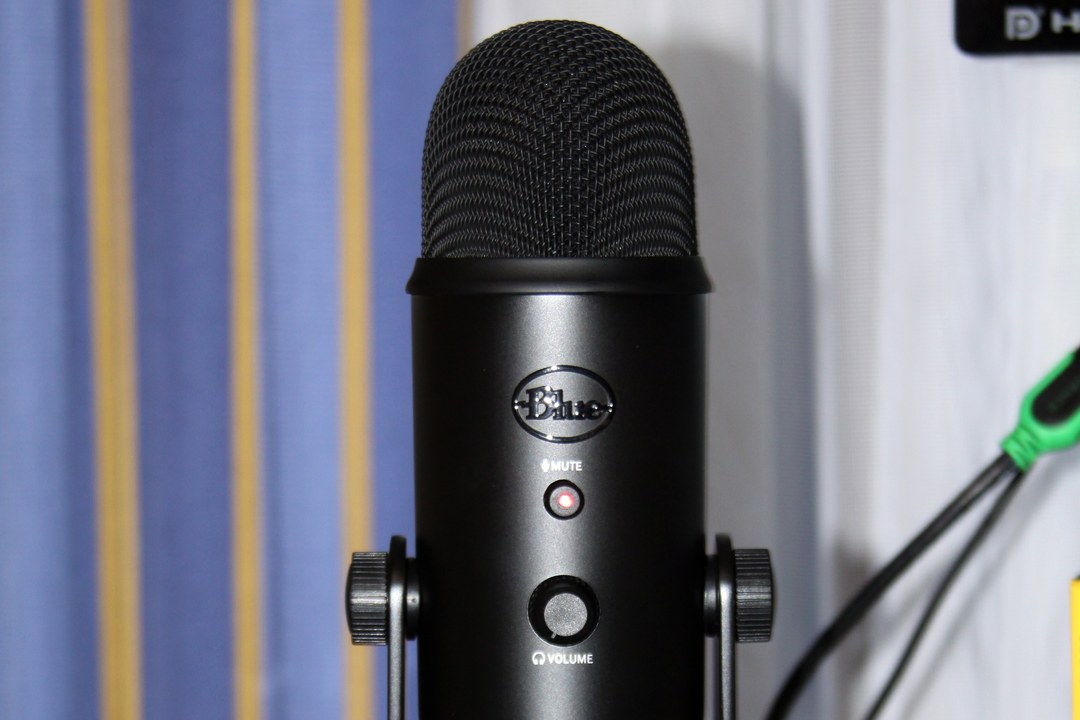
The Yeti is the most-reviewed microphone in this entire category by a margin that is hard to overstate, and that review base is the strongest evidence of long-term reliability on this page. It is also the closest thing here to zero configuration: one cable, no drivers, no companion app required, with a gain knob and a mute button you can reach without opening software.
Its genuinely distinctive feature is four switchable pickup patterns. The bidirectional setting is the cheapest honest way to record two people facing each other on one microphone, and nothing else in this roundup offers it. The limitation is the one every condenser shares: it hears the room. Keyboard clatter, air conditioning and echo all arrive with your voice in a way they do not on the dynamics here. It is also USB only, so it is an endpoint rather than a step.

Logitech Creators Blue Yeti USB Microphone
by Blue
The most-reviewed podcast mic on Amazon and the simplest thing to buy if your room is already quiet and you want to record two people without a second mic.
Pros
- Four switchable pickup patterns is a feature nothing else here matches, and the bidirectional setting is the cheapest honest way to record two people sitting across from each other on a single microphone
- It is as close to zero-configuration as this category gets: one cable, no drivers, no companion app required, and a gain knob and mute button you can reach without opening software
- The review base is extraordinary -- more than fifty-seven thousand ratings -- which makes its long-term reliability the best-evidenced of anything on this page by a wide margin
- Blue VO!CE bundles broadcast-style vocal processing at no cost, so the presets that make a voice sit forward are a click away rather than a plugin purchase
Cons
- It is a condenser, and condensers hear everything -- keyboard clatter, air conditioning, traffic and room echo all arrive with your voice in a way they simply do not on the dynamics here
- USB only, so there is no upgrade path: when you outgrow it you are buying a different microphone, not an interface
- It is large and heavy on a desk, and the stand it ships with puts it lower than it should be for the best sound, so most owners end up on a boom arm anyway
Best for Podcasting and Music: RØDE NT1 Signature Series
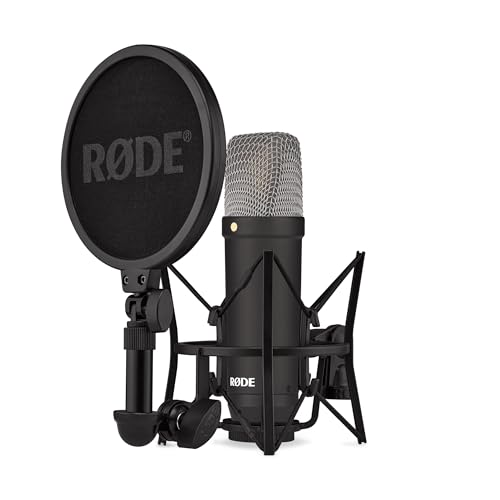
The NT1 is the pick for anyone who records both talk and music, which describes a large share of the people reading a site like this one. At around four decibels of self-noise it is among the quietest condensers you can buy at any price, and that shows up where it matters least glamorously: in the gaps between sentences, where cheaper microphones reveal a faint hiss under everything.
It is equally convincing on a vocal take and an interview, so it collapses two purchases into one. The shock mount, pop filter and XLR cable are all included, which is unusual and removes the accessory bill that normally follows a condenser. The trade is the one every condenser makes, only more so: it is merciless about your room, and it needs an interface with clean phantom power. If you are recording guitar as well, our best acoustic-electric guitars guide covers the other half of that chain.
RØDE NT1 Signature Series Large-Diaphragm Condenser Microphone
by RØDE
The crossover pick: a genuinely quiet studio condenser that handles a vocal take as convincingly as an interview, provided your room is under control.
Pros
- At around four decibels of self-noise it is among the quietest condensers you can buy at any price, which matters most in the gaps between sentences where cheaper mics reveal a faint hiss under everything
- It is the one mic here that is equally at home on a spoken-word episode and a vocal take, so a musician who podcasts stops owning two microphones and starts owning one
- The shock mount, pop filter and XLR cable are all in the box, which is unusual at this price and removes the accessory bill that normally follows a condenser purchase
- RØDE backs it with a ten-year warranty, which is longer than most people keep a microphone and a fair proxy for how confident the maker is in the build
Cons
- The same sensitivity that makes it sound open makes it merciless about your room -- a computer fan, a road outside or a hard wall behind you will all end up in the recording
- It needs an interface supplying clean phantom power, so it is not a first microphone unless the interface is already part of the plan
- There is no onboard monitoring or control of any kind, because it is a studio mic rather than a podcast appliance
Best USB Condenser: Elgato Wave:3 MK.2
The Wave:3 is built around a problem most microphones ignore: the take you cannot use because someone laughed. Clipguard reroutes the signal internally when the level spikes rather than letting it distort, which turns the most common beginner disaster into a non-event. Auto Gain removes level-setting entirely, and it does so before conversion rather than squashing the result afterwards, which is a meaningfully better implementation than most.
Wave Link is more capable software than the price suggests, putting the onboard processing and your own plugins in one signal path with independent monitor mixes. The multifunction dial means gain, headphone level and monitor blend are all a push and a turn away mid-record. It is a condenser, so the room caveat applies in full, and it is USB-C only with no XLR path out.

Elgato Wave:3 MK.2 USB Condenser Microphone
by Elgato
A USB condenser built around not ruining takes, with anti-clipping and auto-gain that make it hard to record something unusable.
Pros
- Clipguard is the most useful safety net on this page: when you laugh or shout, it reroutes the signal internally instead of letting the take distort, which turns the most common beginner disaster into a non-event
- Auto Gain removes level-setting entirely for anyone who does not want to learn it, and unlike most auto-level implementations it is doing so before conversion rather than squashing the result afterwards
- Wave Link puts the onboard processing and your own VST plugins in a single signal path with independent monitor mixes, which is far more capable software than the price suggests
- The multifunction dial handles gain, headphone level and monitor blend by pushing and turning, so the adjustments you make mid-record never require reaching for a mouse
Cons
- It is a condenser and shares the Yeti's fundamental limitation -- it hears the room, and no amount of DSP fully fixes an echoey one
- USB-C only, with no XLR output at all, so like the Yeti it is an endpoint rather than a step
- Wave Link is effectively required to get the most from it, which means another background application running whenever you record
Best Value Hybrid: MAONO PD400X Dynamic Microphone
The PD400X is the interesting one on this page, because it offers the same architecture as the MV7+ for a lot less: a dynamic capsule, both USB-C and XLR, onboard processing driven by a companion app, and a headphone jack with monitor blend. The three-in-one digital knob cycles gain, headphone volume and monitor mix by pressing, and the tap-to-mute on the top is genuinely silent in a way a physical switch is not.
What you are trading is evidence. Its review base is a small fraction of everything else here, so the long-term reliability picture is thin rather than bad. The features you buy it for live in an app that has a recurring pattern of needing a driver reinstall on first setup. And it will not hold resale value the way a Shure or a RØDE does. If those are acceptable, it is the cheapest route to a mic you will not outgrow.

MAONO PD400X Dynamic Microphone, USB/XLR Podcast PC Mic
by MAONO
The hybrid dynamic to buy if the Shure MV7+ feature list appeals and its price does not, with the caveat that you are trusting a newer brand's software.
Pros
- It offers the same USB and XLR hybrid architecture as the Shure MV7+ at a large fraction less, which makes it the cheapest route to a mic you will not outgrow when you add an interface
- The MaonoLink app brings real EQ, a limiter and a compressor to the mic itself, so the tone shaping that normally happens in your editor happens before recording
- The three-in-one digital knob handles gain, headphone volume and monitor mix by pressing to cycle, and tap-to-mute on the top is genuinely quiet in a way a physical switch is not
- It is sold through MAONO's own storefront rather than a reseller, which is a meaningful authenticity signal in a category with a lot of relabelled units
Cons
- Its review base is a small fraction of everything else in this roundup, so the long-term reliability evidence is thin rather than bad
- The features people buy it for live in an app, and that app has a recurring pattern of needing a driver reinstall on first setup
- Brand recognition matters more than it should when you resell gear, and this will not hold value the way the Shure and RØDE mics do
Best Compact Wireless: DJI Mic Mini
The Mic Mini solves a different problem from everything above it: recording two people who are not sitting at a desk, usually with a camera running. Each transmitter weighs about ten grams and clips out of sight, so nothing sits between two faces. Crucially it arrives as two transmitters and a receiver, so it is a complete two-person rig in one purchase rather than a microphone you buy twice.
The charging case takes total runtime to roughly forty-eight hours, which removes battery anxiety from a full day of location recording. Two levels of noise cancellation handle the traffic and room tone that ruin most on-location interviews. The limits are honest ones: there is no headphone jack on the receiver for true monitoring, and a clip-on omni capsule will not match a good desk dynamic on a seated studio recording.

DJI Mic Mini (2 TX + 1 RX + Charging Case)
by DJI
A complete two-person wireless kit that disappears on camera, at a price most people expect to pay for a single desk microphone.
Pros
- Each transmitter weighs about ten grams and clips out of sight, which is the whole point for an interview you are also filming -- nothing sits between two people's faces
- It arrives as two transmitters and a receiver, so it is a complete two-person rig in one purchase rather than a microphone you have to buy twice
- The charging case takes total runtime to roughly forty-eight hours, which removes battery anxiety from a day of location recording entirely
- Two selectable levels of noise cancellation handle the traffic and room tone that ruin most on-location interviews, and more than twenty-three thousand ratings back up that it works
Cons
- There is no headphone jack on the receiver for true zero-latency monitoring, so you are trusting levels rather than hearing them
- It is a lavalier, and no clip-on omni capsule will match a good desk dynamic for tone on a seated studio recording
- Which receiver and cable combination you need depends on your phone, and an older Lightning iPhone needs an adapter that is not in every bundle
Best Wireless for iPhone: RØDE Wireless GO III
The Wireless GO III is what you buy when the recording cannot be repeated. It records internally in 32-bit float, which means a sudden laugh or a raised voice cannot clip the file even if the gain was set badly. For a field interview where you have no chance to ride levels, that single feature is worth more than any tonal difference between the microphones on this page.
It is also the only pick here that ships with a Lightning cable alongside USB-C and 3.5mm, so it connects to an older iPhone, a current iPhone, a camera and a computer without a trip to buy an adapter. Each transmitter doubles as a standalone recorder, so a dropped wireless link still leaves you a clean file. It costs roughly double the DJI kit for a similar core job, and that safety net is most of what the difference buys.

RØDE Wireless GO III (Gen 3)
by RØDE
The wireless kit to buy when a take cannot be repeated: 32-bit float recording, onboard backup files, and cables for every phone in the box.
Pros
- It records internally in 32-bit float, which means a sudden laugh or a raised voice cannot clip the take even if you set the gain badly -- for field interviews where you cannot ride levels, that is the single most valuable feature in this roundup
- It is the only pick here that ships with a Lightning cable alongside USB-C and 3.5mm, so it connects to an older iPhone, a newer iPhone, a camera and a computer without a trip to buy an adapter
- Each transmitter is also a standalone recorder, so even if the wireless link drops you still have a clean file from the source
- RØDE's wireless line has been the working standard for location audio for years, and the service and firmware record behind it is longer than any competitor's
Cons
- It costs roughly double the DJI kit for a similar core job, and the 32-bit float safety net is the main thing that money buys
- The review base is the smallest here because this generation is recent, so there is less long-term owner evidence than the count of RØDE units in the field would suggest
- Two transmitters clipped to two shirts is still lavalier sound, not desk-mic sound, so it does not replace a studio microphone for a seated show
Best for Two Hosts: MAONO PD200W Wireless Bundle for 2
The PD200W is the only product here designed from the start around two people. Two wireless desk microphones run into a single receiver, and each one lands on its own track. That second point is the one that matters in editing: separate tracks are the difference between fixing a cough cleanly and cutting both voices to remove it.
Unlike the DJI and RØDE kits these are desk microphones with real capsules rather than clip-on lavaliers, so they capture a seated conversation properly. Buying one bundle instead of two mics, two cables and a two-input interface removes both the compatibility guesswork and a fair amount of cost. It only makes sense if you genuinely record with someone else, and it carries the same newer-brand and companion-software caveats as the PD400X.

MAONO PD200W Hybrid Wireless Podcast Microphone Bundle for 2
by MAONO
The straightforward answer to recording two people properly: two wireless desk mics, one receiver, and a separate track for each voice.
Pros
- It is the only product here designed from the start for two hosts: two wireless desk microphones running into one receiver, which is a purpose-built answer rather than two mics and a mixer improvised into one
- Each microphone lands on its own track, and separate tracks are the difference between an editable two-person conversation and one where fixing a cough means cutting both voices
- The microphones are wireless but they are desk mics with real capsules, so it captures a proper seated conversation rather than the clip-on lavalier sound of the DJI and RØDE kits
- Buying one bundle rather than two mics, two cables and a two-input interface removes both the compatibility guesswork and a meaningful amount of the cost
Cons
- It is only worth the money if you genuinely record with a second person -- as a solo mic it is beaten by cheaper picks here
- It carries the same caveat as the PD400X: a newer brand, a smaller review base, and a feature set that leans on companion software
- Wireless desk mics need charging, which is one more thing to remember before a session than a cable will ever be
Best USB Podcast Microphones
A USB microphone contains its own preamp and converter, so it plugs into a computer and works with nothing else in the chain. That is the entire appeal and it is a real one. The trade is a fixed ceiling you cannot raise later, which is why the third pick here is a hybrid: it runs as a pure USB mic today and still has somewhere to go. If you also want a USB mic for singing, streaming or recording instruments, my best USB microphones guide covers those uses.
| Product | Price | Buy |
|---|---|---|
| Logitech Creators Blue Yeti USB MicrophoneBest USB mic overall Four pickup patterns, no drivers, no app, and the deepest review base in the category | $99.99 | View on Amazon |
| Elgato Wave:3 MK.2 USB Condenser MicrophoneBest USB mic for not ruining takes Clipguard and Auto Gain make a distorted or badly levelled recording genuinely hard to produce | $134.99 | View on Amazon |
| Shure MV7+ USB-C & XLR Podcast Dynamic Mic with StandBest USB mic with an upgrade path Runs as a pure USB mic today and has a real XLR output for the day you add an interface | $319.00 | View on Amazon |
Best Budget Podcast Microphones Under $100
You do not need to spend much to record a good podcast, and all three of these prove it. What separates them is what you already own. The first is a complete kit for someone starting from nothing, the second assumes you have an interface, and the third is not a desk mic at all but is the cheapest complete two-person rig here.
| Product | Price | Buy |
|---|---|---|
| Samson Q2U USB/XLR Dynamic Microphone Recording and Podcasting PackBest budget mic overall Stand, clip, windscreen and both cables included, plus a real XLR upgrade path | $79.99 | View on Amazon |
| RØDE PodMic Cardioid Dynamic Broadcast MicrophoneBest budget XLR mic Broadcast character with a built-in pop filter, if you already own an interface | $86.00 | View on Amazon |
| DJI Mic Mini (2 TX + 1 RX + Charging Case)Best budget two-person kit Two transmitters and a receiver in one box, for interviews recorded away from a desk | $95.00 | View on Amazon |
Best Podcast Microphones for Beginners
The best first microphone is the one that produces a usable recording before you have learned anything, and then does not need replacing once you have. That rules out both extremes: a very cheap condenser will make your room sound worse than it is, and a broadcast dynamic will sound thin without an interface you do not yet own.
| Product | Price | Buy |
|---|---|---|
| Samson Q2U USB/XLR Dynamic Microphone Recording and Podcasting PackBest first mic overall Everything needed in one box, a forgiving dynamic capsule, and nothing to outgrow | $79.99 | View on Amazon |
| Logitech Creators Blue Yeti USB MicrophoneBest mic for zero setup Plug in and record, with a mute button and gain knob you can reach without software | $99.99 | View on Amazon |
| MAONO PD400X Dynamic Microphone, USB/XLR Podcast PC MicBest beginner mic with processing Onboard EQ and a limiter do the level-setting a beginner has not learned yet | $154.99 | View on Amazon |
Best XLR Podcast Microphones
XLR means an interface, and an interface means better conversion, real gain control and room for a second host. These three cover the range: the broadcast standard, the value benchmark, and the condenser for anyone whose room is already under control.
| Product | Price | Buy |
|---|---|---|
| Shure SM7B Dynamic Vocal Microphone for Podcasting & StreamingBest XLR mic overall The broadcast reference, provided your interface can supply enough clean gain | $439.00 | View on Amazon |
| RØDE PodMic Cardioid Dynamic Broadcast MicrophoneBest value XLR mic SM7B-adjacent character with an internal pop filter, at a fraction of the outlay | $86.00 | View on Amazon |
| RØDE NT1 Signature Series Large-Diaphragm Condenser MicrophoneBest XLR condenser Exceptionally low self-noise and a full accessory kit, for a treated or quiet room | $146.00 | View on Amazon |
Best Dynamic Microphones for Podcasting
If your recording space has bare walls, a hard floor or a window onto a road, this is the section that matters. A dynamic capsule needs more sound energy to move, so it hears you at close range and largely ignores the rest of the room. Every recommendation here is a dynamic, and each assumes a different amount of gear already on your desk.
| Product | Price | Buy |
|---|---|---|
| Shure MV7+ USB-C & XLR Podcast Dynamic Mic with StandBest dynamic overall A dynamic capsule plus a denoiser, on both USB and XLR, with no interface required to start | $319.00 | View on Amazon |
| Shure SM7B Dynamic Vocal Microphone for Podcasting & StreamingBest dynamic for a treated studio chain The broadcast standard for a hard-surfaced room, once you have the gain to drive it | $439.00 | View on Amazon |
| Samson Q2U USB/XLR Dynamic Microphone Recording and Podcasting PackBest budget dynamic A forgiving cardioid dynamic and a complete accessory kit for the least money here | $79.99 | View on Amazon |
Best Podcast Microphones for iPhone and Mobile Recording
Recording to a phone changes the requirements completely. You need the right connector, you cannot easily monitor levels, and you usually cannot ask for a second take. That last point is why the first pick leads: internal 32-bit float recording means a badly set gain no longer costs you the interview.
| Product | Price | Buy |
|---|---|---|
| RØDE Wireless GO III (Gen 3)Best for iPhone overall Ships with Lightning, USB-C and 3.5mm cables, and records 32-bit float so a take cannot clip | $199.00 | View on Amazon |
| DJI Mic Mini (2 TX + 1 RX + Charging Case)Best compact mobile kit Two ten-gram transmitters and a receiver, with a case that carries it to about forty-eight hours | $95.00 | View on Amazon |
| Shure MV7+ USB-C & XLR Podcast Dynamic Mic with StandBest desk mic for a USB-C phone A proper desk dynamic over USB-C, for recording to a phone or tablet at a table rather than on the move | $319.00 | View on Amazon |
Best Wireless Microphones for Podcasting
Wireless is about where you record rather than how good it sounds. Two of these are clip-on lavalier kits for interviews away from a desk, and the third is the outlier: wireless desk microphones with real capsules, for two people sitting down without cables between them.
| Product | Price | Buy |
|---|---|---|
| RØDE Wireless GO III (Gen 3)Best wireless overall 32-bit float recording, onboard backup files on each transmitter, and every cable in the box | $199.00 | View on Amazon |
| DJI Mic Mini (2 TX + 1 RX + Charging Case)Best value wireless A complete two-person kit at a price most people expect to pay for one desk microphone | $95.00 | View on Amazon |
| MAONO PD200W Hybrid Wireless Podcast Microphone Bundle for 2Best wireless for a seated show Two wireless desk mics on separate tracks, so a two-host conversation stays editable | $219.99 | View on Amazon |
More Podcast Mic Picks by Use Case
| Product | Price | Buy |
|---|---|---|
| MAONO PD200W Hybrid Wireless Podcast Microphone Bundle for 2Best for multiple hosts A purpose-built pair on one receiver, with each voice recorded to its own track | $219.99 | View on Amazon |
| Shure SM7B Dynamic Vocal Microphone for Podcasting & StreamingBest professional podcast mic The broadcast reference with the deepest owner-review base of any XLR mic here | $439.00 | View on Amazon |
| RØDE NT1 Signature Series Large-Diaphragm Condenser MicrophoneBest mic for podcasting and vocals A studio condenser quiet enough for a vocal take and articulate enough for an interview | $146.00 | View on Amazon |
| DJI Mic Mini (2 TX + 1 RX + Charging Case)Best portable podcast mic Ten-gram transmitters, a charging case, and noise cancellation built for location work | $95.00 | View on Amazon |
Buyer's Guide
Almost every disappointing podcast recording comes down to one of four things, and the microphone itself is rarely the first of them. Capsule type decides how much of your room ends up in the file. Connection decides whether the mic is a step or an endpoint. Gain decides whether it hisses. And placement decides most of the rest. Here is what actually separates these microphones in use.
Dynamic or condenser: this is the room question, not the quality question
Start here, because nothing else you decide matters as much. A dynamic capsule is relatively insensitive, so it captures your voice at close range and largely leaves behind the reflections off your walls, the hum of an air conditioner and the clatter of a keyboard. A condenser is far more sensitive and hears all of it. In a treated studio that sensitivity is exactly what you want, and the RØDE NT1's four-decibel self-noise is genuinely lovely. In an untreated spare bedroom it is a liability, and this is why so many people buy a Blue Yeti, hear the echo in their first recording, and conclude the microphone is bad when the room is the problem. If your recording space has bare walls, a hard floor and a window onto a street, buy a dynamic -- the Shure MV7+, the Samson Q2U, the RØDE PodMic or the Shure SM7B -- and revisit condensers when the room has been dealt with.
USB, XLR, or both: buying an endpoint versus buying a step
USB microphones contain their own preamp and converter, so they plug into a computer and work with nothing else in the chain. That is a real advantage and it comes with a fixed ceiling, because you cannot improve a preamp you cannot reach. The Blue Yeti and the Elgato Wave:3 are both excellent and both terminal: when you outgrow them you are buying a new microphone, not adding a component. XLR mics send an analogue signal into an interface, which means better conversion, real gain control and the ability to add channels for guests -- but the interface is a second purchase and a second thing to learn. The hybrids resolve this properly. The Shure MV7+, the Samson Q2U and the MAONO PD400X all carry both connections in one body, so you start on USB tonight and move to an interface the day you need one, with no change to your sound and no second microphone purchase. If you are undecided, buy a hybrid; the flexibility costs almost nothing at any price tier here.
Gain and self-noise: why a good mic can sound thin and hissy
This is the most common expensive mistake in the category, and it has almost nothing to do with the microphone. Dynamic mics have low output. The Shure SM7B in particular wants somewhere around sixty decibels of clean gain to sit at a healthy level, and many entry-level interfaces provide less than that, or provide it while adding their own noise at the top of the dial. The result is a recording that sounds distant and hissy, which people reasonably blame on the mic. The fixes are an interface with genuinely high, clean gain, or an inline gain booster between the mic and the interface. Both cost real money and neither is in the box, so factor it into the price before you buy an SM7B or a PodMic. USB mics with onboard processing sidestep this entirely, which is a large part of what you are paying for in the Shure MV7+ and the Elgato Wave:3.
Onboard processing: a genuine shortcut, and a philosophy you may not want
Several mics here process your voice in real time before it reaches the computer. The Shure MV7+ denoises and auto-levels, the Elgato Wave:3's Clipguard makes a distorted take almost impossible, and the MAONO units run EQ, compression and limiting through their companion apps. For a beginner this is a legitimate shortcut past a genuinely difficult skill, and consistent levels with no editing is worth a great deal when you are producing weekly. The trade is that the processing is baked into the file and cannot be undone, and to an experienced ear auto-levelling frequently sounds like it is breathing -- pumping up the room tone in the pauses between sentences. The purist mics here, the SM7B, the PodMic and the NT1, do none of it and hand you a raw signal to shape yourself. Neither approach is better; decide whether you would rather learn a compressor or skip one.
What comes in the box, and what you still have to buy
The advertised price of a microphone is frequently not the price of recording with it, and the gap varies enormously across this page. The Samson Q2U arrives complete: stand, clip, windscreen and both cables. The RØDE NT1 includes the shock mount and pop filter that a condenser genuinely needs. The Shure MV7+, Blue Yeti, Elgato Wave:3 and MAONO PD400X all ship with a desktop stand. At the other end, the Shure SM7B and the RØDE PodMic come as bare microphones with no way to hold them up, so a boom arm is mandatory rather than optional and adds a meaningful amount to the real cost. A boom arm is worth having regardless, because it is the easiest way to keep the mic four to six inches from your mouth and off a desk that transmits every keystroke, but it should be a decision you make deliberately rather than discover after the box arrives.
Multi-host recording: channels, spacing, and separate tracks
The moment a second person joins, the requirements change more than most guides admit. You need a channel per person, which means either a two-input interface with two XLR mics, a purpose-built bundle like the MAONO PD200W, or a wireless kit like the DJI Mic Mini or RØDE Wireless GO III that ships as two transmitters. What you should avoid is two people sharing one microphone, unless you have a Blue Yeti and can use its bidirectional pattern, which is a legitimate and genuinely cheap solution. You also want separate tracks rather than a single mixed file, because editing a conversation recorded to one track means every cut affects both voices. Then mind the spacing: keep the two microphones at least three times as far apart as each speaker is from their own mic, or the bleed between them will hollow out both voices in a way EQ cannot fix. Dynamics make this much easier than condensers, because they pick up less of the other person to begin with.
How to Choose the Best Podcast Microphone for You
Start with your room, not your budget, because the room decides the capsule and the capsule decides everything else. If you are recording in a spare bedroom with bare walls, a hard floor and a window onto a street, buy a dynamic microphone and stop considering condensers until you have dealt with the space. That points at the Shure MV7+, the Samson Q2U, the RØDE PodMic or the Shure SM7B. If your room is genuinely quiet or already treated, the RØDE NT1, the Elgato Wave:3 and the Blue Yeti open up, and the NT1 in particular will reward you for the work you did on the room.
Then decide whether you are buying an endpoint or a step. A pure USB microphone plugs in and works, which is worth a lot, and it cannot be improved later, which is worth understanding. A hybrid costs almost nothing extra at any tier here and removes the decision entirely, which is why the Q2U and the MV7+ sit at opposite ends of the price range doing the same clever thing. Only buy XLR-only if you already own the interface, and if you are buying an SM7B specifically, check that interface’s clean gain before you order the mic rather than after.
Everything after that is situational. A second host means a channel and a track each, which the MAONO PD200W handles as a bundle and a two-input interface handles with two PodMics. Recording away from a desk means the RØDE Wireless GO III or the DJI Mic Mini. And whichever you choose, spend on a boom arm before you spend on a better microphone: getting the capsule four to six inches from your mouth and off a desk that transmits keystrokes improves a recording more than any price tier on this page. If music is part of your show, our best acoustic guitar strings and best guitar tuner guides cover keeping the instrument side of the recording in shape.
The Bottom Line
If you want one microphone that works tonight and still works after you build a proper setup, the Shure MV7+ is the clearest best overall pick: a dynamic capsule for real rooms, onboard processing that flatters an untrained voice, and both USB-C and XLR in one body. On a budget the Samson Q2U is a genuinely sufficient microphone rather than a compromise, and it arrives complete. The Shure SM7B is the upgrade worth making once you own an interface with the gain to drive it.
From there it depends on how you record. The RØDE PodMic is the value XLR pick, the Blue Yeti the easiest plug-and-play mic and the cheapest way to put two people on one microphone, the RØDE NT1 the crossover choice for talk and music, the Elgato Wave:3 MK.2 the USB condenser hardest to clip, and the MAONO PD400X the cheapest hybrid with real onboard processing. Away from the desk, the DJI Mic Mini is the value two-person wireless kit, the RØDE Wireless GO III the one to trust when a take cannot be repeated, and the MAONO PD200W the straightforward answer for two hosts sitting down. Match the capsule to your room and the connection to your plans, and the microphone stops being the thing anyone notices. If your show involves playing as well as talking, our best electric guitars roundup is a natural next stop.
Frequently Asked Questions
What microphone do most podcasters use?
Is USB or XLR better for podcasting?
Do I need a dynamic or a condenser microphone for a podcast?
What mic does Joe Rogan use?
What is the 3 to 1 rule for microphones?
How much should I spend on a podcast microphone?
Do I need an audio interface for a podcast microphone?
Related Articles
12 Best USB Microphones of 2026 (Vocals, Streaming, Gaming & Music)
studio-recording
14 Best Budget Audio Interfaces of 2026 (Cheap Picks for Guitar, Podcasting and Streaming)
studio-recording
10 Best Studio Headphones of 2026 for Music Production (Mixing, Recording, Open-Back & Budget)
studio-recording
10 Best Audio Interfaces for Guitar of 2026 (Picks for Amp Sims, Bass and Acoustic)
studio-recording
13 Best Audio Interfaces of 2026 (Home Studio, Podcasting, iPad & 8-Channel)
studio-recording
About the Reviewer

Julian Reyes, MM, Berklee
M.M. Performance, Berklee College of Music
Julian Reyes is a multi-instrumentalist with a Master of Music from Berklee College of Music and over a decade gigging on guitar, bass, and keys. Before founding House of Octave, he spent years as a gear buyer for an independent music retailer, evaluating hundreds of instruments and audio products for the sales floor. He started House of Octave in 2026 to give players honest, hands-on reviews — judged by how gear actually sounds and holds up on stage and in the studio, not by spec sheets or sponsorships.