11 Best Acoustic-Electric Guitars of 2026 (Beginner to Stage-Ready)
Berklee-trained multi-instrumentalist Julian Reyes (MM) reviews the 11 best acoustic-electric guitars of 2026 -- beginner, budget, thin-body, small-body, 12-string, nylon-string and stage-ready picks from Yamaha, Fender, Taylor, Takamine and Ibanez, matched to how and where you actually play.
Updated
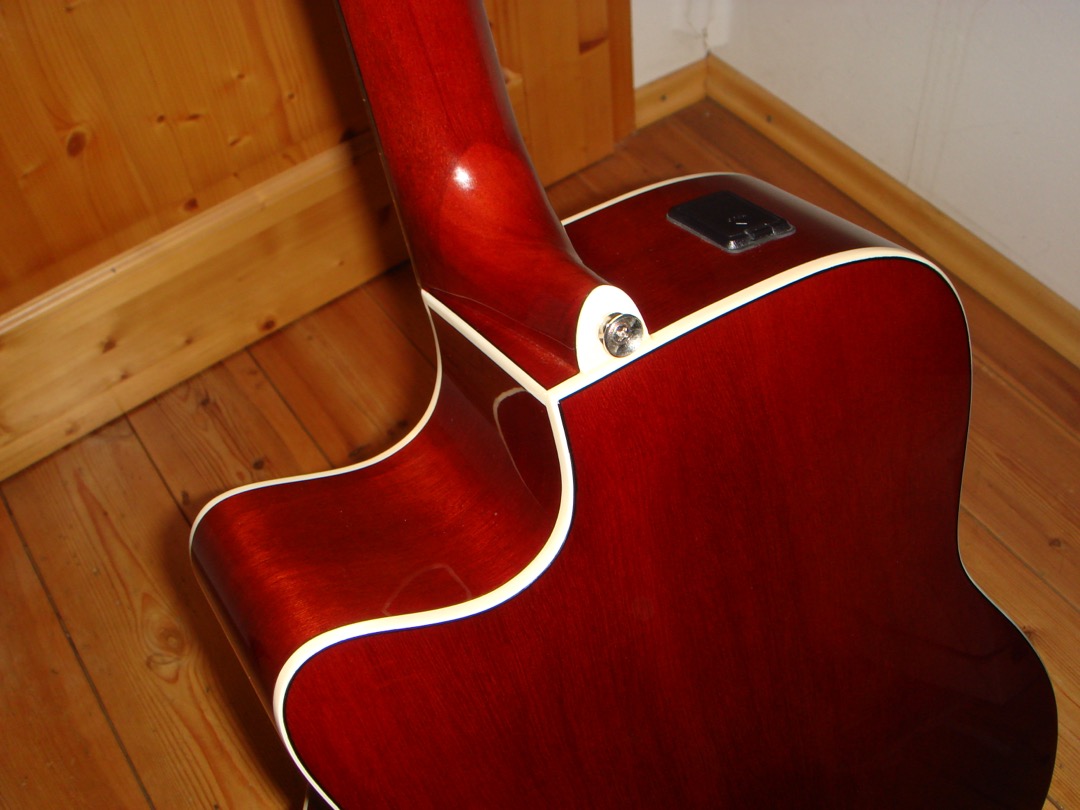
An acoustic-electric guitar is not a compromise between two instruments, which is the assumption behind most of the confusion about them. It is an ordinary acoustic guitar with a pickup fitted, and unplugged it plays and sounds exactly as its acoustic twin does. What the pickup buys you is every situation where a guitar has to be heard past the front row: an open mic, a church service, a school hall, a rehearsal with a drummer, or a laptop and an audio interface at midnight. The premium over the equivalent acoustic is small at every price level, which is why it is usually the smarter buy even for someone who has never plugged anything in.
What makes choosing one harder than choosing a plain acoustic is that you are judging two instruments at once. A guitar can have a beautiful unplugged voice and a preamp that sounds brittle through a PA, or a stage-proven pickup system on a body that is dull to sit and play. So I approached this the way I approached buying inventory as a gear buyer: not “which acoustic-electric is best” but “which is right for each kind of player,” from a first guitar that costs less than a decent set of headphones to a carry-on travel instrument and a professional small-bodied Taylor. Eleven guitars, each matched to a clear role. It is worth browsing our full guitars category to see how these sit in the wider range, and if you are still deciding between an acoustic and an electric as a first instrument, start with our acoustic vs electric guitar comparison.
| Product | Price | Buy |
|---|---|---|
| Yamaha FGX800CBest Overall | $439.99 | View on Amazon |
| Fender CD-60SCERunner-Up | $339.99 | View on Amazon |
| Jameson Thinline Acoustic-ElectricBudget Pick | $118.99 | View on Amazon |
| Fender FA-125CE BundleRunner-Up | $269.99 | View on Amazon |
| Yamaha APX600Runner-Up | $389.99 | View on Amazon |
| Yamaha FSX800CRunner-Up | $439.99 | View on Amazon |
| Takamine GD11MCERunner-Up | $499.00 | View on Amazon |
| Taylor GS Mini-e MahoganyPremium Pick | $699.00 | View on Amazon |
| Ibanez AW5412CE Artwood 12-StringRunner-Up | $479.99 | View on Amazon |
| Yamaha NTX1Runner-Up | $579.99 | View on Amazon |
| Traveler Guitar Ultra-Light AcousticRunner-Up | $299.99 | View on Amazon |
Find the Best Acoustic-Electric Guitar for Your Need
Jump straight to the guitar that fits how you play:
- Best acoustic-electric guitars overall
- Best beginner acoustic-electric guitar
- Best budget acoustic-electric guitar
- Best acoustic-electric guitar under $500
- Best acoustic-electric guitar under $1,000
- Best small-body and travel acoustic-electric guitar
- Best thin-body acoustic-electric guitar
- Best acoustic-electric guitar for live performance
- More use cases
How I Tested and Evaluated These Acoustic-Electric Guitars
Every guitar here was selected on a verified, active Amazon listing, a real owner-review base, a genuine track record from the builder in acoustic instruments specifically, and a clear fit for one kind of player. I drew on twenty years of playing and a gear-buyer’s eye for what matters once a guitar is actually in your hands: whether the top is solid or laminate and what that means over a decade, how the body feels across a full practice session, whether the preamp has a usable range or only one good setting, and how the instrument behaves in front of a monitor rather than alone in a room. I cross-referenced hundreds of owner reviews for the complaints that recur on acoustic-electrics — action too high out of the box, quacky piezo attack, batteries that die mid-set, sharp fret ends — and weighed tonewoods, electronics and playability against how each guitar is meant to be used. Guitars from unverified sellers or with thin, suspicious review histories were left out. Where an instrument is built for one specific job rather than for everyone, I have said so plainly instead of pretending every guitar suits every player.
Best Acoustic-Electric Guitars Overall
These eleven guitars span every budget and use case, but they share one thing: each is the honest best choice for the player it targets. Below, every guitar is reviewed once in full. Farther down, use-case sections pull the right two or three together so you can compare and decide quickly for your specific need.
Best Overall: Yamaha FGX800C
If someone asked me to name one acoustic-electric guitar without knowing anything else about them, this is the one I would name, and the reasoning starts with a spec that most buyers skip past. The FGX800C has a solid Sitka spruce top. Nearly everything at and below this price uses a laminate top, which is thin layers of wood bonded with glue, and glue is a damper — it stops the top vibrating as freely as a single piece of real wood does. The practical consequence is that a laminate guitar sounds the same in year ten as it did on the shop floor, while a solid top keeps opening up as the wood ages. You are buying an instrument that improves rather than one that merely survives.
The electronics deserve as much attention as the wood. Yamaha’s System 66 gives you a three-band EQ plus an adjustable mid-range frequency control, and that mid control is the professional feature here. Midrange is where an amplified acoustic guitar either speaks clearly through a band or turns honky and boxed-in, and being able to move the mid band to the exact frequency causing the problem, rather than cutting a fixed one the designer chose for you, is the difference between fighting a PA and working with it. A precision chromatic tuner is built into the same panel, so tuning happens silently on the guitar between songs.
The honest limits are about what you would pay more for. The nato back and sides are perfectly pleasant but not characterful, and the next real tonal step up means solid rosewood or mahogany sides at a considerably higher price. And a full dreadnought is a large body — if you have a shorter reach or you mostly fingerpick, the FSX800C below is the same specification in a smaller shape and will make you happier. For everyone else, this is the most complete guitar here.

Yamaha FGX800C
by Yamaha
The best-balanced acoustic-electric here: a solid spruce top that will improve with age, a preamp with real midrange control, and Yamaha's build consistency behind it.
Pros
- The best combination of tone and value here, and the reason is the top: a solid Sitka spruce top rather than a laminate, which is the single spec that decides whether a guitar opens up and sounds better after a year of playing or stays exactly as it sounded in the box
- Yamaha's System 66 preamp is a genuine step above what most guitars at this level carry -- three-band EQ plus an adjustable mid-range frequency control, which is the professional tool here, because midrange is where an amplified acoustic either cuts through a mix or turns honky and boxy
- The dreadnought body delivers the full, loud, bass-forward voice most people picture when they imagine an acoustic guitar, and the cutaway gives you clean access to the upper frets without the volume penalty people expect from a cutaway
- A precision chromatic tuner is built into the preamp, so tuning happens on the guitar between songs rather than with a clip-on that falls off, and Yamaha's build consistency at this level is the most reliable in the industry
Cons
- The nato back and sides are pleasant rather than characterful; the tonal step up from here is a guitar with solid rosewood or mahogany sides, and that is a much bigger spend
- A full dreadnought is a large body, and a smaller player or anyone who mostly fingerpicks will find the FSX800C more comfortable and better balanced
Best Solid-Top Value: Fender CD-60SCE
The CD-60SCE is the guitar I point people to when they want a solid top and cannot stretch to the Yamaha. Fender fits a solid spruce top with scalloped X-bracing here, which is a genuinely serious specification at this price, and the scalloping matters: shaving the braces reduces mass and lets the top move more freely, which is why this guitar has more volume and low-end bloom than its price suggests. Mahogany back and sides give it a warmer, more midrange-centred voice than the Yamahas, which suits singers particularly well because it leaves room in the frequency range where a voice sits.
The pickup system is a Fishman Classic Design, and the name carries real weight with sound engineers. Fishman’s under-saddle voicing is deliberately neutral — it does not try to flatter your guitar, which means it takes EQ from a desk without fighting back. The detail I like most, though, has nothing to do with electronics: Fender rolls the fingerboard edges on this guitar. The sharp fret-end edge that makes an inexpensive acoustic uncomfortable has been dressed away, so it feels broken-in from the first day, and that matters enormously to a new player’s hands.
Two caveats. The average owner rating here is the joint-lowest on this page, and reading the critical reviews the theme is consistent: setup out of the box varies. That is a shipping-and-QC issue rather than a design fault, and a professional setup turns this into a guitar that plays like a much dearer one, but you should budget for it. And the Fishman preamp fitted here has no onboard tuner, so a clip-on stays on the list — our guitar tuner guide covers the ones worth owning.

Fender CD-60SCE
by Fender
A solid-top dreadnought with a Fishman system and rolled fingerboard edges -- the most guitar-per-dollar here if you are willing to pay for a setup.
Pros
- A solid spruce top with scalloped X-bracing at a price where most rivals fit a laminate top, which means it has the same capacity to open up over time as guitars costing considerably more
- The Fishman Classic Design pickup and preamp is a name a sound engineer recognises, and Fishman's under-saddle voicing is deliberately neutral, so it takes EQ from a PA desk well rather than fighting it
- Rolled fingerboard edges are the detail that makes this feel broken-in from the first day -- the sharp fret-end edge that makes a cheap guitar uncomfortable has been dressed away, which matters enormously to a new player's hands
- Mahogany back and sides give it a warmer, more midrange-focused voice than the spruce-and-nato combination on the Yamahas, which suits singers and strummers particularly well
Cons
- The average owner rating is the joint-lowest on this page, and the recurring theme in the critical reviews is inconsistent setup out of the box rather than a design fault -- budget for a professional setup and it plays like a much dearer guitar
- The Fishman preamp here has no onboard chromatic tuner, so a clip-on tuner stays on your accessory list
Best Budget: Jameson Thinline Acoustic-Electric
There is a version of this recommendation that pretends a very cheap guitar is secretly as good as an expensive one, and that is not what is happening here. What is true is that this is the most-reviewed instrument on this page by a distance, with more than two thousand three hundred owner ratings at a solid average, and that volume of accumulated evidence tells you something a spec sheet cannot: these arrive playable far more often than not. For a first guitar bought without knowing whether the player will still be playing in six months, that is the metric that matters most.
The thinline body is the reason I picked this over the several other guitars at the same price. A shallower body is markedly easier to get an arm comfortably around, and physical discomfort is one of the two reasons beginners quit — the other being action so high that fretting hurts. A four-band onboard EQ with a built-in tuner is also more control than some guitars here costing three times as much offer, so a new player can plug into any amp and find a usable sound without owning a pedal or knowing what one does.
The trade-offs are exactly the ones the price implies. A laminate spruce top over a basswood body will not open up with age, and unplugged it sounds noticeably thinner and quieter than any solid-top guitar here. Quality control is variable, and the tuning machines are the first thing most owners eventually replace. None of that is a reason to avoid it as a first instrument; all of it is a reason to see it as a starting point rather than a destination.

Jameson Thinline Acoustic-Electric
by Jameson Guitars
The most guitar you can get for the least money, with the deepest owner-review base here and a slim body that makes the first month genuinely easier.
Pros
- The cheapest guitar on this page by a wide margin and also the most-reviewed, with more than two thousand three hundred owner ratings at a solid average -- an unusual amount of accumulated evidence for a budget instrument, and it tells you the thing arrives playable far more often than not
- The thinline body is the reason this works as a first guitar rather than merely a cheap one: a shallower body is easier to get an arm around, which removes one of the two physical reasons beginners quit, the other being high action
- A four-band onboard EQ with a built-in tuner is more control than the preamp on some guitars here costing three times as much, and it means a beginner can plug into any amp and get a usable sound without owning a single pedal
- It ships with a gig bag and picks, so nothing else has to be bought on day one -- and if the player gives up in month three, very little money has been lost
Cons
- A laminate spruce top over a basswood body will not open up with age the way the solid-top guitars here do, and the unplugged voice is noticeably thinner and quieter as a result
- Quality control is the trade-off at this price: a proportion of these need a setup, and the tuners are the first component most owners eventually replace
Best Beginner Package: Fender FA-125CE Bundle
The most common way a beginner guitar purchase goes wrong is not the guitar — it is arriving home with an instrument and no way to tune it, no way to carry it, no strap, and no spare strings for the one that breaks in week two. This bundle removes all of that at once: gig bag, clip-on tuner, strap, spare strings, picks and an instructional DVD arrive in the same box. Nothing stands between opening it and the first lesson, which sounds trivial until you have watched someone lose a fortnight of enthusiasm waiting for a tuner to be delivered.
The guitar underneath is a real Fender, and that matters more than it should. The nato C-shaped neck is the same comfortable profile Fender uses across its acoustic range, so the hand position learned on this transfers directly to anything bought later, and the FE-A2 electronics are deliberately simple — plug in, set the volume, play. Its owner-review base is the third-deepest here, and the theme running through it is that the guitar arrives set up better than the price would suggest.
What you give up is the top. Laminate spruce over basswood puts a firm ceiling on the unplugged tone, and a solid-top guitar like the CD-60SCE is an audible step up in body and sustain. The bundled accessories are entry-grade too; the tuner and strap do their job and most players replace them within a year. As the package that gets someone properly started with no follow-up shopping trip, though, this is the one I would send.

Fender FA-125CE Bundle
by Fender
The most sensible first acoustic-electric: a real Fender with a comfortable neck, bundled with every accessory a new player needs and nothing they do not.
Pros
- The most complete answer for a genuine beginner, because it is not just a guitar: the bundle includes a gig bag, a clip-on tuner, a strap, spare strings, picks and an instructional DVD, so nothing stands between opening the box and the first lesson
- A real Fender headstock matters more than it should to a fourteen-year-old, and this is a real Fender -- the nato C-shaped neck is the same comfortable profile Fender uses across its acoustic line, so the hand position learned here transfers to any guitar bought later
- The FE-A2 electronics are simple rather than clever, which is right for a first amplified instrument: plug in, set the volume, play, with no menu of features to get lost in
- Its review base is the third-deepest here, and the recurring theme among owners is that it arrives set up better than its price suggests
Cons
- The laminate spruce top and basswood back and sides put a firm ceiling on the unplugged tone -- this guitar sounds like what it is, and a solid-top guitar like the CD-60SCE is an audible step up
- The bundled accessories are entry-grade; the tuner and strap are fine to start with and most players replace them within a year
Best Thin Body: Yamaha APX600
The APX600 is the best-selling thin-body acoustic-electric in the world, and the reason is not the looks. A shallow body is dramatically more comfortable to hold, particularly standing with a strap, and it feeds back far less at volume than a full-depth guitar does. Feedback on an acoustic is a resonance problem — a big box of air in front of a loud speaker eventually howls — and less air means less howl. That is exactly why you see this body shape on stages far more often than its share of guitar sales would predict.
The other thing that makes it unusual is the neck. A twenty-five-inch scale with narrower string spacing than a standard acoustic makes this the easiest guitar here for an electric player to switch to; the neck feels closer to a Stratocaster than to a dreadnought, which removes the main reason electric players bounce off acoustics. Yamaha’s System 65 preamp is voiced for a live mix rather than for sounding impressive alone in a bedroom, and the scalloped bracing recovers more low end than a body this thin has any right to produce. It has the second-deepest review base on this page, at more than twelve hundred owner ratings.
The compromise is real and worth stating plainly. A thin body moves less air, so unplugged this is quieter and less full than any full-depth guitar here. If most of your playing happens on a sofa with no cable attached, this is the wrong shape and the FGX800C is the right one. And the top is laminate, so it will not develop with age. Buy it for what it is: a guitar built to be plugged in.

Yamaha APX600
by Yamaha
The stage-focused thin body that electric players find easiest to adapt to -- comfortable, feedback-resistant, and voiced for a live mix rather than a bedroom.
Pros
- The best-selling thin-body acoustic-electric in the world for a reason, and it is not the looks: the shallow body is dramatically more comfortable to hold, and it feeds back far less at stage volume than a full-depth guitar, which is exactly why you see APX bodies on stages
- A 25-inch scale with narrower string spacing than a standard acoustic makes it the easiest guitar here for an electric player to switch to -- the neck feels closer to a Stratocaster than to a dreadnought, which removes the usual reason electric players avoid acoustics
- The second-deepest review base on this page, at more than twelve hundred owner ratings, and Yamaha's System 65 preamp is deliberately voiced for a live mix rather than for sounding impressive alone in a bedroom
- The scalloped bracing pattern recovers a surprising amount of low end for a thin body, so it does not sound as thin acoustically as its depth suggests
Cons
- A thin body moves less air, so unplugged it is quieter and less full than any full-depth guitar here -- if most of your playing is acoustic on a sofa, this is the wrong shape
- The top is laminate rather than solid, so its unplugged voice will not develop with age the way the FGX800C or the CD-60SCE will
Best Small Body: Yamaha FSX800C
Its case is simple: it is the FGX800C — the same solid Sitka spruce top, the same System 66 preamp with the adjustable mid control — in a concert-size body. Nothing is given up in specification, only in body volume. That makes it the clearest recommendation here for anyone who has ever found a dreadnought awkward, because the problem with a big guitar is almost never the neck, it is getting an arm comfortably over a deep, wide body for an hour.
There is a tonal argument for the smaller body too, not just an ergonomic one. A concert body is naturally more even across the strings than a dreadnought, which pushes its bass response forward and can swamp the middle of a chord. That evenness is why fingerstyle players gravitate to this shape: individual notes stay distinct, and a picked arrangement keeps its internal lines audible instead of blurring into a wash. For fingerpicking, this is the guitar on this page I would choose.
Its only real disadvantage is volume. A concert body cannot match a dreadnought for sheer unplugged output or low-end push, so a hard strummer competing with a room full of people will be heard less. The review base is also thinner than the dreadnought’s, simply because the FGX800C outsells it — the platform underneath is identical, but there is less accumulated owner evidence to lean on.

Yamaha FSX800C
by Yamaha
The best pick's specification in a smaller, better-balanced body, and the obvious choice for fingerstyle or a shorter reach.
Pros
- The FGX800C's solid Sitka spruce top and System 66 preamp in a concert-size body, so nothing is given up in specification, only in body volume
- The smaller concert body is the single best recommendation here for a player with a shorter reach or smaller frame, because the problem with a dreadnought is almost never the neck, it is getting an arm comfortably over a deep, wide body
- A concert body is naturally more balanced across the strings than a dreadnought, which is why fingerstyle players gravitate to this shape -- individual notes stay distinct instead of being swamped by the bass response a dreadnought pushes forward
- It carries the same adjustable mid-range control as its bigger sibling, which is the most useful single knob on any acoustic preamp once you are plugged into a PA
Cons
- It has a thinner review base than the FGX800C, simply because the dreadnought outsells it -- the underlying instrument is the same platform, but there is less accumulated owner evidence to lean on
- A concert body cannot match a dreadnought for sheer unplugged volume and low-end push, so a hard strummer in a room full of people will be heard less
Best for the Stage: Takamine GD11MCE
Takamine appears on more stages than its market share suggests, and the reason is the preamp. The TP-4TD system fitted here gives you a gain control, a three-band EQ and a built-in tuner, and it is genuinely difficult to make it sound bad through a PA. That is a higher compliment than it sounds: most acoustic pickup systems have a setting where they turn brittle and quacky, and part of what you buy with a stage-focused brand is a system whose entire usable range is usable.
The all-sapele construction supports the same goal. Sapele gives a focused, midrange-forward voice rather than a scooped, bass-heavy one, and a live sound engineer’s main fight with an acoustic guitar is boominess in the low mids. A guitar that arrives at the desk already sitting in the right part of the spectrum needs less corrective EQ and holds its place in a mix better. The satin finish is the working musician’s choice too — it hides handling marks that a gloss finish shows, and damps the top marginally less.
What you are not buying is a better acoustic instrument. The sapele top is a laminate, so it will not develop with age the way a solid top does, and unplugged this is quieter and more restrained than a spruce-topped dreadnought. If your guitar spends most of its life unplugged in a living room, the FGX800C is more rewarding for the money. If it spends its life plugged into a desk, this is the one.

Takamine GD11MCE
by Takamine
The gigging guitar here -- a stage-proven Takamine preamp and a midrange-forward voice that sits in a live mix without a fight.
Pros
- Takamine's preamp and pickup design is the reason this brand appears on more stages than its market share suggests -- the TP-4TD system is voiced to sit in a live mix with a gain control, three-band EQ and a built-in tuner, and it is genuinely hard to make it sound bad through a PA
- The all-sapele construction gives it a focused, midrange-forward voice that is easier to mix live than a scooped, bass-heavy dreadnought, because a live sound engineer's main fight with an acoustic guitar is boominess in the low mids
- The satin finish is the working musician's choice: it does not show every fingerprint and handling mark the way a gloss finish does, and it damps the top marginally less
- Takamine's stage reputation is earned over decades, and the practical benefit is that a house engineer who sees one on your strap knows what to expect from the DI signal
Cons
- The sapele top is a laminate, so it will not develop with age the way a solid-top instrument does -- you are paying for the electronics and the stage pedigree rather than for a better acoustic voice
- Unplugged, it is noticeably quieter and more restrained than a spruce-topped dreadnought, which makes it less rewarding as a purely acoustic guitar to sit and play
Best Upgrade: Taylor GS Mini-e Mahogany
The GS Mini is the rare small guitar that professionals actually own rather than tolerate, and it has become a genuine studio and songwriting standard — a sentence that cannot honestly be written about any other short-scale instrument. The solid mahogany top is the heart of it. Mahogany has a compressed, woody midrange that makes a small body sound far larger and more finished than its dimensions suggest, and it records beautifully because that compression is doing some of the work a studio compressor would otherwise do.
Taylor’s build quality is the other half of the argument, and it is the half that is hardest to convey on a spec sheet. Taylor’s neck geometry and factory setup are the best in the business at any price, which means this guitar arrives playing correctly: the fret ends are dressed, the action is right, and no trip to a technician is required. The ES-B electronics include a built-in tuner and, unusually, a battery-life indicator — a small thing until you consider that the classic acoustic-electric failure mode is a nine-volt battery dying mid-set with no warning.
It is the most expensive guitar on this page by a clear margin, and the short scale means it is not a substitute for a full-size instrument if maximum unplugged volume is what you want. The back and sides are layered sapele rather than solid wood, which is what keeps the price where it is; purists notice, and almost nobody hears it in a mix. As the best instrument here, it is the one I would tell someone to save for rather than compromise on.

Taylor GS Mini-e Mahogany
by Taylor
The best instrument on this page: a solid mahogany top, Taylor's setup quality, and a small body that professionals keep rather than outgrow.
Pros
- The best-sounding guitar on this page and the only one here made by a major American builder, with a solid mahogany top over sapele -- mahogany's compressed, woody midrange is why this small body sounds far larger and more finished than its dimensions suggest
- The GS Mini is the rare small guitar that professionals actually own rather than tolerate; it has become a genuine studio and songwriting standard, which is a sentence that cannot honestly be written about any other short-scale guitar
- Taylor's ES-B electronics include a built-in tuner and a battery-life indicator, and the system is voiced with Taylor's characteristic clarity rather than the brittle quack that spoils many under-saddle pickups
- Taylor's neck geometry and factory setup are the best in the business at any price, so it arrives playing correctly -- the fret ends are dressed, the action is right, and no trip to a technician is needed
Cons
- It is the most expensive guitar on this page by a clear margin, and the short scale means it is not a substitute for a full-size instrument if you want maximum unplugged volume
- The back and sides are layered sapele rather than solid wood, which is what keeps the price where it is -- purists notice, though almost nobody hears it in a mix
Best 12-String: Ibanez AW5412CE Artwood
A twelve-string does one thing no six-string can: the paired octave strings create a natural chorus and shimmer that has carried an enormous amount of recorded music, from folk to arena rock. The AW5412CE is the best route into that sound at a sane price, and the reason is the solid okoume top — the wood usually sold as African mahogany. A solid top matters more on a twelve-string than on a six, because the extra string tension demands a top that can still move properly under load rather than one stiffened by laminate glue.
Two design choices make it better than its price bracket suggests. The open-pore finish leaves the top far less damped than a thick gloss coat, which is exactly right on an instrument whose entire appeal is ringing sustain. And it has a cutaway, which is rarer on twelve-strings than it should be — it turns the instrument from a strum-only guitar into one you can play melodically above the twelfth fret. Ibanez also fits a slimmer neck profile than most twelve-string builders, which materially reduces the fatigue of fretting twelve strings across a whole set.
Owning a twelve-string is simply more work than owning a six, and that is worth knowing before you buy one. Tuning takes twice as long, string changes cost twice as much, and the neck tension means setups matter more and drift faster. The review base is also thin next to the mainstream six-strings here, which is what happens in a niche category rather than a signal about this particular instrument. Our acoustic guitar strings guide is worth reading before the first restring.

Ibanez AW5412CE Artwood 12-String
by Ibanez
A solid-top twelve-string with an open-pore finish and a cutaway -- the shimmer of a much more expensive instrument at a mainstream six-string price.
Pros
- A solid okoume top -- the wood sold as African mahogany -- on a twelve-string at this price is genuinely unusual, and it matters more on a twelve than a six because the extra string tension demands a top that can move properly under load
- The open-pore finish leaves the top far less damped than a thick gloss coat, which is the right decision on a twelve-string where the whole point is the shimmering chorus of paired octave strings ringing together
- A cutaway on a twelve-string is rarer than it should be, and it turns the instrument from a strum-only guitar into one you can actually play melodically above the twelfth fret
- Ibanez fits a slimmer neck profile than most twelve-string builders, which materially reduces the fatigue of fretting twelve strings for a whole set
Cons
- A twelve-string is more work to own than a six: tuning takes twice as long, string changes cost twice as much, and the neck tension means setups matter more
- The review base is thin compared with the mainstream six-strings here, which is simply what happens in a niche category rather than a signal about this instrument
Best Nylon-String: Yamaha NTX1
Most nylon-string guitars are built for classical players, with wide necks and flat fingerboards designed for a right-hand technique that takes years to learn. The NTX1 is explicitly designed for steel-string and electric players instead, and that is why it belongs on this page rather than in a classical roundup. The neck is far narrower than a traditional classical guitar’s, so a player crossing over does not have to relearn their left hand — the chord shapes and spacing feel familiar from the first minute.
The specification is serious underneath the crossover design. A solid spruce top on a nylon-string at this price is unusual, and it matters more here than on a steel-string because nylon strings drive a top with far less energy, so a responsive top does more of the work. The thin body is a deliberate stage decision: nylon-string guitars are notorious for feeding back through a PA, and less resonant air inside means less to set off a howl. Yamaha’s System 61 preamp and an onboard tuner complete a genuinely giggable instrument.
Be clear about what it is not. It is a nylon-string guitar, so it will never produce the bright, cutting strum a steel-string does; this is a different instrument for a different job rather than a substitute. And the narrow neck that makes it approachable for steel-string players is exactly what a trained classical guitarist will dislike, because it crowds the right-hand technique they were taught. One genuine side benefit: nylon is much gentler on unconditioned fingertips, which makes this a sensible instrument for an adult beginner who finds steel painful in the first month.

Yamaha NTX1
by Yamaha
A nylon-string built for steel-string hands -- narrow neck, solid spruce top, thin feedback-resistant body, and an onboard tuner for the stage.
Pros
- Explicitly designed for steel-string and electric players rather than for classical guitarists, which is the whole reason it belongs on this page -- the neck is far narrower than a traditional classical guitar's, so a player crossing over does not have to relearn their left hand
- A solid spruce top on a nylon-string at this price is unusual, and nylon strings need a responsive top more than steel strings do because they drive it with far less energy
- The thin-body design is a deliberate stage decision: nylon-string guitars are notorious for feeding back through a PA, and less body volume means less resonant air to set off a howl
- Nylon strings are gentler on unconditioned fingertips than steel, so this is a genuinely sensible instrument for an adult beginner who finds a steel-string painful in the first month
Cons
- It is a nylon-string guitar, so it will never do the bright, cutting strum a steel-string does -- this is a different instrument for a different job, not a substitute
- The narrow neck that makes it approachable for steel-string players is exactly what a trained classical player will dislike, because it crowds the right-hand fingerstyle technique they were taught
Best Travel Guitar: Traveler Guitar Ultra-Light Acoustic
This solves a problem no other guitar here solves. At under three pounds and twenty-eight inches long, it fits in an overhead bin, which changes the question from which guitar to travel with into whether to travel with one at all. Anyone who has watched a gate agent look at a full-size acoustic understands why that matters, and anyone who has checked a guitar into a hold and opened the case at the other end understands it better.
The engineering that makes the length possible is the in-body tuning system: the machine heads are relocated into the body and the headstock is removed entirely. Crucially, this is not achieved by shortening the neck. The scale length is a full twenty-four and three-quarter inches with twenty-two frets, so your hands play the same shapes in the same places as on a normal guitar — there is no recalibration when you get home. The detachable lap rest is the detail that makes it usable rather than a novelty, because a headless body with no waist is awkward to hold without one.
The trade-off is the body, or rather the absence of one. Unplugged this is very quiet — it is a practice and travel instrument, not something to lead a campfire singalong with. There is no preamp, no EQ and no onboard tuner either, so all tone shaping happens at the amp or interface end. Plugged into a headphone amp in a hotel room, though, it does exactly what it was built to do, and nothing else here comes close.

Traveler Guitar Ultra-Light Acoustic
by Traveler Guitar
The only guitar here that fits in an overhead bin -- under three pounds, a full-scale neck, and a piezo output for silent hotel-room practice.
Pros
- It solves the one problem no other guitar here solves: at under three pounds and twenty-eight inches long it fits in an overhead bin, so the choice stops being which guitar to travel with and becomes whether to travel with one at all
- The in-body tuning system moves the machine heads into the body and removes the headstock entirely, which is what makes the length possible -- and it keeps a full twenty-four-and-three-quarter-inch scale with twenty-two frets, so your hands play the same shapes in the same places
- The detachable lap rest is the detail that makes it usable rather than a novelty, because a headless body with no waist is genuinely awkward to hold without one
- A piezo pickup and a standard quarter-inch jack mean it plugs into an amp, an interface or a headphone amp, so it doubles as a silent-practice instrument in a hotel room
Cons
- There is almost no body, so unplugged it is very quiet -- this is a practice and travel instrument, not something to lead a campfire singalong with
- There is no preamp, no EQ and no onboard tuner, so all tone shaping happens at the amp or interface end
Best Beginner Acoustic-Electric Guitar
A beginner needs three things from an acoustic-electric: a neck and body comfortable enough that practice does not hurt, a pickup simple enough to plug in without a manual, and a low enough price that quitting is not a financial event. Solid-top tone is a luxury at this stage, not a requirement. What is not optional is a proper setup, so if you buy at the very bottom of the market, put a little aside for a technician to lower the action. Our best beginner acoustic guitars guide covers the purely acoustic alternatives.
| Product | Price | Buy |
|---|---|---|
| Fender FA-125CE BundleBest first guitar overall Arrives with the tuner, gig bag, strap, strings and picks a first week needs, on a real Fender neck | $269.99 | View on Amazon |
| Jameson Thinline Acoustic-ElectricCheapest sensible starting point A slim body and a four-band EQ with a tuner for the least money that still buys something playable | $118.99 | View on Amazon |
| Fender CD-60SCEBest beginner guitar to grow into A solid spruce top and rolled fingerboard edges make this the one you keep after the first year | $339.99 | View on Amazon |
Best Budget Acoustic-Electric Guitar
Buying cheap here is mostly about avoiding two specific failures: an action so high that fretting is painful, and a body so deep that holding it is uncomfortable. Tonewoods barely matter at this level because every option is laminate. Spend your attention on how the guitar feels and whether the preamp does something useful, and accept that the unplugged voice will be thin. All three below are honest picks in ascending order of what they add.
| Product | Price | Buy |
|---|---|---|
| Jameson Thinline Acoustic-ElectricCheapest playable option The deepest owner-review base on this page and a slim body that makes the first month easier | $118.99 | View on Amazon |
| Fender FA-125CE BundleBest budget package A real Fender with every starter accessory included, for a modest step up | $269.99 | View on Amazon |
| Yamaha APX600Best budget guitar for the stage A thin, feedback-resistant body and a stage-voiced preamp for anyone who will actually plug in | $389.99 | View on Amazon |
Best Acoustic-Electric Guitar Under $500
This is the band where acoustic-electrics get genuinely good, and the reason is that solid tops and capable preamps both arrive here. It is also the band where I would tell most players to buy and stop, because the improvement above it becomes gradual while the price does not. The three below are the strongest options under that threshold, and the choice between them is really a choice between body shape and preamp philosophy.
| Product | Price | Buy |
|---|---|---|
| Yamaha FGX800CBest under-$500 guitar overall A solid Sitka spruce top plus an adjustable mid control, which nothing else near this price offers | $439.99 | View on Amazon |
| Fender CD-60SCEBest solid-top value A solid spruce top with scalloped bracing and a Fishman system engineers recognise | $339.99 | View on Amazon |
| Yamaha APX600Best under-$500 stage guitar A thin comfortable body and a live-voiced preamp, the easiest of these three to play standing for a whole set | $389.99 | View on Amazon |
Best Acoustic-Electric Guitar Under $1,000
Above the mid band you stop buying features and start buying build quality, better woods and a builder’s reputation. This is also where specialist instruments become affordable, so the sensible question changes from which guitar is best to which instrument you actually want. The three below answer three different versions of that question.
| Product | Price | Buy |
|---|---|---|
| Taylor GS Mini-e MahoganyBest instrument under $1,000 A solid mahogany top, Taylor's setup quality, and a small body professionals keep rather than outgrow | $699.00 | View on Amazon |
| Yamaha NTX1Best nylon-string under $1,000 A solid spruce top and a crossover neck, so a steel-string player can actually play it | $579.99 | View on Amazon |
| Ibanez AW5412CE Artwood 12-StringBest 12-string under $1,000 A solid okoume top and an open-pore finish, which is where a twelve-string's shimmer comes from | $479.99 | View on Amazon |
Best Small-Body and Travel Acoustic-Electric Guitar
Small means two different things, and confusing them leads to the wrong purchase. A smaller full guitar, like a concert or a GS Mini, is about comfort and tonal balance while remaining a complete instrument. A travel guitar sacrifices the body itself to fit in an overhead bin. Decide which problem you have first: a guitar that is awkward to hold, or a guitar that cannot come with you.
| Product | Price | Buy |
|---|---|---|
| Yamaha FSX800CBest small-body guitar The best pick's solid-top specification in a concert body, for players who find a dreadnought too big to sit with | $439.99 | View on Amazon |
| Taylor GS Mini-e MahoganyBest small-body instrument overall A short scale and a solid mahogany top that sounds far bigger than the body suggests | $699.00 | View on Amazon |
| Traveler Guitar Ultra-Light AcousticBest true travel guitar Under three pounds and carry-on sized, with a full-length scale so your hands do not relearn anything | $299.99 | View on Amazon |
Best Thin-Body Acoustic-Electric Guitar
A thin body trades unplugged volume for two things worth having: comfort, especially standing with a strap, and resistance to feedback at volume. If your guitar’s main job is being plugged in, that is a good trade. If it spends most of its life unplugged on a sofa, it is a bad one, so answer that question before shopping by body depth.
| Product | Price | Buy |
|---|---|---|
| Yamaha APX600Best thin body overall The world's best-selling thin body, with a narrow neck electric players adapt to immediately | $389.99 | View on Amazon |
| Yamaha NTX1Best thin-body nylon-string A thin nylon-string built for the stage, where full-depth classical guitars howl | $579.99 | View on Amazon |
| Jameson Thinline Acoustic-ElectricCheapest thin body A slim, comfortable body with a four-band EQ at the lowest price here | $118.99 | View on Amazon |
Best Acoustic-Electric Guitar for Live Performance
On stage the pickup system matters more than the tonewoods, because the audience hears your preamp through a PA rather than your top through the air. The features that earn their keep are an onboard tuner for silent tuning between songs, a midrange control for cutting through a band, and a body shape that does not feed back in front of a monitor. Pair any of these with a proper acoustic amp — our guitar amp guide explains why an electric guitar amp is the wrong tool.
| Product | Price | Buy |
|---|---|---|
| Takamine GD11MCEBest gigging guitar A stage-proven Takamine preamp with gain, three-band EQ and a tuner, on a mix-friendly sapele voice | $499.00 | View on Amazon |
| Yamaha APX600Best for feedback resistance A shallow body that resists feedback in front of a monitor, with a live-voiced preamp | $389.99 | View on Amazon |
| Yamaha FGX800CBest all-rounder that also gigs An adjustable mid control that finds and fixes the exact frequency fighting your band | $439.99 | View on Amazon |
Best Acoustic-Electric Guitars by Use Case
A few more directions worth calling out. Every guitar below is reviewed in full above — this is the quick map for a handful of specific players, from the twelve-string convert to the home recordist.
| Product | Price | Buy |
|---|---|---|
| Ibanez AW5412CE Artwood 12-StringBest 12-string acoustic-electric Paired octave strings and a solid top, with a cutaway for playing above the twelfth fret | $479.99 | View on Amazon |
| Yamaha NTX1Best nylon-string acoustic-electric A classical voice with a narrow crossover neck and a thin, feedback-resistant body | $579.99 | View on Amazon |
| Yamaha FSX800CBest for fingerpicking A balanced concert body keeps picked lines distinct instead of burying them under bass | $439.99 | View on Amazon |
| Taylor GS Mini-e MahoganyBest for small hands A short scale and a compact body make chord stretches meaningfully easier to reach | $699.00 | View on Amazon |
| Takamine GD11MCEBest for intermediate players A stage-grade preamp and a focused voice, for a player who has outgrown a starter guitar | $499.00 | View on Amazon |
| Yamaha FGX800CBest for home recording An adjustable mid control and a solid spruce top give a clean, EQ-friendly signal to an interface | $439.99 | View on Amazon |
Buyer's Guide
I have spent twenty years playing and buying gear -- at Berklee, on stage, and as a buyer who evaluated hundreds of instruments before they reached players. An acoustic-electric is judged on two separate things at once, and most buying advice conflates them: it has to be a good acoustic guitar, and it has to be a good amplified instrument. A guitar can be excellent at one and poor at the other. These are the six things I weigh, in the order that actually decides the purchase.
Solid Top vs Laminate Top
This is the first thing to check and the single biggest predictor of how a guitar will sound in five years. A solid top is one piece of real wood; a laminate top is thin layers glued together, and the glue is the problem, because it stops the top vibrating freely. A solid top moves better from day one and continues to open up as the wood ages and its resins cure, so the guitar you own in a decade will sound better than the one you bought. A laminate top sounds exactly the same forever. The FGX800C, the FSX800C, the CD-60SCE, the AW5412CE and the NTX1 all have solid tops; the APX600, the FA-125CE, the GD11MCE and the Jameson do not. That is not automatically disqualifying, because laminate is tougher, more humidity-tolerant and cheaper, and on a stage guitar or a first guitar those can be the right trade-offs. Just know which one you are buying, since retailers often word this ambiguously, and 'select spruce top' means laminate.
Body Shape and Size
Body shape decides the voice, and body size decides whether you enjoy holding it. A dreadnought is the loud, bass-forward shape most people picture, and it is the right default for strumming and singing. A concert or grand-auditorium body like the FSX800C is smaller and more balanced string to string, which is why fingerstyle players prefer it -- individual notes stay distinct rather than being buried under bass. A thin-body like the APX600 gives up unplugged volume for comfort and feedback resistance, which is a good trade if the guitar's main job is being plugged in. A GS Mini or travel body prioritises portability. Be honest about your frame here: the most common reason a guitar stops being played is that it is uncomfortable to hold, and that is almost always the body, not the neck. A cutaway costs a barely measurable amount of unplugged volume and buys real access above the twelfth fret.
The Pickup and Preamp System
This is the part unique to an acoustic-electric, and it varies far more between guitars than the woods do. Nearly everything at these prices uses an under-saddle piezo pickup, which is reliable, feedback-resistant and slightly prone to a brittle, quacking attack if the preamp is poor. What separates the systems is the preamp: how much EQ control it gives, and how it is voiced. A basic three-band EQ is the baseline. An adjustable mid-range frequency control, as on the Yamaha System 66 in the FGX800C and FSX800C, is the genuinely useful upgrade, because midrange is where an amplified acoustic either cuts through a band or turns honky. Fishman and Takamine systems, as in the CD-60SCE and the GD11MCE, are the names live engineers know and trust. If you will ever play through a PA, weight this factor above the tonewoods, because a mediocre guitar with a good system beats a fine guitar with a bad one through a desk every time.
Onboard Tuner and Practical Controls
An onboard chromatic tuner sounds like a minor convenience and turns out to be the feature you use most. On stage you can tune silently between songs with the volume down, without clipping anything to your headstock and without a pedal on the floor. Most guitars here have one; the CD-60SCE, the FA-125CE and the Traveler Ultra-Light do not, which simply means a clip-on tuner stays in your case. The other controls worth checking are a notch or phase switch, which is what kills feedback when you play in front of a monitor, and a battery indicator, as Taylor fits to the ES-B system, because the classic acoustic-electric failure is a nine-volt battery dying mid-set with no warning. Carry a spare battery regardless, and if a guitar has a preamp you cannot reach the battery of without loosening the strings, count that against it.
Playability: Neck, Nut Width and Setup
An acoustic guitar with high action is the most common reason beginners quit, and it is almost always fixable rather than inherent. Action -- the string height above the fretboard -- is set at the factory and drifts with humidity and time, so a professional setup transforms a guitar for a fraction of its price and is worth budgeting for on anything under about five hundred. Nut width decides how crowded chords feel: a narrower neck like the APX600's suits electric players and smaller hands, while a wider one gives fingerstyle players room. Fender's rolled fingerboard edges on the CD-60SCE and Taylor's factory setup are both examples of build details that make a guitar feel broken-in rather than raw. If you can play a guitar before buying it, check the action at the twelfth fret and how the fret ends feel under your palm as you slide up the neck -- those two things tell you more than any spec sheet.
Budget and the Brands Worth Trusting
The acoustic-electric market is unusually well served at the low end, and the jumps are real rather than marketing. The entry level buys a playable first instrument with a laminate top and a working pickup, which is enough to learn on and enough to plug into a PA. The middle band, where most of this page sits, is where solid tops and genuinely good preamps arrive, and it is where most players should buy, because the improvement from here upwards gets much more gradual. Above that you are paying for better woods, better setup and a builder's reputation. On brands: Yamaha is the most consistent manufacturer in the industry at every price and is nearly impossible to go wrong with; Fender's acoustic line offers the most solid-top guitar for the money; Takamine is the stage specialist; Taylor and Martin are the American builders worth saving for; Ibanez and Cordoba are the specialists for twelve-string and nylon respectively. Budget-house brands like Jameson are honest value at their price but are the ones you outgrow. If you are still choosing between shapes and price tiers, our [best acoustic guitars](/best-acoustic-guitar/) guide covers the purely acoustic side of the same market.
How to Choose the Best Acoustic-Electric Guitar for You
Start with the body, because it rules out more options faster than any other question and it is the thing most likely to make you stop playing. Sit with a dreadnought before you buy one — if getting your arm comfortably over it is an effort, a concert body like the FSX800C or a GS Mini will be played far more often, and a guitar that gets played beats a guitar that sounds marginally better on paper. If the guitar’s job is mostly to be plugged in and carried to gigs, a thin body like the APX600 wins on comfort and feedback resistance, and gives up only unplugged volume you were not using anyway.
Then check the top. Solid or laminate is the single spec that determines whether the instrument improves over the years you own it, and retailers word it ambiguously on purpose, so read carefully — “select spruce” means laminate. Only after those two questions should you weigh the electronics, and the thing to look for is control rather than brand: a plain three-band EQ is the baseline, and an adjustable mid-range frequency control is the feature that actually rescues an amplified acoustic in a band mix. Finally, budget for a setup on anything at the lower end, because high action is the most common reason a perfectly good guitar ends up in a cupboard. Once it is home, our how to tune a guitar guide and our best acoustic guitar strings guide cover the two things that change how it sounds most.
Final Verdict
For most players, the Yamaha FGX800C is the best acoustic-electric guitar of 2026 — a solid Sitka spruce top that will keep improving, a preamp with genuine midrange control, and Yamaha’s build consistency behind it. If a dreadnought feels like too much guitar, the Yamaha FSX800C is the same specification in a smaller, better-balanced body and is the best choice here for fingerstyle. The Fender CD-60SCE is the most solid-top guitar for the money if you will pay for a setup, and the Jameson Thinline is the honest starting point when budget is the binding constraint. For a genuine beginner, the Fender FA-125CE bundle removes every follow-up purchase. On stage, the Takamine GD11MCE has the preamp engineers trust and the Yamaha APX600 the body that resists feedback. For specialists: the Ibanez AW5412CE for twelve-string shimmer, the Yamaha NTX1 for nylon strings with a neck a steel-string player can use, and the Traveler Guitar Ultra-Light for a guitar that fits in an overhead bin. And if you can stretch, the Taylor GS Mini-e Mahogany is the best instrument on this page and the one people keep for decades. Answer the body question honestly first, and the rest of the decision gets easy.
Frequently Asked Questions
What is the best acoustic-electric guitar?
Is an acoustic-electric guitar good for beginners?
Do acoustic-electric guitars sound different unplugged?
What amp do I need for an acoustic-electric guitar?
Can I plug an acoustic-electric guitar into a regular electric guitar amp?
Related Articles
About the Reviewer

Julian Reyes, MM, Berklee
M.M. Performance, Berklee College of Music
Julian Reyes is a multi-instrumentalist with a Master of Music from Berklee College of Music and over a decade gigging on guitar, bass, and keys. Before founding House of Octave, he spent years as a gear buyer for an independent music retailer, evaluating hundreds of instruments and audio products for the sales floor. He started House of Octave in 2026 to give players honest, hands-on reviews — judged by how gear actually sounds and holds up on stage and in the studio, not by spec sheets or sponsorships.