8 Best Acoustic Guitars of 2026 (Every Budget & Body)
Berklee-trained gear buyer Julian Reyes (MM) reviews the 8 best acoustic guitars of 2026, from a solid-top budget dreadnought to stage-ready Taylors, matched by body shape, tonewood, and playing style.
Updated
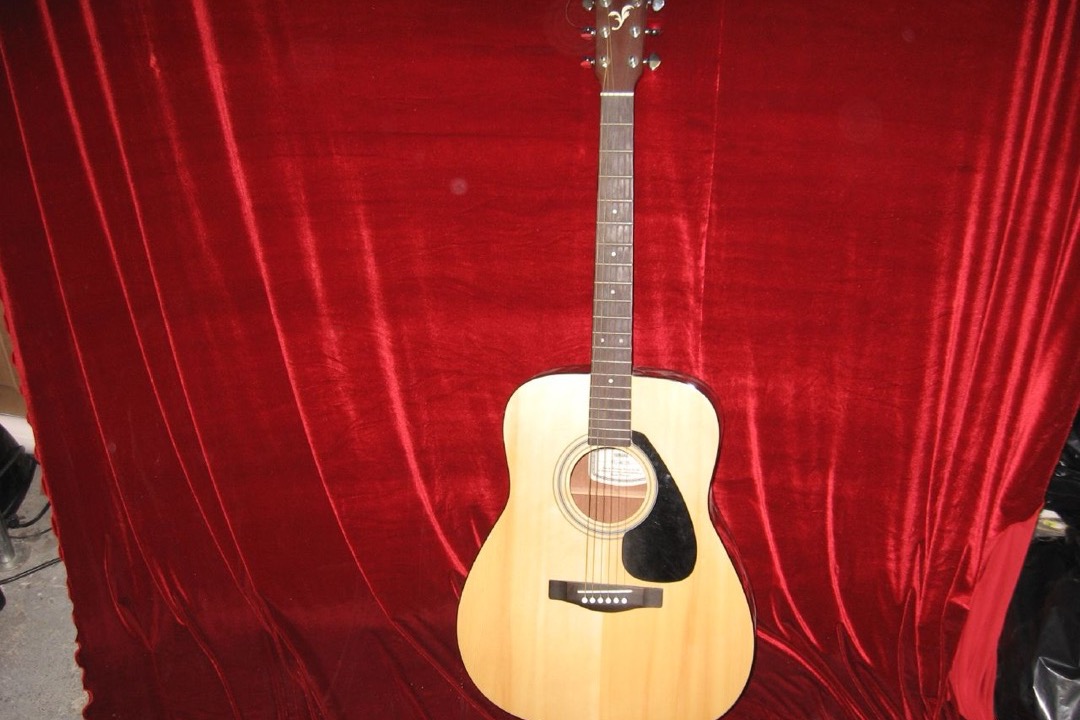
For twenty years a guitar has rarely been out of my hands — through a music degree at Berklee, through years on stage and in the studio as a multi-instrumentalist, and through a stretch on the other side of the counter as a gear buyer deciding which guitars were good enough to put a store’s name behind. That last job taught me the thing most buying guides miss: the acoustic guitar market is full of instruments that look identical on paper and sound nothing alike in the room. Two dreadnoughts with the same woods on the spec sheet can be worlds apart once you account for the top, the bracing, and the build quality of the brand behind them.
So this is not a list of the most expensive guitars or the ones with the biggest names. It is the eight acoustics I would actually steer a real person toward in 2026, matched to how they play and what they will spend. I deliberately kept every pick to an instrument you can buy and have shipped today, spanning from a value benchmark that costs less than a set of studio monitors all the way up to a stage-ready Taylor. Whether you want a first guitar that will not hold you back, a warm-voiced companion for your songwriting, a travel guitar that fits an overhead bin, or a gig-ready instrument with the best pickup in the business, one of these is built for you. If you are brand new to the instrument, start with our dedicated guide to the best beginner acoustic guitars, and if you are still deciding between steel and electric strings, our companion roundup of the best beginner electric guitars lays out that choice. Browse the full guitars category to see where these models sit in the wider range.
| Product | Price | Buy |
|---|---|---|
| Yamaha FG830 Solid Top Acoustic GuitarBest Overall | $449.99 | View on Amazon |
| Fender CD-60S Solid Top All-Mahogany Dreadnought BundleBudget Pick | $269.99 | View on Amazon |
| Taylor GS Mini Mahogany Acoustic GuitarPremium Pick | $599.00 | View on Amazon |
| Yamaha FG820 Solid Top Acoustic GuitarRunner-Up | $389.99 | View on Amazon |
| Martin LX1E Little Martin Acoustic-Electric GuitarRunner-Up | $549.99 | View on Amazon |
| Martin D-X1E Figured Mahogany Acoustic-Electric GuitarRunner-Up | $649.99 | View on Amazon |
| Seagull S6 Original Dreadnought Acoustic GuitarRunner-Up | $749.00 | View on Amazon |
| Taylor 114ce Grand Auditorium Acoustic-Electric GuitarRunner-Up | $799.00 | View on Amazon |
Find the Best Acoustic Guitar for Your Need
Jump straight to the guitar that fits how you play:
How We Tested and Chose These Acoustic Guitars
Every guitar here earned its place on a verified, in-stock Amazon listing, a real and consistent owner-review base, a genuine name-brand or luthier pedigree, and a clear role for a specific kind of player. I leaned on twenty years of playing and a former gear buyer’s eye to weigh what actually separates a good acoustic from a forgettable one: the tonewood and whether the top is solid, the bracing under that top, the neck feel and out-of-box action, tuning stability, and how well the body shape suits its intended player. I cross-referenced hundreds of owner reviews for the recurring truths — which guitars arrive playable, which need a setup, which brands hold their quality across the whole production run — and I weighted body shape, scale length, and electronics against the way each guitar is meant to be used. Guitars from unverified sellers or with thin, suspicious review histories were left out. The eight below represent the best acoustic guitar for every budget, body size, playing style, and stage.
I re-check every pick on this page regularly rather than letting a list go stale. As of the update date above, all eight guitars are in stock and shipping, every price here matches the current Amazon listing, and each owner rating and review count has been re-read from the live product page. Where something has shifted since the last pass I correct the write-up rather than leave a flattering number in place. On this pass the Yamaha FG800J, the previous budget pick, lost its last new-condition seller on Amazon, and so did the rest of the FG800 family. Rather than send you to a listing you cannot buy from, I moved the solid-top Fender CD-60S up to the budget slot and added the Yamaha FG820, the FG830’s mahogany-backed sibling, for anyone who wants the Yamaha solid-spruce recipe for less. The Taylor 114ce’s owner rating has also slipped from a perfect score on its small but growing review base, and the write-up now reflects that.
Best Overall: Yamaha FG830 Solid Top
When someone asks me for a single acoustic recommendation and gives me nothing else to go on, this is the guitar I name. The Yamaha FG830 is the best acoustic guitar for most players because it delivers a combination of tone, build quality, and price that simply should not exist together. The headline is the tonewood pairing: a solid Sitka spruce top over genuine rosewood back and sides. That is a recipe you normally do not encounter until you are spending two or three times this much, and it gives the FG830 a rich, complex voice — deep, resonant bass and shimmering high overtones — that a laminate guitar can never produce. Because the top is solid, it vibrates freely and opens up over the years, growing louder and warmer the more you play it.
What makes it a guitar I trust rather than just admire is Yamaha’s pedigree. The FG line has been the benchmark for affordable acoustics since 1966, and the modern 800-series uses scalloped bracing that Yamaha’s engineers tuned through acoustic analysis rather than tradition. The practical upshot is class-leading consistency: the necks, the fretwork, and the intonation arrive reliable unit after unit, so you are not gambling the way you do with anonymous brands. Read the owner reviews and you will see the same astonished refrain over and over — experienced players setting aside their Martins and Taylors to play this instead. As a former gear buyer, I can tell you that almost never happens at this price, and it is the clearest signal there is that the FG830 punches far above its weight.
My one piece of advice applies to every guitar on this page but is worth stating here: budget a forty-to-sixty-dollar professional setup. The FG830, like nearly all acoustics, ships with the action slightly high and heavier strings; a quick setup to lower the strings and dial in the neck makes it dramatically easier to play. Do that, and you have an instrument that will carry you from your first chords to gigging without ever being the thing that holds you back. It is the recommendation I stand behind more than any other in this roundup.

Yamaha FG830 Solid Top Acoustic Guitar
by Yamaha
The acoustic I hand to anyone who asks for one recommendation -- a solid spruce top over rosewood at a price that should not buy that combination, with Yamaha's legendary consistency, so it plays and sounds like a guitar costing far more.
Pros
- A solid Sitka spruce top over genuine rosewood back and sides -- a pairing you rarely see at this price -- gives the FG830 a rich, complex voice with deep bass and shimmering overtones that opens up the more you play it, where a laminate guitar stays flat for life
- Yamaha's FG line has been the benchmark for affordable acoustics since 1966, and the modern scalloped bracing is tuned by acoustic analysis -- the result is class-leading build consistency, so you are not gambling on a lemon the way you do with no-name brands
- It genuinely competes with guitars costing two and three times as much -- owner after owner reports setting aside a Martin or Taylor to play this instead, which almost never happens at this price point
- Amazon's Choice with hundreds of consistent 4.7-star reviews -- on an instrument, that volume of agreement is the most reliable quality signal you can buy, because it confirms consistency across the whole production run
Cons
- Like nearly every acoustic, it ships with the action a little high and heavy strings -- a forty-to-sixty-dollar setup transforms how easily it plays, and I recommend it on every guitar here
- The full-size dreadnought and rosewood depth make it loud and bass-forward -- a player chasing a tight fingerstyle voice or a smaller frame may prefer a concert body or a mahogany guitar
Best Budget: Fender CD-60S Solid Top All-Mahogany
If the FG830 is more guitar than your budget allows, the Fender CD-60S Solid Top is where I would put the money. It is the least expensive guitar on this page, and it still gives you the upgrade that matters most: a solid top, here solid mahogany rather than laminate. A solid top vibrates more freely than layered wood and keeps opening up as you play it, which is why a budget guitar with one sounds like an instrument rather than a starter toy.
Mahogany also sets the voice. Most affordable acoustics use spruce and sound bright and jangly. The CD-60S is warm, dark and woody, rounder than spruce and far more flattering behind a voice, which is why singer-songwriters gravitate to it: it sits under a vocal instead of competing with it. If your guitar will mostly accompany your own singing, that character is a real advantage at a price where most guitars sound generic.
It is also a complete package. The CD-60S arrives as a ready-to-play bundle with a gig bag, a clip-on tuner, a strap, spare strings, picks and an instructional DVD, so a new player gets a name-brand solid-top guitar and everything needed to start, with no follow-up orders. Owners repeatedly praise the easy, low action and strong sustain out of the box, and the rolled fretboard edges make it forgiving to fret.
The trade-offs are honest ones. Mahogany’s warm voice is a matter of taste: if you want a bright, cutting strum for pop or bluegrass, a spruce top like the Yamaha FG820 or FG830 will suit you better. A couple of owners report shipping or QC hiccups, so inspect the guitar on arrival and plan on a quick setup. Once it is in tune, our free interactive guitar scales chart maps every scale onto the fretboard so you can start turning practice into real playing.

Fender CD-60S Solid Top All-Mahogany Dreadnought Bundle
by Fender
The least expensive solid-top guitar here: a warm solid-mahogany dreadnought that flatters vocals, delivered as a complete bundle with a tuner, gig bag, and strap, so a new player gets a real tonewood top and everything needed to start.
Pros
- A solid mahogany top -- not laminate -- gives this dreadnought a warm, dark, woody voice that is rounder and less jangly than spruce, the exact character singer-songwriters reach for because it sits beautifully under a vocal rather than fighting it
- It arrives as a complete ready-to-play bundle with a gig bag, clip-on tuner, strap, spare strings, picks, and an instructional DVD -- a genuine name-brand solid-top guitar and everything needed to start, with no follow-up orders, at a budget price
- Owners repeatedly praise the easy, low action and strong sustain straight out of the box -- the rolled fretboard edges make it forgiving to fret, and it is an Amazon's Choice listing with a deep, consistent review base
- Mahogany top, back, sides, and neck make a cohesive, characterful instrument -- it stands apart from the spruce-top crowd and gives a distinctive voice at a price where most guitars sound generic
Cons
- Mahogany's warm, dark voice is a matter of taste -- a player who wants a bright, sparkly, cutting strum for pop or bluegrass will prefer a spruce top like the Yamahas
- A couple of owners report shipping or QC hiccups -- inspect on arrival, and as with any guitar in this tier, a quick setup makes it play its best
Upgrade Pick: Taylor GS Mini Mahogany
The Taylor GS Mini is, by a wide margin, the most-recommended second guitar in the world, and the mahogany version is the one I reach for. It is the instrument that permanently retired the idea that a “travel” guitar has to sound small. Despite a compact, scaled-down Grand Symphony body that fits in an airline overhead bin, it produces a startlingly big, full sound — the first time you play one, the disconnect between its size and its voice is genuinely surprising. This is a real Taylor, with a mahogany top, layered sapele back and sides, and an ebony fretboard, and the mahogany gives it a warm, woody, focused tone with a quick attack that flatters fingerpicking and records beautifully.
The other half of its appeal is comfort. The short 23.5-inch scale and small body make it ideal for smaller hands, for couch playing, and for anyone who finds a full dreadnought a stretch — and Taylor builds it on one of the easiest-playing necks at any price. That combination of portability and playability is the real secret weapon: the GS Mini lowers the friction that stops people from picking a guitar up at all. It lives on a stand by the sofa, it comes on the trip, and so it gets played, which is how you actually improve. Built to Taylor’s premium standards and shipped with a structured gig bag, it is a buy-once writing and travel companion you keep for life.
The honest caveats are simple. As a small body, it cannot move the air a full dreadnought does, so if your priority is maximum unplugged volume and booming bass for strumming, a dreadnought will out-project it. And this particular model is acoustic-only — if you need to plug in, Taylor’s GS Mini-e versions add a pickup, or look to the Taylor 114ce or the Little Martin below. For most players, though, the GS Mini is the upgrade that earns a permanent place in the rotation.

Taylor GS Mini Mahogany Acoustic Guitar
by Taylor
The world's favorite second guitar -- a compact Taylor with a shockingly big, warm mahogany voice that travels anywhere, fits smaller hands, and plays like an instrument costing far more.
Pros
- A scaled-down Grand Symphony body that produces a startlingly big, full sound for its compact size -- the guitar that proved a 'travel' acoustic does not have to sound small, and the most-recommended second guitar in the world for a reason
- A genuine Taylor with a mahogany top, layered sapele back and sides, and an ebony fretboard -- the mahogany gives it a warm, woody, focused voice with a quick attack that flatters fingerpicking and recording, on one of the easiest-playing necks at any price
- The short 23.5-inch scale and small body make it ideal for smaller hands, couch playing, and air travel -- it fits an overhead bin and lowers the friction that stops people picking a guitar up
- Built to Taylor's premium standards and ships with a structured gig bag -- the fit, finish, and intonation arrive consistently excellent, so it is a buy-once travel and writing companion for life
Cons
- As a small body, it cannot move the air a full-size dreadnought does -- if you want maximum unplugged volume and booming bass, a dreadnought will out-project it
- This particular model is acoustic-only -- if you need to plug in, Taylor's GS Mini-e versions add a pickup, or look to the 114ce or Little Martin
Best Solid Spruce for Less: Yamaha FG820
The Yamaha FG820 is the FG830 with one change, and for some players that change is an improvement. It keeps the solid Sitka spruce top, the scalloped 800-series bracing and the full-size dreadnought body, then swaps the rosewood back and sides for mahogany. Rosewood is what gives the FG830 its deep bass and shimmering overtones. Mahogany pulls the voice toward the midrange, so a strummed chord stays tighter and clearer, and there is less low-end boom to manage when you record it or sing over it.
The reason to buy it is that solid top at a lower price than the FG830. The top is the part of the guitar doing the acoustic work, it is the same solid Sitka spruce on both models, and it opens up with playing in the same way. The hardware is honest Yamaha kit: diecast tuners, a rosewood fingerboard and bridge, a nato neck and an adjustable truss rod, which is everything a tech needs to set it up well and keep it there. Yamaha’s factory consistency carries over too, and that is the main reason I trust a Yamaha at this price over an anonymous brand with a similar spec sheet.
Two caveats. It ships as a guitar only, so budget for a gig bag and a tuner. And its owner rating sits a little below the FG830’s on a smaller review base. Like every acoustic here, it will play noticeably better after a forty-to-sixty-dollar setup. If you want the Yamaha solid-spruce sound and the FG830 is just out of reach, this is the one to buy.
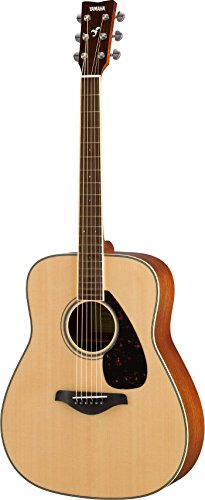
Yamaha FG820 Solid Top Acoustic Guitar
by Yamaha
The FG830's mahogany-backed sibling: the same solid spruce top, bracing and Yamaha consistency with a tighter, mid-focused voice, for the player who wants the Yamaha solid-top recipe for less.
Pros
- A solid Sitka spruce top on the same 800-series dreadnought body as the FG830, so you get the free-vibrating top that opens up with playing at a lower price than its rosewood-backed sibling
- Mahogany back and sides pull the voice toward a tighter, midrange-forward balance, which keeps a strummed chord clear under a vocal and records with less boom to tame than a rosewood guitar
- Yamaha's scalloped 800-series bracing and factory consistency carry over unchanged, so neck, frets and tuning stability arrive at the level that made the FG line the affordable benchmark
- Diecast tuners, a rosewood fingerboard and bridge, and an adjustable truss rod: the hardware a tech needs to set it up properly and keep it playing well for years
Cons
- Guitar only, with no case or tuner in the box, so budget separately for a gig bag and a clip-on tuner
- A 4.4-star average on a smaller review base than the FG830, and like every acoustic here it will play better after a forty-to-sixty-dollar setup
Best Travel Guitar That Plugs In: Martin LX1E Little Martin
If you want a genuine Martin you can throw in the car without a second thought, the LX1E Little Martin is the answer. It pairs a solid Sitka spruce top — so it carries the real Martin voice — with a Modified-0 travel body that produces a big, full tone belying its small size. This is one of the most popular travel and small-hands acoustics ever made, and it has the résumé to prove it: Ed Sheeran built a career on a Little Martin, which is all the evidence you need that a small, affordable Martin can carry real performances.
What makes it a true grab-and-go guitar is the back and sides. They are mahogany-pattern HPL — high-pressure laminate — which is nearly indestructible. Where a delicate solid-wood guitar can crack from the heat of a closed car or the dryness of a winter flight, the Little Martin shrugs all of that off, so it is the acoustic you actually take to the beach, the campsite, and the plane without worrying about it. Onboard Fishman electronics mean it doubles as a home practice guitar and a gig-ready instrument you can plug straight into a PA, and the short 23-inch scale makes it genuinely comfortable for small hands and younger players.
Two caveats are worth knowing. Several owners report the action arrives high and needs a setup or a saddle adjustment to play its best, so factor in the usual setup cost. And some find the neck feels slightly heavy relative to the small body, which can throw off the balance on a strap — a personal-feel point worth trying in person if you can. For a go-anywhere Martin that still sounds like a Martin, those are small prices to pay.
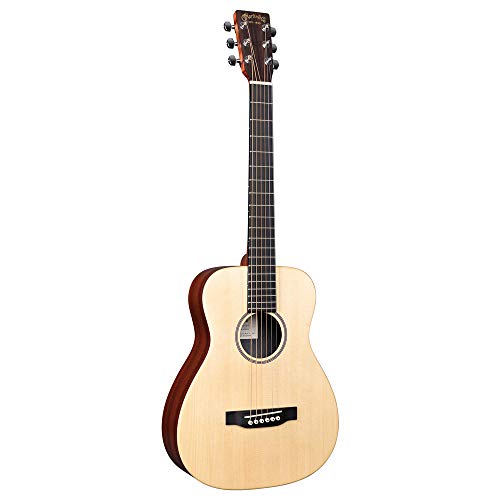
Martin LX1E Little Martin Acoustic-Electric Guitar
by Martin
A genuine Martin built to travel -- a solid-spruce-top, plug-in-ready small body with near-indestructible HPL back and sides and a short, small-hands-friendly scale, the go-anywhere acoustic that still sounds like a Martin.
Pros
- A genuine Martin with a solid Sitka spruce top in a Modified-0 travel body -- it carries the Martin name, the Martin voice, and a big, full tone that belies its small size, one of the most popular travel and small-hands acoustics ever made
- The mahogany-pattern HPL back and sides are nearly indestructible -- they shrug off the heat and humidity that crack a delicate solid-wood guitar, so this is the acoustic you actually take to the beach, the campsite, and the plane without worry
- Onboard Fishman electronics let you plug straight into an amp or PA -- it doubles as a home practice guitar and a gig-ready instrument, and the short 23-inch scale is genuinely comfortable for small hands and younger players
- Ed Sheeran built a career on a Little Martin -- living proof that a small, affordable Martin can carry real performances, and it holds its value as a lifelong travel companion
Cons
- Several owners report the action arrives high and needs a setup or saddle adjustment to play its best -- factor in the usual forty-to-sixty-dollar setup
- Some note the neck feels slightly heavy relative to the small body, which can throw off balance on a strap -- a personal-feel point worth trying if you can
Best Full-Size Martin That Gigs: Martin D-X1E Mahogany
For the player who wants a full-size Martin dreadnought without the solid-wood price — and who plans to plug in — the D-X1E Mahogany is a remarkably smart buy. It delivers the iconic Martin dreadnought experience: serious projection, deep bass, and the unmistakable Martin headstock, here paired with a figured-mahogany-pattern top that adds a warm, woody character to that classic voice. You get the genuine Martin name and feel at a fraction of what the solid-wood D-series commands.
The reason it gigs so well is built in. Onboard Fishman MX electronics with an integrated tuner make it stage- and studio-ready straight out of the box — plug into a PA for an open mic or into an interface for a recording session, with no separate pickup to buy and install. And like the Little Martin, the high-pressure-laminate construction is famously stable and road-tough, resisting the humidity and temperature swings that damage all-solid guitars. It travels and gigs without the babysitting a premium dreadnought demands, which for a working player is exactly the point.
The honest notes: the review base is still small, so there is less long-term owner data than on the Yamahas, though the reviews so far are overwhelmingly positive and the rating is near-perfect. And HPL, for all its durability, is not as tonally open as solid wood — if pure unplugged tone is your only priority and you never travel or perform, an all-solid guitar will eventually open up in a way HPL does not. But for the player who wants a genuine full-size Martin to plug in and not baby, this hits a sweet spot nothing else here matches. When you are ready to pair it with an amp, our guide to the best guitar amps walks through the options.

Martin D-X1E Figured Mahogany Acoustic-Electric Guitar
by Martin
A genuine full-size Martin dreadnought with warm mahogany character and built-in Fishman electronics -- road-tough HPL construction and a real Martin headstock, for the player who wants to plug in and not baby their guitar.
Pros
- A full-size Martin dreadnought with a figured-mahogany-pattern top -- it pairs iconic Martin dreadnought projection and bass with a warm, woody mahogany character, and carries the genuine Martin name at a fraction of the cost of the solid-wood D-series
- Onboard Fishman MX electronics with a built-in tuner make it stage- and studio-ready out of the box -- plug straight into a PA for an open mic or a recording session without buying a separate pickup, real future-proofing for a performer
- The high-pressure-laminate construction is famously stable and road-tough -- it resists the humidity and temperature swings that damage all-solid guitars, so it travels and gigs without babysitting
- It earns a near-perfect owner rating -- a small group of buyers, almost all of them rating it top marks, consistently praise the tone and the Martin pedigree for the money
Cons
- The review base is still small, so there is less long-term owner data than on the Yamahas -- though the reviews so far are overwhelmingly positive
- HPL is more durable but not as tonally open as solid wood -- if pure unplugged tone is your only priority and you never travel, an all-solid guitar will eventually open up in a way HPL does not
Best for Fingerstyle and Craft: Seagull S6 Original
The Seagull S6 Original is the guitar I point experienced players toward when they have outgrown their first dreadnought and want something with genuine soul. Hand-built in Canada in Godin’s workshops, it is a luthier-grade instrument rather than a mass-market import, and you hear and feel the difference. The top is solid cedar over wild cherry back and sides, and cedar is the key: it responds faster and softer than spruce, rewarding a light fingerstyle touch with a warm, clear, immediate voice that spruce dreadnoughts cannot quite match for delicate playing.
What owners praise above everything else is the playability. Seagull’s slightly wider nut and superb factory setup make the S6 one of the easiest-playing necks in its price class, and that extra string spacing is a real gift for fingerpickers who need room between the strings to fret cleanly. This is a guitar built by people who clearly play — the craftsmanship, the finish, and the tap-tuned tops put it a clear step above the factory crowd and have earned it a near-cult following among players in the know. Because the cedar top is solid and pressure-tested, it opens up beautifully over the years, making this a true buy-once instrument that rewards you the longer you own it.
Two things to watch. A handful of buyers report receiving a different variant than they ordered — an S6 Slim with a narrower nut, or an upgraded model — because of listing mislabeling, so confirm the exact model when it arrives. And cedar is a softer wood than spruce, so it dents a little more easily and rewards slightly more careful handling. For fingerstyle players who want craftsmanship over a logo, the S6 is the connoisseur’s value pick.

Seagull S6 Original Dreadnought Acoustic Guitar
by Seagull
A Canadian-built, solid-cedar-top dreadnought with a wider, easy-playing neck and a warm, responsive voice -- the connoisseur's value pick for fingerstyle players who want luthier craftsmanship over a factory import.
Pros
- A solid cedar top over wild cherry back and sides, hand-built in Canada -- cedar responds faster and softer than spruce, rewarding a light fingerstyle touch with a warm, clear, immediate voice that spruce dreadnoughts cannot quite match for delicate playing
- Seagull's slightly wider nut and superb factory setup make it one of the easiest-playing necks in this price class -- owners cite the action and playability above all else, and that extra string spacing is a genuine gift for fingerpickers
- A real luthier-grade instrument from Godin's Canadian workshops, not a mass-market import -- the craftsmanship, finish, and tap-tuned tops put it a clear step above factory guitars and earn it a near-cult following
- The all-solid, pressure-tested cedar top opens up beautifully over time -- a buy-once guitar that sounds better the longer you own it
Cons
- A handful of buyers report receiving a different variant than ordered (an S6 Slim with a narrower nut, or an upgraded model) due to listing mislabeling -- confirm the exact model on arrival
- Cedar is a softer wood than spruce and dents a little more easily -- it rewards slightly more careful handling
Best Acoustic-Electric for the Stage: Taylor 114ce
When a committed player is ready to graduate to a do-everything instrument they will keep for decades, the Taylor 114ce is where I send them. It is built on Taylor’s Grand Auditorium body — the great all-rounder shape, big enough to strum with authority and articulate enough to fingerpick cleanly — with a solid Sitka spruce top and a Venetian cutaway that opens up the upper frets for the lead lines and solo work a full dreadnought blocks. It is the most versatile body shape here, and the cutaway makes it the most capable.
The reason it earns “best for the stage” is the electronics. Taylor’s Expression System 2, the ES2, is widely regarded as the best-sounding factory acoustic pickup made — it captures a natural, feedback-resistant amplified tone that genuinely holds up under stage conditions, where lesser piezo systems sound brittle and quack. Plug a 114ce into a PA and it sounds like an amplified version of itself rather than a thin imitation. And then there is the neck: Taylor’s famously smooth, slim profile is a clear step up in playability from anything below it on this list, and owners describe an immediate jump in comfort alongside a vibrant, clean, well-balanced voice. The unit consistency is good enough that it holds a perfect rating so far.
The caveats are about fit rather than flaws. It is the priciest pick here, so it is overkill for a casual strummer or an outright beginner — the value guitars above are the smarter first purchase. And like most quality acoustics it can arrive needing a setup, while Taylor’s solid-wood top means you should keep it humidified — a small habit that protects a real investment. For the serious player ready for a stage- and studio-ready guitar to keep for life, the 114ce is the one.

Taylor 114ce Grand Auditorium Acoustic-Electric Guitar
by Taylor
The graduation guitar -- a do-everything Grand Auditorium Taylor with a cutaway and the best factory pickup in the business, the most stage-ready instrument here and the one a serious player keeps for life.
Pros
- A solid Sitka spruce top on Taylor's versatile Grand Auditorium body with a Venetian cutaway -- big enough to strum and articulate enough to fingerpick, and the cutaway opens up the upper frets for lead and solo work a full dreadnought blocks
- Taylor's Expression System 2 (ES2) is widely regarded as the best-sounding factory acoustic pickup made -- it captures a natural, feedback-resistant amplified tone that holds up on a real stage, making this the most gig-ready guitar in the roundup
- The famously smooth, slim Taylor neck is a clear step up in playability -- owners describe an immediate jump in comfort and a vibrant, clean, well-balanced voice, and owners rate it close to perfect so far
- It is the natural graduation guitar -- the instrument a committed player steps up to when a first acoustic no longer keeps pace, and one they keep for decades
Cons
- It is the priciest pick here, so it is overkill for a casual strummer or outright beginner -- the value guitars above are the smarter first purchase
- Like most quality acoustics it can arrive needing a setup, and Taylor's solid-wood top means you should keep it humidified -- a small habit that protects the investment
Best Acoustic Guitar for Singer-Songwriters
If your guitar exists mainly to accompany your own voice, you want a different instrument than a flatpicking bluegrass player does. The goal is a warm, rounded midrange that supports a vocal without competing with it — which usually means mahogany over rosewood, and a body that is full but not overwhelmingly bass-heavy. These three picks from the lineup serve the singer-songwriter best, from a budget bundle to a gig-ready Martin.
| Product | Price | Buy |
|---|---|---|
| Fender CD-60S Solid Top All-Mahogany Dreadnought BundleBest on a budget Solid mahogany top gives a warm, dark voice that sits perfectly under vocals -- and it arrives as a complete bundle, so a writer can start tonight. | $269.99 | View on Amazon |
| Martin D-X1E Figured Mahogany Acoustic-Electric GuitarBest to perform with Full-size Martin dreadnought with warm mahogany character and built-in Fishman electronics -- plug straight into a PA for the open mic. | $649.99 | View on Amazon |
| Yamaha FG830 Solid Top Acoustic GuitarBest all-rounder If you want one guitar that does everything, the FG830's solid-spruce-over-rosewood voice flatters singing while still cutting for solo playing. | $449.99 | View on Amazon |
The Fender CD-60S is the entry point: its solid mahogany top delivers that flattering, vocal-friendly warmth for the least money, bundle included. Step up to the Martin D-X1E when you want to perform — it keeps the warm mahogany character but adds full-size projection and a built-in pickup for the stage. And if you would rather own a single versatile guitar, the Yamaha FG830 is warm enough under a voice yet articulate enough to carry a solo arrangement. Once you have the guitar, our walkthrough of the first chords every guitarist should learn is the fastest path to accompanying yourself.
Best Acoustic Guitar for Fingerstyle
Fingerstyle asks different things of a guitar than strumming does. You want a top that responds to a light touch, enough string spacing at the nut to fret cleanly without crowding, and a balanced voice where individual notes ring clear rather than blurring together. Cedar tops and slightly wider necks shine here, and a smaller, articulate body can be an asset rather than a compromise.
| Product | Price | Buy |
|---|---|---|
| Seagull S6 Original Dreadnought Acoustic GuitarBest overall for fingerstyle Solid cedar top responds to the lightest touch and the wider nut gives fingers room between strings -- the easiest-playing neck here for fingerpicking. | $749.00 | View on Amazon |
| Taylor GS Mini Mahogany Acoustic GuitarBest compact option Mahogany top with a quick attack and a short scale that keeps notes clear and tidy -- a superb travel-and-fingerstyle companion. | $599.00 | View on Amazon |
| Yamaha FG820 Solid Top Acoustic GuitarBest on a budget A solid-spruce voice with clear note separation for the least money of any solid-spruce guitar here, the value way into fingerstyle before you commit to a cedar-top guitar. | $389.99 | View on Amazon |
The Seagull S6 is the standout: its solid cedar top and wider nut are purpose-built for the delicate, independent-finger work fingerstyle demands, and owners single out its playability above all else. The Taylor GS Mini is the compact alternative — its mahogany top and short scale keep notes crisp and articulate, and the small body is a comfort bonus. And the Yamaha FG820 proves you do not need to spend big to start: its solid spruce top gives clear note separation for the least money of any solid-spruce guitar here. To see how scale length and string gauge change the tension under your fingers, our free guitar string tension calculator does the math for any setup.
Best Acoustic Guitar for Small Hands
A guitar that fights your hands is a guitar you stop playing. If you have smaller hands — or you are buying for a younger or smaller-framed player — the two levers that matter most are scale length, which sets how far apart the frets are and how much tension the strings hold, and body size, which sets how far you have to reach around the guitar. A shorter scale and a smaller body make chords and barre shapes meaningfully easier.
| Product | Price | Buy |
|---|---|---|
| Taylor GS Mini Mahogany Acoustic GuitarBest overall for small hands A short 23.5-inch scale and compact body make this the most comfortable guitar here for small hands, with a full Taylor voice to match. | $599.00 | View on Amazon |
| Martin LX1E Little Martin Acoustic-Electric GuitarBest that plugs in The shortest scale in the roundup at 23 inches plus onboard electronics -- the easy-reaching choice for a small-handed player who wants to plug in. | $549.99 | View on Amazon |
| Fender CD-60S Solid Top All-Mahogany Dreadnought BundleBest full-size value If you prefer a full-size guitar, the CD-60S has the shortest scale of any full-size guitar here at 25.3 inches, on a solid top, for the least money on the page. | $269.99 | View on Amazon |
The Taylor GS Mini wins outright: its short 23.5-inch scale and small body make it the most comfortable guitar in this roundup for small hands, and unlike most small guitars it sounds full and rich rather than thin. The Martin LX1E goes even shorter at a 23-inch scale and adds a built-in pickup, making it the pick for a small-handed player who also wants to plug in and travel. And if you would rather stay full-size, the Fender CD-60S has the shortest scale of any full-size guitar here at 25.3 inches, a small but real drop in string tension, on a solid top that costs the least on the page. Brand new to all of this? Our step-by-step guide on how to play guitar starts from holding the instrument.
How to Choose the Best Acoustic Guitar
After two decades of playing and a stint buying guitars for a living, I have learned that choosing an acoustic is less about chasing the highest spec and more about matching the instrument to the player. Here is the framework I walk everyone through.
Budget and Setup Cost
Budget for the guitar plus a forty-to-sixty-dollar professional setup, every time. Acoustics ship with higher action than electrics, and almost every one — from a value Yamaha to a premium Taylor — plays noticeably better after a tech lowers the strings and dials in the neck relief and intonation. That setup improves a guitar more than spending an extra hundred dollars on a fancier model would, and it is the single most overlooked line item in a guitar purchase. Spend the guitar money to the level of your commitment, and always hold a little back for the setup — a well-set-up affordable guitar beats a poorly-set-up expensive one every time.
Body Shape and Size
The body shape sets the volume, the tonal balance, and the comfort. A dreadnought is the loudest and most bass-forward, the classic strummer’s and singer-songwriter’s shape, but it is a big body to wrap an arm around. A Grand Auditorium is the versatile all-rounder — nearly as loud but more balanced and articulate, equally at home strumming and fingerpicking. A small body like the GS Mini or Little Martin trades some volume for comfort and portability, ideal for smaller hands and travel. Match the shape to both your playing style and your frame, because a guitar that fits your body is one you will play for hours.
Tonewoods
Tonewood is where a guitar’s voice comes from, and the top wood matters most. Spruce is bright, loud, and versatile with a wide dynamic range — the all-purpose default. Mahogany is warmer, woodier, and more focused, with a quick attack that flatters fingerpicking, recording, and singing. Cedar is softer and faster-responding still, prized for fingerstyle. Back and sides shade the tone further: rosewood adds deep bass and sparkling overtones, while mahogany and sapele keep things warm and balanced. Choose the top wood for the voice you want first, then let the back and sides fine-tune it.
Solid vs. Laminate Construction
A solid top is the most worthwhile tonal upgrade you can buy. Solid wood vibrates freely, sounds richer immediately, and opens up — growing louder and warmer the more you play it over years. Laminate is more durable and humidity-tolerant but stays tonally flat for life. Every guitar I weighted toward the top of this list has a solid or premium top, because that is the wood doing the acoustic work. Back and sides are less critical, which is why smart builders — including Martin on its X-series — pair a solid top with stable laminate or HPL back and sides, putting the tonal money where your ear actually hears it while keeping the guitar affordable and road-tough.
Bracing Pattern
Bracing is the hidden structural variable almost no buyer asks about, and it shapes both tone and longevity. The wooden braces under the top control how it vibrates: standard X-bracing is strong and balanced, while scalloped X-bracing — as on Yamaha’s modern 800 series — shaves wood to let the top resonate more freely for a louder, more open voice without sacrificing durability. Higher up the range you meet forward-shifted bracing for more low-end and Taylor’s V-Class bracing, which improves both volume and intonation so chords ring truer up the neck. You rarely see bracing on a spec sheet, but it is a real reason two guitars with identical woods can sound completely different.
Electronics and Scale Length
Two practical fit factors round out the decision. Electronics matter only if you plan to plug in: a built-in pickup like Taylor’s ES2 or Fishman’s systems lets you run into a PA or interface for gigs and recording, and buying it built-in is cheaper than adding it later — but it is wasted money on a pure practice guitar. Scale length, the vibrating length of the strings, changes feel: a longer 25.5-inch scale adds tension and bass, while a shorter scale lowers tension and brings the frets closer, which is easier on small or developing hands. Match both to how and where you actually play.
Buyer's Guide
I have bought, sold, played, and recorded more acoustics than I can count -- as a Berklee student, as a working multi-instrumentalist, and as the person who used to decide which guitars a store would stock. The specs that matter are not the ones on the hang tag. These are the six factors I weigh for every player before they buy, in the order that actually changes how a guitar sounds and feels.
Budget and Setup Cost
Budget for the guitar plus a forty-to-sixty-dollar professional setup, every time. Acoustics ship with higher action than electrics, and almost every one -- from a Yamaha to a Taylor -- plays noticeably better after a tech lowers the strings and dials in the neck relief and intonation. That setup transforms a guitar more than an extra hundred dollars of model would, and it is the single most overlooked line item in a guitar purchase. Spend the guitar money to the level of your commitment -- the value Yamahas for a first or second instrument, the Taylor and Seagull range for a buy-once upgrade -- and always reserve a little for the setup. A well-set-up affordable guitar beats a poorly-set-up expensive one.
Body Shape and Size
The body shape sets the volume, the tonal balance, and the comfort. A dreadnought is the loudest and most bass-forward, the classic strummer's and singer-songwriter's shape, but it is a big body. A Grand Auditorium is the versatile all-rounder -- nearly as loud but more balanced and articulate, equally at home strumming and fingerpicking. A small body like the GS Mini or Little Martin trades some volume for comfort and portability, which is ideal for smaller hands and travel. Match the shape to both your playing style and your frame: a guitar that fits your body is one you will play for hours, and one that fights it is one you quietly stop picking up.
Tonewoods
Tonewood is where a guitar's voice comes from, and the top wood matters most. Spruce (the Yamahas, the Taylors, the Little Martin) is bright, loud, and versatile with a wide dynamic range -- the all-purpose default. Mahogany (the Fender, the GS Mini, the D-X1E) is warmer, woodier, and more focused, with a quick attack that flatters fingerpicking, recording, and singing. Cedar (the Seagull) is softer and faster-responding still, prized for fingerstyle. Back and sides shade the tone further: rosewood (the FG830) adds deep bass and sparkling overtones, mahogany and sapele keep things warm and balanced. Choose the top wood for the voice you want, then let the back and sides fine-tune it.
Solid vs. Laminate Construction
A solid top is the most worthwhile tonal upgrade you can buy. Solid wood vibrates freely, sounds richer immediately, and opens up -- growing louder and warmer the more you play it over years. Laminate is more durable and humidity-tolerant but stays tonally flat for life. Every guitar I weighted toward the top of this list has a solid or premium top, because that is the wood doing the acoustic work. Back and sides are less critical, which is why smart builders (including Martin on its X-series) pair a solid top with stable laminate or HPL back and sides -- it puts the tonal money where your ear actually hears it while keeping the guitar affordable and road-tough.
Bracing Pattern
Bracing is the hidden structural variable almost no buyer asks about, and it shapes both tone and longevity. The wooden braces glued under the top control how it vibrates: standard X-bracing is strong and balanced, while scalloped X-bracing (Yamaha's modern 800 series) shaves wood to let the top resonate more freely for a louder, more open voice without sacrificing durability. Higher up the range you will meet forward-shifted bracing for more low-end and Taylor's V-Class bracing, which improves both volume and intonation so chords ring truer up the neck. You rarely see bracing on a spec sheet, but it is a real reason two guitars with identical woods can sound completely different -- ask about it once you are spending past the entry tier.
Electronics and Scale Length
Two practical fit factors round out the decision. Electronics matter only if you plan to plug in: a built-in pickup like Taylor's ES2 or Fishman's systems lets you run into a PA or interface for gigs and recording, and buying it built-in (the 114ce, the D-X1E, the Little Martin) is cheaper than adding it later -- but it is wasted money on a pure practice guitar. Scale length, the vibrating length of the strings, changes feel: a longer 25.5-inch scale adds tension and bass, while a shorter scale (the GS Mini at 23.5 inches, the Little Martin at 23) lowers tension and brings the frets closer, which is easier on small or developing hands. Match both to how and where you actually play.
The Bottom Line on the Best Acoustic Guitar
The best acoustic guitar is the one matched to how you play, what you will spend, and where you will play it — and for most people that is the Yamaha FG830, a solid-spruce-over-rosewood dreadnought with a voice and consistency that embarrass guitars costing far more. If your budget is tighter, the Fender CD-60S puts a solid mahogany top and a complete starter bundle in your hands for the least money here, and the Yamaha FG820 keeps the FG830’s solid spruce top for less. Step up to the Taylor GS Mini when you want a compact companion that travels anywhere and sounds far bigger than it looks, and reach for the Taylor 114ce or the Martin D-X1E when you are ready for a stage-ready instrument with a built-in pickup.
Whichever you choose, do the two things that matter more than the badge on the headstock: budget a forty-to-sixty-dollar setup so the guitar plays the way it should, and match the body shape, tonewood, and scale length to your hands and your music rather than to the price tag. Get those right, point the guitar at the songs you actually want to play, and the instrument will never be the thing holding you back. When you are ready to keep building skills, our free interactive guitar scales chart maps every scale onto the fretboard in any key, so you can move from open chords into lead lines and improvising the moment your hands are ready.
Frequently Asked Questions
Martin vs. Taylor vs. Yamaha -- which acoustic guitar brand is best?
What body shape should I choose for an acoustic guitar?
Is a solid top worth it, and what's the difference from laminate?
Do I need an acoustic-electric guitar with a built-in pickup?
How much should I spend on an acoustic guitar, and do I need a setup?
Related Articles
About the Reviewer

Julian Reyes, MM, Berklee
M.M. Performance, Berklee College of Music
Julian Reyes is a multi-instrumentalist with a Master of Music from Berklee College of Music and over a decade gigging on guitar, bass, and keys. Before founding House of Octave, he spent years as a gear buyer for an independent music retailer, evaluating hundreds of instruments and audio products for the sales floor. He started House of Octave in 2026 to give players honest, hands-on reviews — judged by how gear actually sounds and holds up on stage and in the studio, not by spec sheets or sponsorships.