10 Best Studio Headphones of 2026 for Music Production (Mixing, Recording, Open-Back & Budget)
Berklee-trained musician Julian Reyes reviews the 10 best studio headphones of 2026 for music production, matched by use: mixing, recording, open-back and budget.
Updated
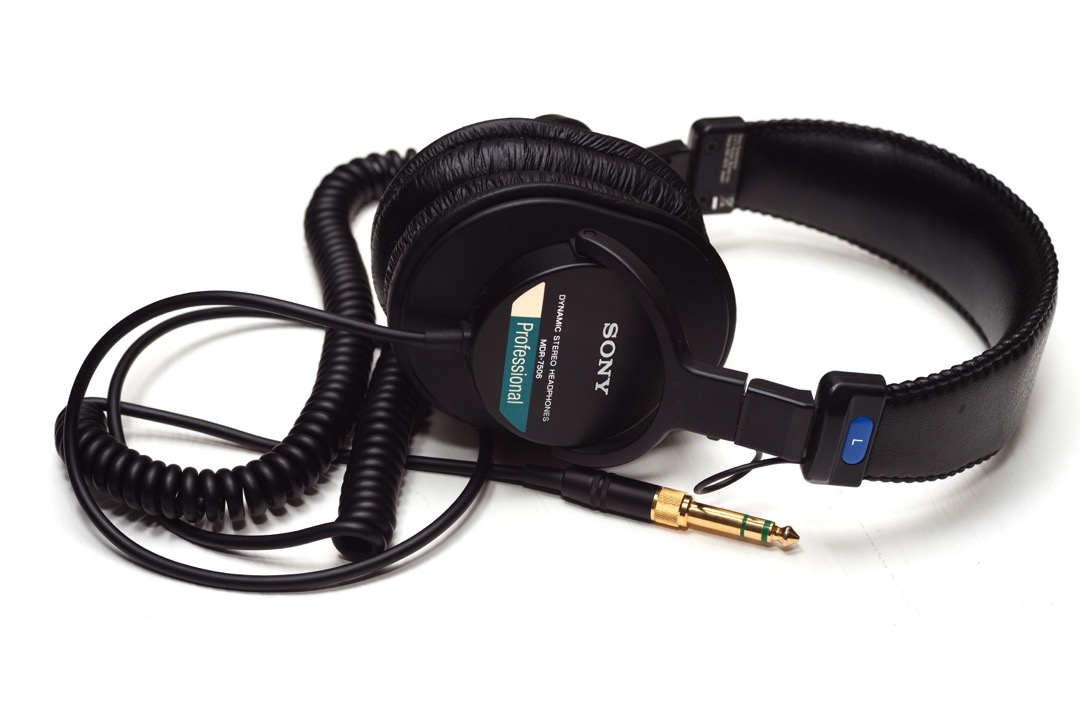
Most studio headphone guides are written by mix engineers, for mix engineers, and they quietly assume you are sitting in a treated room with monitors and reaching for headphones only to check a detail. That is not who I write for. The musicians I know buy studio headphones to do four unrelated jobs. They practise in them, they track in them at one in the morning because the house is asleep, they edit a podcast in them, and only then do they try to mix in them. A pair that measures beautifully and clamps like a vice is a bad purchase for that person no matter what the frequency plot says.
I studied at Berklee and spent years on the other side of a gear counter before that, which means I have watched a great many people buy the wrong pair for reasons that had nothing to do with sound. They bought an open-back for a room with a live microphone in it. They bought 250 ohms for a laptop. They bought something with a fixed cable and binned the whole unit two years later over a crackling left channel. Every one of those mistakes is avoidable with a single question asked before the purchase, and none of them shows up in a specification table.
So this best studio headphones roundup is organised the way I would work through it with you in person. Ten pairs for 2026, from an entry closed-back to a German-made reference can, each matched to a specific way of working in music production rather than ranked on a single line. If you are still assembling the chain that has to drive them, our best audio interfaces guide covers the box at the other end of the cable.
| Product | Price | Buy |
|---|---|---|
| Audio-Technica ATH-M50x Professional Studio Monitor HeadphonesBest Overall | $159.00 | View on Amazon |
| Audio-Technica ATH-M20x Professional Studio Monitor HeadphonesBudget Pick | $59.00 | View on Amazon |
| beyerdynamic DT 1990 Pro MKII (30 Ohm) Open-Back Studio HeadphonesPremium Pick | $698.99 | View on Amazon |
| Sennheiser HD 490 PRO Open-Back Professional HeadphoneRunner-Up | $344.00 | View on Amazon |
| beyerdynamic DT 770 Pro (80 Ohm) Closed-Back Studio HeadphonesRunner-Up | $199.99 | View on Amazon |
| beyerdynamic DT 990 Pro (250 Ohm) Open-Back Studio HeadphonesRunner-Up | $199.99 | View on Amazon |
| Sony MDR7506 Professional Large Diaphragm HeadphoneRunner-Up | $113.00 | View on Amazon |
| Audio-Technica ATH-M40x Professional Studio Monitor HeadphoneRunner-Up | $109.00 | View on Amazon |
| Sennheiser HD 25 On-Ear DJ HeadphonesRunner-Up | $130.34 | View on Amazon |
| AKG K240STUDIO Semi-Open Studio HeadphonesRunner-Up | $49.99 | View on Amazon |
Find the Best Studio Headphones for Your Need
Jump straight to the section that matches how you actually work:
- Best studio headphones overall
- Best studio headphones for mixing and mastering
- Best studio headphones for recording and tracking
- Best headphones for recording vocals
- Best open-back studio headphones
- Best closed-back studio headphones
- Best budget studio headphones
- Best studio headphones for a home recording studio
- More studio headphone picks by use case
How I Tested and Evaluated These Studio Headphones
I want to be precise about what this is and is not. I have no anechoic chamber and no measurement rig, and I did not put these ten pairs on a head-and-torso simulator to produce frequency plots. Any roundup claiming it measured ten headphones to a tenth of a decibel is asking you to take a great deal on trust. What I do have is years of buying-desk experience across most of these product lines, session time behind several of them, and a systematic read of what owners report once a pair has been worn daily for a year or more. That combination catches the things that decide whether you are happy, and it is honest about its limits.
Four criteria did most of the sorting. The first was fitness for purpose, which in this category means the open versus closed question answered honestly rather than fudged, because a headphone that leaks into a microphone is not a tracking headphone regardless of how it sounds. The second was drivability, checked against real gear rather than an abstraction: whether a given impedance reaches a working level from a laptop, from a basic interface, or only from a proper headphone amplifier. The third was long-session comfort, judged from the owner reports that describe hour four rather than minute five, since clamp and pad material change what you hear as well as how you feel.
The fourth was serviceability, which almost nobody weighs and everybody eventually cares about. A headphone with a detachable cable and a published parts catalogue is a different ownership proposition from one where a frayed lead ends the unit, and that difference matters more over five years than any subtle tuning preference. Every ASIN on this page was verified live on Amazon before publication, with stock, condition and seller checked rather than assumed, and nothing with a thin or suspicious review history was included.
Best Studio Headphones Overall
These ten pairs cover everything from a first closed-back to a reference open-back for mastering. Each is reviewed once in detail below. Farther down, use-case sections pull two or three together so you can compare and decide quickly for the specific job you have in front of you.
Best Overall: Audio-Technica ATH-M50x
The M50x is the default recommendation in this category and it earns the position, though not for the reason most people assume. It is not the most accurate headphone here. That is the beyerdynamic, or the Sennheiser open-backs depending on what you are listening for. What the M50x is, more reliably than anything else in the field, is the pair that does every job a home setup asks of it without being bad at any of them. You can track in it because it is closed and it isolates. You can practise in it for an hour without your ears cooking. You can rough out a mix in it and the result will travel. With 33,838 owner ratings behind it, the widest review base of anything on this page, there is essentially nothing left to discover about how it behaves in year three.
The engineering choices are practical rather than exotic. The 45mm drivers sit in cups that swivel far enough to drop one side off your ear, which is how people actually monitor against a cue mix, and the cable detaches with a twist-lock connector so a chair rolling over the lead costs you a spare rather than the headphone. The 38-ohm impedance means it reaches a proper level from a phone, a laptop, or any interface you are likely to own, so nothing else has to be bought to make it work. Aftermarket pads are widely available, which extends its life well past the point where the originals flatten out.
The honest caveats are real and worth knowing before you buy. The clamp is tight out of the box on larger heads and takes a couple of weeks of wear to settle. The low end reads slightly lifted against a true reference can, which is pleasant for practice and means a final bass decision wants a second check on something else or on speakers. And the build is plastic-forward in a way that feels less substantial than the beyerdynamic DT line in your hands, even though it holds up in practice. None of that stops it being the right first serious purchase for most people.

Audio-Technica ATH-M50x Professional Studio Monitor Headphones
by Audio-Technica
The headphone I would hand to most people buying their first serious pair: forgiving enough to track in, flat enough to work on, and documented by more owners than anything else here.
Pros
- The widest review base in the category by a wide margin, which means every quirk and every failure mode has already been documented publicly by someone who hit it first
- A flat, forgiving tuning that serves both tracking and casual mixing, so one pair covers the two jobs a home setup actually asks of a headphone
- Swiveling earcups let you drop one side off your ear for one-ear monitoring, which is how most people actually track against a cue mix
- The detachable cable is genuinely repairable, so a frayed lead is a spare part rather than the end of the headphone
Cons
- Clamping force is tight out of the box for some head sizes and takes a week of wear to settle
- The bass reads slightly boosted against a true reference can, so final low-end decisions want a second check
- The plastic-heavy build feels less substantial in the hand than the beyerdynamic DT line
Best Budget: Audio-Technica ATH-M20x
The M20x is the best closed-back entry point in this roundup, and the reason to recommend it over a cheaper consumer headphone has nothing to do with what it costs. It is voiced to be honest. If a vocal take is sibilant, you will hear the sibilance. If your kick and bass are fighting, you will hear them fight. Almost everything sold at the same level is voiced to be pleasant instead, which means it flatters a rough mix and lets you leave a problem in place for weeks. Going from earbuds to a pair of these is the single biggest improvement most people make to their monitoring, and it happens on day one.
For the tier, the practical details are unusually good. The clamp is comfortable enough for long sessions rather than merely tolerable, which the entry tier regularly gets wrong. At 47 ohms it drives happily from a phone or a basic interface, so nothing else needs buying to make it usable. And with a review base that is enormous for an entry SKU, the long-run ownership picture is genuinely well documented rather than guesswork.
The limits are exactly where you would expect them. The cable is fixed, which is the one specification I would change if I could, because it means a frayed lead ends a perfectly good headphone rather than costing a spare part. The padding is thinner than the M40x and M50x, which is unremarkable at minute ten and noticeable at hour two. And isolation, while decent, is not class-leading, so a loud cue mix can still find its way into a nearby microphone. If you already know you will be tracking vocals seriously, the beyerdynamic further down is the better tool. If you are buying a first real studio headphone, this is the one.

Audio-Technica ATH-M20x Professional Studio Monitor Headphones
by Audio-Technica
The first real studio headphone for someone who has been recording on earbuds, and accurate enough that nothing in the mix is quietly hiding.
Pros
- Genuinely accurate tuning for the tier, so nothing in a rough mix is hidden by a bass lift the way consumer headphones hide it
- A comfortable clamp for long sessions, which is not something the entry tier usually gets right
- An enormous review base for an entry SKU, so the long-run ownership picture is unusually well documented
- Drives easily from a phone or a basic interface, with no amp and no adapter required to reach a usable level
Cons
- The fixed cable means there is no repair path if it frays
- Thinner padding than the M40x and M50x, which shows up after a couple of hours
- Less isolation than the best closed-backs here, so loud cue mixes can still reach a nearby microphone
Best Upgrade: beyerdynamic DT 1990 Pro MKII
The DT 1990 Pro MKII is the reference can on this page, and it is the pair you buy when the limiting factor in your mixes has stopped being the room or the arrangement and has started being what you can hear. Its imaging is the thing owners return to repeatedly: it places elements in a way that survives the move to speakers, which is the only test of a mixing headphone that actually matters. Mastering engineers use the DT 1990 lineage for a reason, and the MKII refines rather than reinvents it.
One specification deserves a correction before anything else. Amazon’s auto-generated specification table for this listing calls the driver planar magnetic. It is not. It is a Tesla dynamic driver, the same operating principle as every other headphone on this page, executed with a stronger magnetic circuit. The more consequential engineering news is the impedance. The original DT 1990 was a 250-ohm headphone that really did need a dedicated amplifier, and the MKII revision brings it to 30 ohms, which means it reaches a proper level from an ordinary audio interface. That change quietly removes a second purchase that used to be mandatory at this tier, and it is the single biggest reason this pair is now practical in a home studio rather than only in a commercial one.
The rest is what you expect from a German-built beyerdynamic: velour pads that stay comfortable through a session long enough to make real decisions, a detachable cable, a case and spare cushions in the box, and a unit sold direct by the manufacturer so parts and warranty come from the people who made it. The honest counterweights are the outlay, which is a serious one against a home studio budget, the open back, which leaks audibly to anyone in the room and rules the pair out for tracking, and the review history, which is genuinely shallow because this is the newest revision here. If you need one headphone to do everything, this is not it. If you need the one that tells you the truth, it is.

beyerdynamic DT 1990 Pro MKII (30 Ohm) Open-Back Studio Headphones
by beyerdynamic
A reference-grade open-back that the 30-ohm revision finally made practical to run from an ordinary interface instead of a dedicated amplifier.
Pros
- Reference-grade imaging that reviewers repeatedly say translates to real mixes rather than flattering them
- The 30-ohm MKII revision drives properly without a dedicated amp, which is unusual at this tier and removes a hidden second purchase
- Velour comfort that holds up across long mastering sessions, with a case and spare cushions in the box
- Made in Germany and sold direct by beyerdynamic, so the service and parts path is the manufacturer rather than a reseller
Cons
- A serious outlay against a home studio budget, and the gap to the rest of this page is large
- The open back leaks audibly to anyone else in the room, and into any microphone nearby
- The newest revision here, so its review history is still shallow compared with the staples
Best for Mixing and Mastering: Sennheiser HD 490 PRO
The HD 490 PRO does something no other headphone on this page does, and it is not a gimmick. It ships with two complete sets of ear pads, voiced differently: one set tuned for mixing, one for producing. Swapping pads changes the seal, the cavity and therefore the response, which is why worn pads quietly ruin an old headphone, and Sennheiser has turned that physical fact into a feature. In practice it means you can work in a slightly more forgiving voicing while writing and arranging, then swap to the analytical set when you sit down to balance the mix, using one pair the whole time.
The underlying headphone is a wide, uncoloured open-back with an easy, natural presentation and very little editorialising of its own. Placement decisions are easy to hear rather than easy to guess, and at 7.05 ounces it is the lightest of the open-backs here, which is what makes the fourth hour of a session survivable. The cable detaches and retracts, the pads are washable and replaceable, and the whole design reads as something intended to be serviced rather than discarded.
Two things to be clear about. At 130 ohms it wants a real headphone amplifier or a capable interface output, not a laptop jack, and plugging it into a MacBook will make it sound smaller than it is. And it is a young product with a much shallower review history than the Audio-Technica and beyerdynamic staples on this page, so the multi-year durability picture is not yet written. Being open-backed, it also leaks, which means it belongs at the mix position rather than in a tracking room.

Sennheiser HD 490 PRO Open-Back Professional Headphone
by Sennheiser
The only headphone here that ships two separately voiced ear-pad sets, which turns one pair into a mixing can and a producing can.
Pros
- Ships with two distinct ear-pad sets voiced separately for mixing and for producing, which nothing else here does
- A wide, uncoloured soundstage that makes placement decisions easy to hear rather than easy to guess
- Washable, replaceable pads and a detachable retractable cable point at a long service life
- The lightest of the open-backs here, which is what makes a four-hour session survivable
Cons
- At 130 ohms it wants a real headphone amp or interface rather than a laptop jack
- The open back leaks, so it is not a tracking headphone in a room with a live microphone
- A young SKU with a much shallower review history than the Audio-Technica and beyerdynamic staples
Best for Vocal Tracking: beyerdynamic DT 770 Pro (80 Ohm)
If you walk into a commercial studio and look at what is hanging on the hook in the vocal booth, it is very often a DT 770 Pro. That is not brand inertia. Tracking asks for one thing above all others, which is that the cue mix stays inside the headphone and out of the microphone, and the DT 770’s closed cups and dense pads do that better than most of the field. When a vocalist wants the click loud, this is the pair that lets them have it without a ghost tick appearing under every quiet line in the edit.
The variant matters more here than on anything else on this page, so be deliberate about it. The DT 770 Pro is sold in 32, 80 and 250-ohm versions, and the 80-ohm model is specifically the one voiced to run cleanly from an audio interface without an outboard amplifier. That is the sweet spot for a home studio: enough impedance to behave well on a decent headphone output, not so much that you need to buy something else to hear it properly. If you are choosing an interface at the same time, our best budget audio interfaces guide covers which outputs actually have the drive to do this.
Build is where beyerdynamic has always separated itself. The velour pads and steel headband are built for daily handling over years rather than occasional use, and both are replaceable, which is what keeps these pairs in service long after their contemporaries have been thrown out. The exception is the cable, which is fixed on a 3m straight run, and that is the one real durability weak point in an otherwise serviceable design. The clamp is also firm, which is exactly what you want for isolation and exactly what fatigues you on a very long session.

beyerdynamic DT 770 Pro (80 Ohm) Closed-Back Studio Headphones
by beyerdynamic
The closed-back that lives in vocal booths for a reason, and the 80-ohm version is specifically the one that runs properly off an interface.
Pros
- The de facto vocal-booth standard, and the 80-ohm variant is specifically the one voiced to run cleanly off an interface without an outboard amp
- Passive isolation genuinely keeps click and cue bleed out of the microphone, which is the whole job in a tracking headphone
- Velour pads and a steel headband built for years of daily handling rather than occasional use
- Sold direct by beyerdynamic USA, so warranty and replacement parts come from the manufacturer
Cons
- The fixed cable is the one real durability weak point in an otherwise repairable design
- Sustained clamp pressure can fatigue over a very long session
- Still wants an interface rather than a phone to reach a proper level
Best Open-Back Mixing Reference: beyerdynamic DT 990 Pro (250 Ohm)
The DT 990 Pro is the open-back that the most people have actually lived with. It is the most thoroughly reviewed open-back in this roundup, and that depth of owner history is worth something concrete: every quirk, every pad replacement cycle, every failure mode has been described in public by someone who hit it first. For a headphone you intend to use for a decade, that record is more useful than any measurement.
What it does well is space. The open back gives it a wide, natural stereo image that makes reverb tails, panning and depth legible in a way no closed-back on this page manages, and it has been trusted as a mixing reference for long enough that plenty of engineers know exactly where it lies. Velour pads and a steel headband mean it can be re-padded rather than replaced, and it is sold direct by beyerdynamic USA, so the parts path is the manufacturer.
The 250-ohm impedance is the thing to take seriously. This is the pair on this page that genuinely needs an amplifier or a capable interface headphone output, and plugged into a laptop it will sound quiet, thin and disappointing. Owners blame the headphone for this constantly, and the headphone is not the problem. If your entire chain is a laptop jack, buy something else or buy the amplifier first. The fixed coiled cable is the other limitation, because it caps the service life of a design that is otherwise built to be maintained. And being open, it puts your mix into the room, which makes it useless anywhere near a live microphone.

beyerdynamic DT 990 Pro (250 Ohm) Open-Back Studio Headphones
by beyerdynamic
The open-back mixing reference with the deepest owner history in this roundup, provided you own something that can actually drive 250 ohms.
Pros
- The most thoroughly reviewed open-back in this roundup, so its behaviour over years of use is unusually well documented
- A wide, natural stereo image long trusted as a mixing reference rather than a hi-fi presentation
- Velour pads and a steel headband that survive years of use and can be re-padded rather than replaced
- Sold direct by beyerdynamic USA, with the manufacturer behind the warranty
Cons
- At 250 ohms it genuinely needs an amp or a capable interface and is audibly quiet straight off a laptop
- The fixed coiled cable cannot be replaced, which caps the service life of an otherwise repairable headphone
- The open design puts your mix into the room, so it is useless anywhere near a live microphone
Best for Broadcast and Field Monitoring: Sony MDR-7506
The MDR-7506 has been on location carts, in edit bays and around the necks of boom operators for decades, and it got there by being relentlessly practical. It folds flat into the supplied case, which is the single reason it lives in so many field kits rather than a nicer-sounding rival. It isolates strongly enough to judge a take while standing next to the thing making the noise. And it is tuned neutral and unhyped, which means it will tell you about the air conditioning, the plosive and the handling noise rather than smoothing them over. For checking whether a recording is usable, that honesty is the whole point.
At 63 ohms it wants an interface or a field recorder rather than a phone, which is exactly the gear it is used with anyway. The 40mm drivers and the tight seal give it a forward, detailed midrange that suits speech particularly well, and it is the reason this pair and the ATH-M40x end up doing similar jobs for different people. If your work is dialogue, interviews or location sound rather than music, this is the more natural choice of the two.
The weaknesses are old and well known. The cable is fixed and coiled, which means a cable fault ends the unit, and the coil itself is genuinely annoying at a desk where it wants a hook it does not have. The stock earpads wear faster than beyerdynamic velour and will flake within a couple of years of daily use, though replacements are cheap and universally available. Neither is a reason to avoid it. Both are reasons to buy a spare set of pads with it and to treat the cable carefully.

Sony MDR7506 Professional Large Diaphragm Headphone
by Sony
A broadcast standard that folds into a bag, isolates well, and tells you the truth about a take rather than flattering it.
Pros
- A broadcast and film standard with decades of accumulated trust behind it, which is why it turns up on so many carts and location bags
- Folds flat into the supplied case, which is exactly why it lives in so many field kits
- Strong isolation for the outlay, enough to judge a take standing next to a noisy source
- A neutral, unhyped tuning that hides nothing, including the problems you would rather not hear yet
Cons
- The non-detachable cable is a genuine long-term liability, because a cable fault ends the whole unit
- The coiled run is unwieldy at a desk and wants a hook or a clip
- The stock earpads wear faster than beyerdynamic velour and need replacing on a working pair
Best for Podcasting and Long Sessions: Audio-Technica ATH-M40x
The M40x is the headphone I recommend most often to people whose work is talking rather than playing, and the reason is counterintuitive. It is less exciting than the M50x. Its low end is noticeably more restrained, and it does not do the thing where a kick drum lands in your chest. Monitoring a voice for four hours, that restraint is precisely what you want, because a lifted low end makes every male voice sound better than it is and you will make EQ decisions accordingly. A flat headphone tells you the room is boxy while you can still do something about it.
Everything practical about it is well judged for long-form work. Both a coiled and a straight cable are in the box and the connector detaches, so a lead failure is a spare part. The cups swivel for one-ear monitoring, which is how anyone conducting an interview actually works. The pads are the same pro-grade type as the rest of the M line and comfort is comparable to the M50x, so nothing about the fit is a compromise. And at 35 ohms it will run off a laptop, an interface, or a portable recorder without complaint. Pair it with something from our best podcast microphones roundup and the monitoring half of a podcast setup is finished.
The honest limitations follow from the same design choice. If you were hoping for a fun listening headphone for the commute, the flat voicing will read as thin, and you should buy the M50x instead. Isolation is good rather than class-leading, so a loud room still gets in and it is not the pair for tracking drums. And the build is the same plastic-forward construction as the rest of the M line, which is durable in practice but does not feel like it in the hand.

Audio-Technica ATH-M40x Professional Studio Monitor Headphone
by Audio-Technica
Flatter and more neutral than the M50x, which is precisely the trade a podcaster or a voice actor should want to make.
Pros
- A flatter and more neutral voicing than the M50x, which is exactly what you want monitoring a voice for hours
- The detachable cable keeps it repairable, and both a coiled and a straight lead are in the box
- Swiveling cups and pro-grade pads survive multi-hour streams and edits without becoming a distraction
- Comparable comfort to the M50x with a flatter response, so nothing about the fit is a step down
Cons
- Noticeably less bass presence than the M50x, which is a virtue for speech and a disappointment for anyone expecting a fun tuning
- Isolation is good rather than class-leading, so a loud room still gets in
- The same plastic-forward build as the rest of the M line
Best for Drummers and Loud Rooms: Sennheiser HD 25
The HD 25 exists because DJs and broadcast engineers needed a headphone that stays audible and stays on your head in a genuinely loud environment, and those two requirements happen to describe playing drums exactly. A drum kit produces sound pressure high enough that most headphones lose the argument: you push the cue mix up to hear it over the kit, and you end your session with tired ears and a headache. The HD 25 has high sensitivity and a hard seal, which means it gets loud enough at lower drive and lets you keep the cue mix somewhere safer.
The fit is the other half of the design. At 4.9 ounces it is the lightest headphone in this roundup by a clear margin, and the split headband and rotating cup are meant to be worn asymmetrically and still stay put while you move. Anyone who has had a heavy pair of around-ear cans slide during a fill knows why that matters. The single-sided cable is detachable and tough, and, more usefully than almost anything else in this category, every single wear part is a purchasable spare: pads, headband, capsules, cable. That is why twenty-year-old HD 25s are still working.
Two caveats, both genuine. The on-ear fit is polarising in a way the around-ear designs here are not. Some people wear them all day happily and some find the pressure on the ear itself uncomfortable after an hour, and there is no way to know which you are without trying. And the soundstage is small, smaller than any open-back on this page, which makes it a monitoring tool rather than a mixing one. It also has a much shallower review history than the Audio-Technica and beyerdynamic staples, though its reputation in the field far outruns its Amazon footprint.
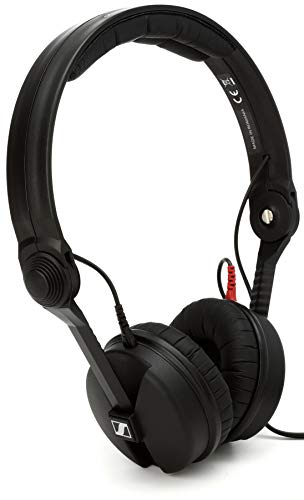
Sennheiser HD 25 On-Ear DJ Headphones
by Sennheiser
Built for DJ booths and broadcast trucks, which makes it the one headphone here designed around the sound pressure a drum kit actually produces.
Pros
- Built for DJ booths and live broadcast, which is to say built for exactly the sound pressure a drum kit produces
- The lightest headphone in this roundup by a clear margin, which matters when it is on your head behind a kit
- Every wear part, cable, pads and headband, is designed to be swapped rather than replaced wholesale
- High sensitivity keeps it audible in a loud room without pushing a cue mix into dangerous territory
Cons
- The on-ear fit is genuinely polarising over a long session in a way the around-ear designs here are not
- A smaller soundstage than any open-back on this page, so it is a monitoring tool rather than a mixing one
- A much shallower review history than the Audio-Technica and beyerdynamic staples
Best Budget Semi-Open: AKG K240 Studio
The K240 Studio has been in production in one form or another since the 1970s, and the current version is the least expensive pair on this page. What makes it interesting is not the outlay but the design: it is semi-open, which means it presents air and space in a way no closed-back at this level can. If you have only ever used sealed headphones, the first ten minutes with these is genuinely surprising, because the music stops sounding like it is happening inside your skull.
The XXL Varimotion transducer is the technical reason. It is a large-diaphragm design with a varying thickness across the membrane, which AKG has refined over decades rather than launched last year, and it produces a relaxed, even presentation that is easy to listen to for hours. The cable detaches and a screw-on 6.3mm adapter is included, which is a specification I would not expect at this level at all and which meaningfully extends the pair’s life. At 55 ohms it runs from an interface without fuss.
Be clear about what semi-open costs you. It leaks far more than the closed-back budget option here, which rules it out for tracking anywhere near a live microphone, and it lets the room in, so a noisy environment will intrude. The clamp is loose, which some players prefer and others find unstable if they move much. And the accessory kit is plainer than Audio-Technica’s budget line. Buy this as a second pair for editing and arranging, or as a first pair if nothing you do involves a microphone.

AKG K240STUDIO Semi-Open Studio Headphones
by AKG
An airy semi-open presentation and a detachable cable at a level where neither normally appears, and the least expensive pair on this page.
Pros
- A genuinely different, airier presentation than any closed-back at this level, which is the whole reason to consider semi-open
- The XXL Varimotion transducer is a decades-proven AKG design rather than a new and unproven one
- A detachable cable at this level is rare and welcome, because it turns a cable fault into a spare part
- A deep review base for the tier, so the long-run ownership picture is well documented
Cons
- The semi-open design leaks far more than the closed-back budget option here, which rules it out for tracking near a microphone
- A looser clamp that some players like and others find unstable when they move
- A plainer accessory kit than Audio-Technica's budget line
Best Studio Headphones for Mixing and Mastering
Mixing asks for the opposite of what tracking asks for. Nothing is recording, so leakage does not matter, which frees you to use an open-back and get the wider stereo image and the lower ear fatigue that come with it. What you want instead is a presentation that does not editorialise: a stereo field you can trust for panning decisions, a midrange that exposes rather than smooths, and enough comfort to stay objective at hour three, because fatigue makes people mix louder and brighter without noticing.
The three below differ on how much headphone the job justifies. The first is the one that adapts to two different jobs through its pad sets. The second is the long-serving reference with by far the deepest owner history, provided you can drive it. The third is the one to buy when hearing further is genuinely the limiting factor in your work.
| Product | Price | Buy |
|---|---|---|
| Sennheiser HD 490 PRO Open-Back Professional HeadphoneBest for mixing and mastering overall Two separately voiced pad sets let one pair cover both arranging and balancing, in the lightest open-back here | $344.00 | View on Amazon |
| beyerdynamic DT 990 Pro (250 Ohm) Open-Back Studio HeadphonesBest open-back reference for a working setup The deepest owner history of any open-back in this roundup, with a wide natural image, if you have an amp or a capable interface for 250 ohms | $199.99 | View on Amazon |
| beyerdynamic DT 1990 Pro MKII (30 Ohm) Open-Back Studio HeadphonesBest mastering-grade upgrade Reference imaging that translates to speakers, and the 30-ohm MKII revision runs it from an ordinary interface | $698.99 | View on Amazon |
Best Studio Headphones for Recording and Tracking
Tracking has one non-negotiable requirement and everything else is secondary: the cue mix must stay inside the headphone. An open-back in a room with a live microphone puts your click track into every take, and no amount of editing removes it cleanly from a quiet vocal. So this is a closed-back decision, and the ranking within it comes down to how hard the seal is and how comfortable it stays when a session runs long.
The second consideration is drive. Tracking almost always happens through an audio interface rather than a laptop jack, so moderate impedance is fine here in a way it is not elsewhere. All three below reach a proper level from any decent interface headphone output.
| Product | Price | Buy |
|---|---|---|
| beyerdynamic DT 770 Pro (80 Ohm) Closed-Back Studio HeadphonesBest for tracking overall The vocal-booth standard, with the isolation to keep a loud click out of the microphone and an 80-ohm rating an interface can drive | $199.99 | View on Amazon |
| Sony MDR7506 Professional Large Diaphragm HeadphoneBest for the engineer's position Neutral, strongly isolating and folds into a case, which is why it lives on location carts and in edit bays | $113.00 | View on Amazon |
| Audio-Technica ATH-M50x Professional Studio Monitor HeadphonesBest all-round tracking headphone Closed, forgiving and easy to drive, with swiveling cups for one-ear monitoring against a cue mix | $159.00 | View on Amazon |
Best Headphones for Recording Vocals
Recording vocals is the most demanding version of the tracking problem. The microphone is close to the singer’s head, it is usually a sensitive condenser, and the cue mix is often loud because singers pitch better when they can hear themselves clearly. That combination is exactly what turns a marginal seal into an audible click bleeding under every quiet phrase. Isolation is the first criterion, comfort is the second, and tonal accuracy comes third, because you are capturing rather than judging.
Consider the room as well as the singer. In a loud or lively space, a harder seal buys you more than a wider soundstage ever will.
| Product | Price | Buy |
|---|---|---|
| beyerdynamic DT 770 Pro (80 Ohm) Closed-Back Studio HeadphonesBest for vocal tracking Dense closed cups and velour pads keep a loud click out of a sensitive condenser, on the 80-ohm variant an interface can drive | $199.99 | View on Amazon |
| Sony MDR7506 Professional Large Diaphragm HeadphoneBest for the engineer monitoring the take Neutral and strongly isolating, so problems in the take are obvious while there is still time to fix them | $113.00 | View on Amazon |
| Sennheiser HD 25 On-Ear DJ HeadphonesBest for a loud or lively room High sensitivity and a hard seal stay audible without pushing the cue mix to a level that tires the singer | $130.34 | View on Amazon |
Best Open-Back Studio Headphones
Open-back headphones let air move freely behind the driver, which does two useful things. It relieves the pressure build-up inside a sealed cup that causes ear fatigue over a long session, and it produces a wider, more natural stereo image because the driver is not working into a small closed volume. That makes them the better tool for mixing, arranging and any long stretch of listening where nothing is being recorded.
It also makes them the wrong tool anywhere near a live microphone, and worth remembering: anyone else in the room can hear exactly what you are listening to. The three here span a wide range of drive requirement, which is the specification to check first.
| Product | Price | Buy |
|---|---|---|
| beyerdynamic DT 990 Pro (250 Ohm) Open-Back Studio HeadphonesBest open-back overall A wide natural image and the deepest owner history of any open-back here, on the condition that you can drive 250 ohms | $199.99 | View on Amazon |
| Sennheiser HD 490 PRO Open-Back Professional HeadphoneBest open-back for mix translation Two separately voiced pad sets and the lightest frame in this group, at an impedance that wants a real interface | $344.00 | View on Amazon |
| beyerdynamic DT 1990 Pro MKII (30 Ohm) Open-Back Studio HeadphonesBest open-back upgrade Reference-grade imaging in a Made in Germany build, and the 30-ohm revision runs without a dedicated amplifier | $698.99 | View on Amazon |
Best Closed-Back Studio Headphones
Closed-back is the default for anyone who records anything. The sealed cup keeps your cue mix out of the microphone and keeps the room out of your ears, and those two properties decide whether a take is usable far more often than tonal balance does. The trade is a narrower stereo image and more ear fatigue over a long stretch, which is why most working setups eventually add an open-back for mixing rather than replacing the closed pair.
Within closed-back, the real differences are how hard the seal is, how the pads behave at hour three, and whether the cable can be replaced when it eventually fails.
| Product | Price | Buy |
|---|---|---|
| Audio-Technica ATH-M50x Professional Studio Monitor HeadphonesBest closed-back overall Forgiving enough to practise in, flat enough to work on, with a detachable cable and swiveling cups | $159.00 | View on Amazon |
| beyerdynamic DT 770 Pro (80 Ohm) Closed-Back Studio HeadphonesBest closed-back for isolation The hardest seal here for tracking, with velour pads and a steel headband built for daily handling | $199.99 | View on Amazon |
| Sony MDR7506 Professional Large Diaphragm HeadphoneBest closed-back for portability Folds flat into its case and isolates strongly, which is why it has lived in field kits for decades | $113.00 | View on Amazon |
Best Budget Studio Headphones
The point of a budget studio headphone is not to save money, it is to stop lying to you. Consumer headphones at the same level are voiced to impress in a short demo, which means a lifted bass shelf and a lifted treble, and mixing on that voicing produces a thin, bright result everywhere else. An honest pair at the entry tier will sound less exciting on day one and make your work travel better within a month.
The choice among these three comes down to what you do in the room. If a microphone is ever live, take the closed-back. If it is only ever you, editing and arranging alone, the semi-open gives you a presentation the closed pairs cannot. And if your sessions run long and your work is mostly speech, the flatter of the Audio-Technica pair is worth the step up.
| Product | Price | Buy |
|---|---|---|
| Audio-Technica ATH-M20x Professional Studio Monitor HeadphonesBest closed-back entry point An honest, accurate voicing with a comfortable clamp, and it drives from a phone or a basic interface with nothing else to buy | $59.00 | View on Amazon |
| AKG K240STUDIO Semi-Open Studio HeadphonesLeast expensive pick on this page A semi-open presentation and a detachable cable at a level where neither normally appears, if nothing in your room is recording | $49.99 | View on Amazon |
| Audio-Technica ATH-M40x Professional Studio Monitor HeadphoneBest budget option for long sessions The flattest voicing of the three and a detachable cable, which is what you want monitoring a voice for hours | $109.00 | View on Amazon |
Best Studio Headphones for a Home Recording Studio
A home studio has one constraint a commercial one does not: the same pair usually has to do every job. You track in it, you edit in it, you practise in it, and you attempt a mix in it, often in a room with no acoustic treatment and a neighbour on the other side of a wall. That argues strongly for closed-back as the first purchase, and for a voicing forgiving enough that you will actually wear it for pleasure as well as work.
The second consideration is what else is on the desk. If your interface is modest, stay under 100 ohms and everything below will reach a proper level from it. Our best audio interfaces for guitar guide covers the outputs on the boxes most home players end up buying.
| Product | Price | Buy |
|---|---|---|
| Audio-Technica ATH-M50x Professional Studio Monitor HeadphonesBest home studio headphone overall One pair that tracks, practises and roughs out a mix competently, with the deepest owner record on this page | $159.00 | View on Amazon |
| Audio-Technica ATH-M40x Professional Studio Monitor HeadphoneBest for long editing sessions A flatter voicing than the M50x and a detachable cable, which suits speech editing and long stretches at a screen | $109.00 | View on Amazon |
| beyerdynamic DT 770 Pro (80 Ohm) Closed-Back Studio HeadphonesBest for tracking in an untreated room The hardest seal here, so a loud cue mix stays out of the microphone even in a small untreated room | $199.99 | View on Amazon |
More Studio Headphone Picks by Use Case
A few narrower needs come up often enough to deserve a direct answer, and each of these is the pick for one specific job rather than a general recommendation.
| Product | Price | Buy |
|---|---|---|
| Sennheiser HD 25 On-Ear DJ HeadphonesBest for drummers and loud rooms The lightest pair here with a hard seal and high sensitivity, so a kit does not force the cue mix into unsafe territory | $130.34 | View on Amazon |
| Audio-Technica ATH-M40x Professional Studio Monitor HeadphoneBest for podcasting and streaming A flat voicing that exposes room tone and plosives while there is still time to fix them, on a detachable cable | $109.00 | View on Amazon |
| Sony MDR7506 Professional Large Diaphragm HeadphoneBest for field recording Folds flat into its supplied case, isolates strongly, and runs happily from a portable recorder or interface | $113.00 | View on Amazon |
| AKG K240STUDIO Semi-Open Studio HeadphonesBest semi-open option on a budget An airier presentation than any closed-back at this level, with a detachable cable, for work with no live microphone | $49.99 | View on Amazon |
| beyerdynamic DT 770 Pro (80 Ohm) Closed-Back Studio HeadphonesBest for guitar and instrument tracking Closed cups that keep a click out of a room microphone, on the 80-ohm variant a guitar interface can actually drive | $199.99 | View on Amazon |
Impedance, Headphone Amps, and Your Audio Interface
This is the specification that ruins the most purchases in this category, and it is entirely avoidable. Impedance describes how much a headphone resists the current driving it. A high-impedance pair draws less current but needs more voltage swing to reach the same loudness, and a laptop headphone jack has very little voltage swing to give. The result is not distortion, it is anaemia: the headphone plays, it sounds quiet and thin and flat, the low end never arrives, and the owner concludes the famous studio headphone everyone recommended is overrated.
Work from what you already own. If your chain ends at a laptop or a phone, stay at or below roughly 50 ohms, which on this page means the 30-ohm DT 1990 Pro MKII, the 35-ohm ATH-M40x, the 38-ohm ATH-M50x and the 47-ohm ATH-M20x. If you have an audio interface with a real headphone output, the 55-ohm K240 Studio, the 63-ohm MDR-7506, the 70-ohm HD 25 and the 80-ohm DT 770 Pro all come alive, and the 80-ohm DT 770 in particular is the variant beyerdynamic voiced for exactly this case. If your interface is a good one, the 130-ohm HD 490 PRO is comfortably within reach. The 250-ohm DT 990 Pro is the one that genuinely wants a dedicated amplifier or a properly specified interface output, and it is the classic disappointment when it is bought without one.
The practical advice is to buy the headphone your current chain can drive, not the one your future chain might. If you are building the chain at the same time, do it in the right order: interface first, headphone second, matched to it. Our best audio interfaces guide covers which units have headphone outputs with real drive behind them, and the best budget audio interfaces guide covers the entry tier, where output strength varies more than the specification sheets suggest. An inexpensive dedicated headphone amplifier is also a perfectly reasonable answer, and it is cheaper than replacing a headphone you cannot hear properly.
Does Headphone Burn-In Actually Exist?
Partly, and far less than the forums claim. Here is the honest version. A dynamic driver has a surround and a spider suspending the diaphragm, and those are mechanical parts made of compliant materials. Mechanical compliance does change slightly with use, which means the driver’s resonant behaviour shifts a small amount over the first hours of movement. That is a real physical effect and it is measurable. What it is not is large. Published measurements of before-and-after burn-in generally find differences well under a decibel across most of the band, which is at or below the threshold where most listeners can reliably tell two things apart in a blind comparison.
Three other effects are much bigger and get credited to burn-in constantly. The first is pad wear. Pads compress and soften with use, which changes the seal and the cavity volume, and that changes bass response substantially, by several decibels in the low end, not fractions of one. That alone is larger than every published burn-in measurement combined. The second is fit and position. Moving an earcup a few millimetres on your head alters the seal enough to hear, which is why the same headphone sounds different on two consecutive wearings. The third, and the largest of all, is you. Your hearing adapts to a new tonal balance over days, and a headphone that sounded bright on Monday sounds normal by Friday because your brain has renormalised, not because the driver changed.
So the practical answer: do not spend a weekend playing pink noise into a new headphone, and do not judge a new pair in the first hour either. Wear it normally for a week or two. In that time the pads will settle, the clamp will loosen slightly, and your ears will adjust, and all three of those matter far more than anything happening to the driver surround. If it still sounds wrong after a fortnight of normal use, it is the wrong headphone for you and no amount of burn-in will fix that.
Why Your Mix Sounds Great in Headphones and Wrong in the Car
Every one of us has done this. The mix sounds balanced, wide and finished in headphones, and then it plays in a car or on a phone speaker and the vocal is buried, the bass is either missing or overwhelming, and the reverb sounds like a swimming pool. This is the translation problem, and it has three specific causes rather than being a mystery.
The first is crossfeed, or the lack of it. On speakers, your left ear hears the right speaker slightly later and slightly darker, and your brain uses that to build a stereo image. In headphones each ear hears only its own channel with no crosstalk at all, so the stereo field is artificially wide and hard-panned elements sound further out than they will anywhere else. Mixes made this way tend to be too narrow when you get to speakers, because you compensated for a width that was never really there. The second is the room, which headphones remove entirely. That sounds like an advantage and is partly a trap, because every listener you have will hear your mix in a room, and reverb and delay decisions made in an anechoic-feeling headphone tend to come out dry and small in the real world. The third is bass. A headphone driver next to your ear and a speaker moving air in a room produce low frequencies by different mechanisms, and open-back and closed-back headphones misreport them in opposite directions: closed cups tend to build up pressure and exaggerate the low end, open cups tend to let it escape and understate it.
The working protocol is four habits and they close most of the gap. First, use reference tracks: pick three or four commercial songs in a similar style that you know intimately, and A/B against them in the same headphones at every stage, because that turns an absolute judgement into a relative one. Second, level-match every comparison, since anything louder sounds better and a 1dB advantage will fool you every time. Third, check the mix in mono regularly, which collapses your stereo field and exposes phase problems, over-wide elements and a vocal that was only sitting right because of width. Fourth, listen somewhere else before you call it done: a car, a phone speaker, a cheap Bluetooth speaker, anything with a different failure mode from your headphones. The problems that survive all four of those are real problems, and everything else was a headphone artefact.
Ear Fatigue, Session Length, and the 60-60 Rule
This is the question I get asked most by people who have started working in headphones daily, and it is the one no roundup seems to answer. The 60-60 rule is a simple, widely cited guideline for safe listening: roughly 60 percent of maximum volume for no more than 60 minutes at a stretch, then a break. It exists because hearing damage is a function of both level and duration together, not level alone, and the relationship is brutal. Every few decibels of increase roughly halves the safe exposure time. Something that is safe for eight hours at a moderate level becomes unsafe in minutes when you push it.
For a working musician this is not an abstract health warning, it is a career issue. Your ears are the instrument you use to do all of this, and noise-induced hearing loss is permanent and cumulative. It also does not announce itself: the first sign is usually not deafness but tinnitus, or a loss of sensitivity in the upper midrange that makes every mix you produce progressively brighter as you compensate for what you can no longer hear. That is how experienced engineers end up making harsh records without knowing it.
The practical version, adapted for studio work rather than casual listening. Take a real break every hour, at least ten minutes with the headphones off, and use it for something quiet rather than a loud playback in the other room. Set your working level once, at a comfortable moderate volume, and mix at that level rather than creeping up as your ears tire, because fatigue makes everything sound duller and the instinct to turn it up is exactly the wrong response. Do your critical listening early in the session when your hearing is fresh. Use the quietest cue mix the performer can work with, which is one genuine argument for a sensitive closed-back like the HD 25 in a loud room. And if you get ringing after a session, that was too loud, full stop. Treat it as information rather than as a normal part of the job.
Buyer's Guide
Nearly every studio headphone regret I have heard traces back to one of six things, and none of them is the driver diameter people argue about online. Here is what actually separates these pairs once they are on a head and being worked in.
Open-back, closed-back and the semi-open middle
This is the first question and it settles more than half the decision. Closed-back cups seal against your head, which keeps outside noise out and, far more importantly, keeps your cue mix from leaking into a live microphone. That makes closed-back the only sensible choice for tracking anything, and it is why the DT 770 Pro and the MDR-7506 have lived in vocal booths for decades. Open-back cups let air and sound pass through the back of the driver, which relieves the pressure build-up that causes ear fatigue and produces a wider, more natural stereo image. That makes open-back the better mixing tool, and it makes it useless within earshot of a microphone. Semi-open, like the AKG K240 Studio, is a genuine middle ground that still leaks more than most people expect, so plan around it as though it were open. If you record anything at all and can only buy one pair, buy closed-back and add an open-back later.
Impedance, sensitivity and what will actually drive them
Impedance is the specification most often ignored and the one most likely to produce a disappointed owner. A higher-impedance headphone draws less current and needs more voltage to reach the same level, which is why a 250-ohm pair sounds quiet, thin and lifeless from a laptop headphone jack while the same pair sounds authoritative from an interface or an amp. On this page the spread is wide and real: the DT 1990 Pro MKII at 30 ohms, the ATH-M40x at 35 and the ATH-M50x at 38 will run off almost anything, the MDR-7506 at 63 and the DT 770 Pro at 80 want an interface, the HD 490 PRO at 130 wants a good one, and the DT 990 Pro at 250 genuinely needs an amp or a capable interface output. Match the number to the gear already on your desk. Buying a high-impedance headphone with the intention of buying an amplifier later is how people end up not enjoying either purchase.
Detachable cable versus fixed cable
The cable is the part that fails, and it fails for boring mechanical reasons: it gets rolled over by a chair, yanked out of a jack, or flexed at the entry point ten thousand times. On a detachable design, as on the ATH-M50x, the ATH-M40x, the HD 490 PRO, the HD 25, the DT 1990 Pro MKII and the K240 Studio, that failure costs you a spare lead. On a fixed design, as on the MDR-7506, the DT 770 Pro, the DT 990 Pro and the ATH-M20x, it either costs you a soldering iron or it ends the headphone. That is a strange weakness to find in otherwise repairable professional gear, and it is the single most common reason a working pair is thrown away rather than serviced. It should not necessarily rule a pair out, because several of the best-sounding headphones here have fixed cables, but it should change how you treat them and whether you buy a second pair for travel.
Clamp, pad material and weight over a long session
Comfort is not a soft criterion in this category, it is an accuracy criterion. A headphone that hurts after ninety minutes changes how long you work, and more subtly, a headphone that shifts on your head changes what you hear, because moving an earcup a few millimetres alters the seal and with it the entire bass response. Velour pads, as on the beyerdynamic and AKG models here, breathe better and stay comfortable longer, at the cost of slightly less isolation than pleather. Pleather seals harder and gets hot. Weight matters at the extremes: the HD 25 at 4.9 ounces disappears on a drummer's head, the DT 1990 Pro MKII at 13.3 ounces is felt but distributes well on a padded headband. Clamp usually loosens over the first few weeks of wear, so judge a tight new pair after a fortnight rather than on day one.
Tuning, and what you are training your ears on
A studio headphone is meant to be honest rather than flattering, but honest is a spectrum and every model here sits somewhere different on it. A flat, unhyped voicing, which is what the ATH-M40x and the MDR-7506 offer, makes a rough take sound rough, which is the point. A slightly lifted low end, which is what the ATH-M50x has, makes the headphone more pleasant for practice and slightly less trustworthy for a final low-frequency decision. The more important truth is that the specific curve matters less than how long you have used it. Mix engineers translate well on headphones they have used for years, not on headphones that measure best, because they have internalised where that particular pair lies. Pick something honest, then stay with it, and check your work against reference tracks you know intimately rather than chasing a flatter response.
Replaceable parts and real service life
Work out what a pair costs to keep, not just what it costs to buy. The headphones that stay in working studios for a decade are the ones with a published parts catalogue, and the practical test is whether you can buy pads, a cable and a headband separately. The HD 25 is the clearest example on this page: every wear part is designed to be swapped, which is exactly why it has survived in DJ booths and broadcast trucks for so long. The beyerdynamic models are close behind on pads and headbands, though two of the three here are held back by fixed cables. The HD 490 PRO ships washable, replaceable pads, which is an unusual and genuinely useful touch. Pads are the part that goes first, typically in one to three years of daily use, and a worn pad changes the seal and therefore the sound long before it looks obviously dead.
How to Choose Studio Headphones
Start with the room, not the headphone. If a microphone is ever live while you are wearing them, you need closed-back and there is nothing to discuss, because an open or semi-open design will leak your cue mix into every take and no editing removes it cleanly. If nothing is ever recording, open-back is the better tool and will fatigue your ears less over a long session. Most working setups end up with one of each, bought in that order, and if you can only own one and you record anything at all, buy closed-back first.
Then check impedance against the gear already on your desk, because this is where the most disappointed purchases in this category come from. Under roughly 50 ohms and a laptop or phone will do. Between 50 and 130 ohms and you want an audio interface with a real headphone output. At 250 ohms you need an amplifier or a properly specified interface, and buying that pair first with the intention of buying an amplifier later is a reliable way not to enjoy either purchase. Match the number to what you have now.
Third, think about how a pair fails rather than how it sounds. The cable is the part that goes, and a detachable one turns that failure into a spare part while a fixed one turns it into a dead headphone or a soldering job. Pads are the other consumable, typically good for one to three years of daily use, and a worn pad changes the seal and therefore the bass response long before it looks obviously finished. A headphone with a published parts catalogue is a genuinely different ownership proposition from one without, and over five years that difference is worth more than a subtle tuning preference.
Finally, be realistic about what accuracy buys you. Going from consumer headphones or earbuds to an honest studio pair is a large, immediate improvement in what you can hear and in how well your work travels. Going from a good studio pair to a reference-grade one is a much smaller step, and it only pays off when what you can hear has genuinely become the limiting factor rather than the room, the arrangement, or the performance. If you are not sure which of those applies to you, it is one of the other three, and the money is better spent on treatment, a stand, or another hundred hours of practice.
The Bottom Line
For most people buying their first serious pair, the Audio-Technica ATH-M50x is the right answer. It tracks, it practises, it edits, and it roughs out a mix competently, it is closed so it works in a room with a live microphone, it drives from anything, and its 33,838 owner ratings mean nothing about long-term ownership is a surprise. It is not the most accurate headphone here and it never claimed to be. It is the one that does every job a home setup asks without being bad at any of them.
If the budget is the binding constraint, the Audio-Technica ATH-M20x is the best closed-back entry point on this page and a genuine step up from consumer headphones rather than a compromise, provided you can live with a fixed cable. The AKG K240 Studio is the least expensive pick here and the one to take instead if nothing in your room is ever recording, since the semi-open presentation gives you air that no closed-back at that level can. At the other end, the beyerdynamic DT 1990 Pro MKII is the upgrade to make when what you can hear has become the thing holding your mixes back, and its 30-ohm revision means it no longer demands a dedicated amplifier to work.
After that it is about the job. The Sennheiser HD 490 PRO is the mixing pick with two separately voiced pad sets, the beyerdynamic DT 770 Pro 80 Ohm is the vocal-booth standard in the variant an interface can actually drive, the beyerdynamic DT 990 Pro 250 Ohm is the deep-history open-back reference if you have the amplifier for it, the Sony MDR-7506 is the broadcast and field standard that folds into a bag, the Audio-Technica ATH-M40x is the flatter pair for podcasting and long sessions, and the Sennheiser HD 25 is the one built for the sound pressure a drum kit produces. Settle the open versus closed question, match impedance to the gear you own, and check that the cable comes off, and the headphone stops being something you think about at all. If you are still building the chain around it, start with our best audio interfaces guide.
Frequently Asked Questions
Can I use wireless or Bluetooth headphones for studio work?
Open-back or closed-back: which do I actually need?
Can I mix entirely on headphones?
Do I need a headphone amp for studio headphones?
What is the real difference between studio headphones and regular headphones?
Related Articles
11 Best Podcast Microphones of 2026 (USB, XLR, Budget, Wireless & Beginner)
studio-recording
13 Best Audio Interfaces of 2026 (Home Studio, Podcasting, iPad & 8-Channel)
studio-recording
14 Best Budget Audio Interfaces of 2026 (Cheap Picks for Guitar, Podcasting and Streaming)
studio-recording
10 Best Audio Interfaces for Guitar of 2026 (Picks for Amp Sims, Bass and Acoustic)
studio-recording
9 Best Reverb Pedals of 2026 (Spring, Ambient, Budget & Studio)
amps-effects
About the Reviewer

Julian Reyes, MM, Berklee
M.M. Performance, Berklee College of Music
Julian Reyes is a multi-instrumentalist with a Master of Music from Berklee College of Music and over a decade gigging on guitar, bass, and keys. Before founding House of Octave, he spent years as a gear buyer for an independent music retailer, evaluating hundreds of instruments and audio products for the sales floor. He started House of Octave in 2026 to give players honest, hands-on reviews — judged by how gear actually sounds and holds up on stage and in the studio, not by spec sheets or sponsorships.