Condenser vs Dynamic Microphone: Which One Should You Record With?
Berklee-trained engineer Julian Reyes compares condenser and dynamic microphones: how each works, sensitivity and gain in real numbers, the background-noise myth, phantom power, and which to use for vocals, podcasts, guitar and drums.
Updated
Every week someone sends me a recording made on a brand-new condenser microphone and asks why it sounds worse than the cheap headset they replaced. The answer is nearly always the same. The condenser is working perfectly. It is recording the bedroom: the echo off the closet door, the laptop fan, the refrigerator two rooms away. They bought a more sensitive microphone, and it heard more.
That is the most useful way into the condenser vs dynamic question. Neither type is better. They are two different ways of turning air pressure into voltage, and each one has consequences for gain, room sound, durability, transient detail and what you need to plug it into. Pick the one whose consequences suit your room and your source, and both will serve you for years. This guide covers how each type works, the numbers behind the differences, the background-noise myth that drives most bad buying decisions, and which to choose for vocals, podcasting, guitar, drums and the rest.
The Short Answer
A dynamic microphone is the better choice for loud sources, live stages and untreated rooms. A condenser is the better choice for detail, quiet sources and rooms that already sound good.
If you record your voice in a spare bedroom, buy a dynamic. If you sing or record acoustic guitar in a room you have treated, or one that is naturally quiet and soft, buy a condenser. If you record guitar amps and drums, you will end up owning both, because a working studio uses both on the same session.
How a Dynamic Microphone Works
A dynamic microphone is a small loudspeaker running in reverse. A thin diaphragm is glued to a coil of very fine wire, and that coil sits in the gap of a permanent magnet. Sound pushes the diaphragm, the diaphragm drags the coil back and forth through the magnetic field, and electromagnetic induction generates a tiny voltage in the coil. That voltage is the signal.
Two things follow from that design.
First, it needs no power. The magnet and the moving coil generate the signal on their own, which is why a dynamic works on any microphone input ever built.
Second, the moving part is heavy by microphone standards. The diaphragm has to carry the coil, so it takes slightly longer to start moving and slightly longer to stop. That mass is what softens the sharpest edge of a transient and what gives most dynamics their gently rolled-off top end. You can see it on the spec sheet: the SM58’s published frequency response stops at 15 kHz, where a studio condenser like the RØDE NT1 runs to 20 kHz. The same construction is what makes dynamics so tough. The Shure SM57 and SM58 are famous for surviving drops, beer and years of touring, and Shure does not publish a maximum sound pressure figure for either one, because no musical source is loud enough to overload the capsule.
How a Condenser Microphone Works
A condenser microphone is a capacitor. A very thin, electrically conductive diaphragm, usually a plastic film a few thousandths of a millimetre thick with a sputtered gold coating, sits a fraction of a millimetre in front of a fixed metal backplate. The two plates hold an electrical charge. When sound moves the diaphragm, the gap between the plates changes, the capacitance changes, and the voltage across them changes with it.
That design also has two consequences.
It needs power. The plates have to be charged, and the capsule’s output is so weak and so high in impedance that it needs a small amplifier inside the microphone body before the signal can travel down a cable. On a studio condenser both jobs are done by phantom power, which is 48 volts sent up the microphone cable from your interface or mixer. Electret condensers, which include most lavalier mics and many USB mics, carry a permanent charge in the capsule but still need power for their internal amplifier.
And the moving part is almost weightless. With no coil attached, the diaphragm follows the air far more precisely. That is where a condenser’s extended high end, sharper transients and sense of air come from. It is also where its fragility comes from. Condensers dislike drops, humidity and being blown into at close range.
Condenser vs Dynamic: The Comparison
| Dynamic | Condenser | |
|---|---|---|
| How it works | Diaphragm and coil move in a magnetic field | Diaphragm and backplate form a charged capacitor |
| Power needed | None | 48V phantom power (or internal power on USB models) |
| Typical sensitivity | About 1 to 4 mV/Pa | About 8 to 32 mV/Pa |
| Gain needed for speech | High, often 50 to 60 dB | Moderate, often 30 to 45 dB |
| High-frequency detail | Rolled off, smooth | Extended, airy |
| Transient response | Slightly softened | Fast and precise |
| Loud sources | Handles almost anything | Usually fine; some need the pad switch |
| Room and reflections | Forgiving when used close | Captures more of the room |
| Durability | Very high | Moderate; avoid drops and humidity |
| Typical uses | Live vocals, podcasts, guitar amps, snare, toms, kick | Studio vocals, acoustic guitar, piano, drum overheads, voiceover |
The figures in the sensitivity row are representative ranges, not limits, and the next section shows where they come from.
Sensitivity and Gain, in Real Numbers
Sensitivity is how much voltage a microphone puts out for a given sound pressure, measured at 1 pascal, which is 94 dB SPL, about the level of a loud voice at a few inches. It is published on every spec sheet, either in millivolts per pascal or in dBV.
Three well-known dynamics, from Shure’s own spec sheets:
- Shure SM58: −56 dBV/Pa, about 1.6 mV/Pa
- Shure SM57: −56 dBV/Pa, about 1.6 mV/Pa
- Shure SM7B: −59 dBV/Pa, about 1.12 mV/Pa
And two studio condensers:
- RØDE NT1 5th Generation: −32 dBV/Pa, about 25 mV/Pa
- Neumann U 87 Ai (cardioid): about 28 mV/Pa
Neumann’s own guidance puts typical dynamics at roughly 1 to 4 mV/Pa and typical condensers at roughly 8 to 32 mV/Pa, so these are representative, not extremes. The gap between the NT1 and the SM58 is about 24 dB. Between the NT1 and the SM7B it is about 27 dB, and between the U 87 and the SM7B about 28 dB. Put plainly, the condenser produces fifteen to twenty-five times the voltage from the same voice.
That gap is the whole reason for the “SM7B sounds thin and hissy” complaint. Shure’s own user guide says the SM7B needs more gain than most entry-level and mid-tier preamps can deliver, and recommends an inline booster for any preamp with less than 60 dB of gain. Many entry-level interfaces top out around 55 to 60 dB, and preamps get noisier near the top of their range. Turn one all the way up and you hear the preamp’s hiss under the voice. The cure is an interface with plenty of clean gain or an inline booster that adds about 25 dB before the signal reaches the preamp. Our guide to the best audio interfaces lists the clean gain on every pick for exactly this reason, and the best budget audio interfaces roundup flags which cheap boxes can actually drive a low-output dynamic.
A condenser has the opposite problem in reverse. Its output is high, so it runs the preamp in its quiet middle range, but it adds its own small amount of electronic noise, listed as self-noise in dB-A. Studio condensers range from about 4 dB-A at the very quiet end, where the NT1 5th Generation sits, to the high teens on many budget models. The U 87 Ai is rated at 12 dB-A in cardioid. Anything under about 15 is inaudible on vocals and loud instruments. Higher figures start to show on quiet fingerpicking or a whispered voiceover, in the pauses between phrases. Dynamics have no self-noise of their own; the noise you hear from them comes from the preamp that has to work so hard.
The Background-Noise Myth
The most repeated claim in this whole debate is that dynamic microphones “don’t pick up background noise.” It is half right, and the half that is wrong costs people money.
A dynamic does not ignore sound from a distance. The SM58 hears your air conditioner just as faithfully as it hears your voice. What changes is how you use it. Because its output is low, you put your mouth two or three inches from the grille and turn up the gain. At that distance your voice is enormous compared with everything else in the room.
The physics behind that is the inverse square law. Every time you halve the distance between a source and a microphone, the direct sound rises by about 6 dB. The room sound, which arrives from everywhere at once, stays roughly constant. Move from twelve inches to three inches and your voice is about 12 dB louder relative to the room. That is the difference between an echoey recording and a dry one, and it applies to any microphone.
So a condenser used at three inches, with its gain set to match, rejects the room nearly as well as a dynamic. Two real differences remain:
- Top end. A dynamic’s gentle high-frequency roll-off softens the bright, splashy reflections a bare room adds. A condenser captures them in full.
- Pattern. Most broadcast dynamics are tightly cardioid or supercardioid, and many affordable condensers have a wider cardioid that picks up more from the sides.
What this means for buying: if you know you will sit close and stay close, a condenser can work in an ordinary room. If you lean back, move around while you talk or sing from a foot away, the dynamic forgives that and the condenser does not. That is why our best podcast microphones list leans so heavily toward dynamics. Podcasters move.
Loud Sources and Maximum SPL
The usual rule says condensers cannot handle loud sources. That is overstated. The NT1 5th Generation is rated to 142 dB SPL, enough for a kick drum or a guitar cabinet at close range. The U 87 Ai is rated to 117 dB in cardioid and 127 dB with its built-in pad switched in, which is why it turns up in front of guitar cabinets and brass sections as well as singers. The pad is the switch to remember: it drops the capsule’s output before the internal electronics so a loud source cannot distort them.
Dynamics simply make the question go away. There is no realistic source that overloads an SM57, which is why you will see one an inch from a snare head on almost every stage. The practical difference on loud sources is less about overload and more about durability: a stick strike or a dropped stand ends a condenser’s day and barely marks a dynamic.
Large Diaphragm, Small Diaphragm and Ribbons
“Condenser” covers more than one kind of microphone, and the differences matter as much as the condenser vs dynamic split.
Large-diaphragm condensers have a capsule around an inch across. They are the classic studio vocal microphone, with a slightly flattering character, low self-noise and often several switchable pickup patterns. They are side-address: you sing into the side of the body, not the end, which catches out a surprising number of first-time owners.
Small-diaphragm condensers, the pencil-shaped ones, have capsules around half an inch across. They are more accurate and more consistent off-axis, which means instruments sound the same even when they are not dead centre in front of the mic. They are the standard choice for acoustic guitar, drum overheads, piano and orchestral recording.
Ribbon microphones are the third type, and they sit between the other two. A ribbon is a strip of corrugated aluminium a few microns thick suspended in a magnetic field. Like a dynamic, a passive ribbon generates its own signal and needs no power. Like a condenser, its moving part is very light. Ribbons usually have a figure-8 pattern, a smooth, dark top end and low output, and they are prized on guitar cabinets, horns and as drum room mics. They are also the most fragile of the three. Never blow into one, and keep phantom power off on any channel connected to an older passive ribbon.
Proximity Effect
Any directional microphone, dynamic or condenser, boosts bass as you get closer to it. This is proximity effect, and it is strongest within a few inches. Radio voices are built on it: the deep, warm broadcast sound is mostly a cardioid microphone used very close.
It matters here because dynamics are used close, so they get more of it. That is part of why a podcaster on a dynamic sounds fuller than one on a condenser at arm’s length. It can also turn muddy. If your voice sounds boomy, back off an inch or switch on the microphone’s bass roll-off before you reach for an EQ.
Which to Use, Source by Source
Studio vocals. A large-diaphragm condenser in a treated or naturally soft room. A dynamic in an untreated room, used close. A finished, professional vocal can come from either.
Podcasting, streaming and voice calls. A dynamic for almost everyone. The room forgiveness and tolerance for movement matter more than extra detail. If you want one cable and no interface, many of the strongest USB microphones are dynamics with an XLR output as well, so they grow with you.
Voiceover and audiobooks. A large-diaphragm condenser in a treated space. Clients expect the detail and the noise floor is part of the job.
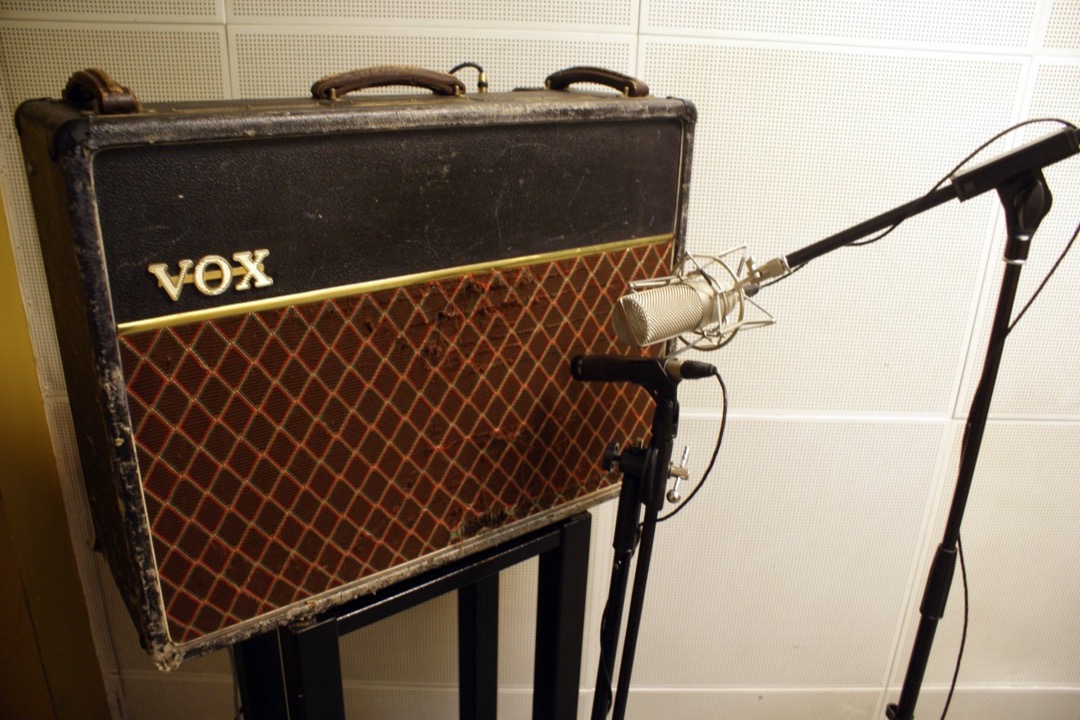
Electric guitar amps. A dynamic, close to the speaker cone. The SM57 on a guitar cabinet is the most copied microphone placement in recording, because the dynamic handles the volume and its mid-forward voicing suits guitar. A condenser or ribbon a foot or two back adds room and depth if you have the channels. If you would rather record your amp tone direct, our guide to the best audio interfaces for guitar covers the Hi-Z inputs and amp simulation you need, and the best guitar amps roundup notes which ones have a direct or headphone output for silent recording.
Acoustic guitar. A small-diaphragm condenser aimed at the 12th to 14th fret, about eight to twelve inches away. A dynamic on an acoustic sounds boxy and loses the shimmer of the strings. Recording a good instrument well starts with the instrument itself, and the guitars in our best acoustic guitar roundup were chosen partly for how evenly they sound across the neck.
Drums. Both. Dynamics on kick, snare and toms, where the sound pressure is high and the bleed from other drums needs to be kept down. Condensers as overheads and room mics, where detail and cymbal shimmer matter.
Piano, strings, choir and anything quiet. Condensers. Low-output dynamics would need so much gain on a quiet source that preamp hiss becomes part of the recording.
Live vocals. A dynamic for almost every singer on almost every stage. Its feedback resistance and durability matter more than detail when the monitors are loud. Handheld condensers do exist for live use, but they need a well-managed stage.
What You Need to Plug Each One Into
An XLR dynamic needs a preamp with plenty of clean gain. That can be an audio interface, a mixer, or a portable recorder. Avoid passive XLR-to-USB cables without a built-in preamp.
An XLR condenser needs the same, plus 48V phantom power. Almost every modern interface supplies phantom power, usually on a single switch that covers one or both inputs.
A USB microphone of either type needs nothing but a USB port. The trade is that the preamp and converter are fixed inside the microphone, so the only upgrade path is a new microphone. A hybrid USB and XLR model avoids that.
Whatever you record with, monitor on closed-back headphones while you record so the playback does not bleed into the microphone. A condenser in particular will happily record the click track leaking out of open-back cans. Our guide to the best studio headphones separates the closed-back models for tracking from the open-back models for mixing.
Cost
At the entry level the two types cost about the same. A well-made large-diaphragm condenser and a classic stage dynamic sit in the same price bracket, which is why the choice should come down to the room and the source, not the budget.
The hidden costs differ. A low-output dynamic may need a higher-gain interface or an inline booster. A condenser may need a shock mount, a pop filter and some acoustic treatment before it sounds the way the demo videos promised. Price in whichever extras your setup needs before deciding one type is cheaper.
A Quick Way to Decide
Answer three questions:
- Does the room sound good? Clap once. If you hear a ring or a flutter after the clap, the room is reflective and a dynamic will serve you better until it is treated.
- How loud is the source? Guitar amps, snare drums and shouting all favour a dynamic. Whispered voice, fingerpicked guitar and piano favour a condenser.
- Will you stay still? If you will sit close to the microphone and stay there, a condenser is an option even in an imperfect room. If you move, choose a dynamic.
Two or three answers pointing the same way settle it. If they split, buy the dynamic first. It is the more forgiving microphone, it will never be useless, and every studio that later adds a condenser still uses its dynamics on the loud sources.
The Verdict
Dynamic microphones are the practical choice: robust, unpowered, forgiving of rooms and happy in front of anything loud. Condenser microphones are the detailed choice: more sensitive, more extended at the top, and best where the room and the source deserve that detail. Most people who record seriously end up owning one of each, and the order in which they buy them is the only real decision. For a voice in an ordinary room, start with a dynamic. For singing or acoustic instruments in a quiet, soft room, start with a condenser.
Frequently Asked Questions
Is a condenser or dynamic microphone better for vocals?
Do dynamic microphones really pick up less background noise?
Can I plug a condenser mic straight into my computer?
Will phantom power damage a dynamic microphone?
Which is better for beginners, condenser or dynamic?
Is a USB microphone a condenser or a dynamic?
Related Articles
13 Best Audio Interfaces of 2026 (Home Studio, Podcasting, iPad & 8-Channel)
studio-recording
11 Best Podcast Microphones of 2026 (USB, XLR, Budget, Wireless & Beginner)
studio-recording
10 Best Studio Headphones of 2026 for Music Production (Mixing, Recording, Open-Back & Budget)
studio-recording
12 Best USB Microphones of 2026 (Vocals, Streaming, Gaming & Music)
studio-recording
Tube vs Solid State Amp: Which Guitar Amp Should You Actually Buy?
amps-effects
About the Reviewer

Julian Reyes, MM, Berklee
M.M. Performance, Berklee College of Music
Julian Reyes is a multi-instrumentalist with a Master of Music from Berklee College of Music and over a decade gigging on guitar, bass, and keys. Before founding House of Octave, he spent years as a gear buyer for an independent music retailer, evaluating hundreds of instruments and audio products for the sales floor. He started House of Octave in 2026 to give players honest, hands-on reviews — judged by how gear actually sounds and holds up on stage and in the studio, not by spec sheets or sponsorships.