Tube vs Solid State Amp: Which Guitar Amp Should You Actually Buy?
Berklee-trained guitarist and former gear buyer Julian Reyes compares tube, solid state and modeling guitar amps: tone, headroom, amp class, weight and upkeep.
Updated
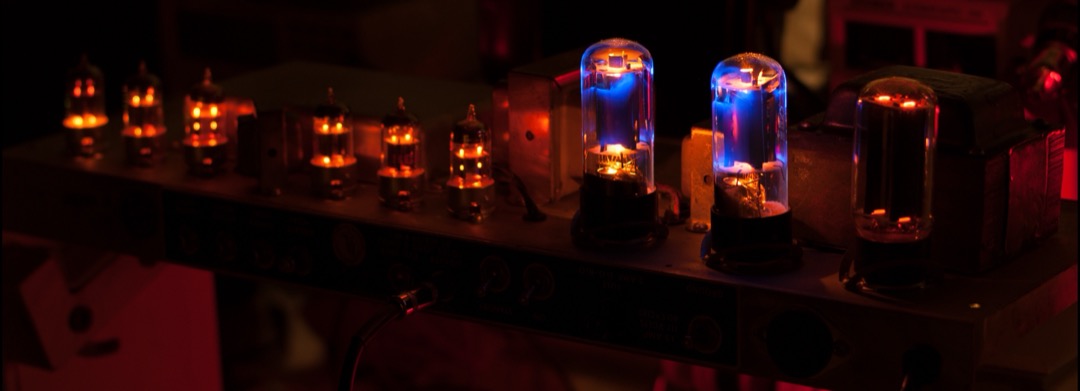
Walk into any guitar shop and you will hear the same sentence within about ten minutes: tube amps sound better. I stood behind that counter for years, and I watched a lot of people spend a lot of money acting on it, then take the amp home to a third-floor apartment where it never once got loud enough to do the thing they paid for. That is the actual problem with the tube versus solid state question. It gets argued as a tone debate when for most players it is a use-case decision.
There is also a third option that most comparisons still treat as a footnote. In 2026 a large share of working guitarists gig and record through modeling, whether that is a Neural DSP Quad Cortex, a Line 6 Helix or Pod Go, a Fender Tone Master, a Boss Katana, or one of the increasingly good units from NUX, Mooer and IK. They run into an FRFR cab, straight to front of house, or straight into an interface, and nobody in the audience knows or cares. Any honest comparison in 2026 is a three-way one.
So this guide covers how each of the three actually makes a sound, what changes in the tone and in the feel under your fingers, why a 50-watt tube amp really is louder than a 50-watt solid state amp, what amplifier class means and where the spec sheets abuse it, what an attenuator does and what it costs you, what upkeep genuinely looks like, and the question nobody in the search results answers: whether any of this survives being buried in a mix.
The Short Answer
A tube amp makes its sound with vacuum tubes, which distort gradually and compress as you push them, and needs an output transformer to feed a speaker. It gives you the most responsive feel and the best overdrive, and it charges you in weight, volume and maintenance.
A solid state amp uses transistors. It is lighter, cheaper, more reliable, and has enormous clean headroom, which makes it an excellent pedal platform and a superb clean amp. Its own distortion is usually its weakest feature, which is why so many players run pedals into a clean one.
A modeling amp or profiler uses DSP to emulate specific amplifiers and cabinets. It gives you the widest range of sounds, the lowest weight, silent practice with headphones, and a direct output for recording or front of house. It costs you some of the last few percent of feel, and it asks you to spend time on menus instead of knobs.
If you play at real volume in a band and love overdrive, buy a tube amp. If you mostly play clean and run pedals, a good solid state amp is the smart buy. If you record at home, practice quietly, or need a lot of sounds from one box, buy modeling. Our roundup of the best guitar amps covers all three families side by side with current models.
How Each One Makes the Sound
A vacuum tube is a small evacuated glass envelope with a heated cathode that boils off electrons, a plate held at a high positive voltage that attracts them, and a control grid between the two. A small voltage swing on the grid controls a much larger current through the tube, and that is the amplification. Because the tube’s transfer curve bends softly at both ends of its range, the signal does not clip abruptly. It rounds off, and it starts adding harmonic content well before it is obviously distorting. That soft knee is the whole reason people love the things.
A transistor does the same job with a semiconductor junction instead of a vacuum. It is far more efficient, runs at low voltages, costs almost nothing, and lasts effectively forever. Its transfer characteristic is more linear right up to its limit, then it stops abruptly. That is excellent behaviour for a hi-fi amplifier and less flattering for a guitar amp, because when a transistor output stage runs out of headroom it clips hard, generating a burst of high-order harmonics that the ear hears as harsh rather than musical. Good solid state guitar amps deal with this by having so much headroom that you never reach it, and by generating any distortion you want deliberately in a preamp circuit designed for the purpose.
A modeler does not amplify your guitar at all in the first stage. It converts the signal to digital, runs it through algorithms that reproduce the behaviour of a specific amplifier circuit and a specific speaker in a specific cabinet with a specific microphone in front of it, and converts it back to analogue. A profiler goes one step further and takes a measurement of a real amplifier you own and reconstructs its response. The output then goes to a small solid state power amp and a speaker, or to a line output. The important architectural point is that a modeler’s tone is software, so the same box can be a 1959 tweed and a modern high-gain head thirty seconds apart.
Tube vs Solid State vs Modeling: The Comparison
| Tube | Solid state | Modeling / digital | |
|---|---|---|---|
| How it makes the sound | Vacuum tubes amplify; output transformer feeds the speaker | Transistors amplify; no output transformer | DSP emulates amp, cab and mic; small solid state power stage |
| Clean headroom | Limited and deliberately so; breaks up as you push it | Very high; stays clean to its rated output | Whatever you program, including headroom that no real amp has |
| Response to volume knob and pick attack | Most dynamic; cleans up when you roll back, blooms when you dig in | Fairly static; the amp does the same thing at every input level | Very good on current units, still slightly flatter at the extremes |
| Weight | Heaviest by a wide margin | Moderate | Lightest, especially floor units |
| Purchase cost | Highest for a given output and feature set | Lowest | Wide range, from budget floor units to flagship processors |
| Ongoing cost and maintenance | Power tubes are consumable, most fixed-bias amps need a rebias by a tech | Essentially none | Firmware updates, occasional new preset packs, no consumables |
| Reliability | Frequent but cheap, mostly user-serviceable failures | Rare failures that usually need a bench tech | Very reliable; the main risk is a bad firmware update or a power supply |
| Best use case | Loud stages, overdriven tones, players who play with dynamics | Clean platforms, pedalboards, practice, hot climates and long tours | Home recording, silent practice, fly gigs, players who need many sounds |
| Biggest weakness | Only sounds like itself at volume, and it is heavy | Its own distortion is rarely as good as its clean tone | Menus, presets, and a feel that is close rather than identical |
Feel: The Part That Is Genuinely Different
Tone comparisons get all the attention and feel is where the actual gap lives. On a good tube amp set near the edge of breakup, your guitar’s volume knob is a gain control. Roll it back a third and the amp cleans up and gets brighter. Dig in with the pick and the amp compresses slightly and pushes back. That is not romance. It is three real mechanisms stacked: the tube’s soft clipping curve, the power supply drooping under a transient current demand, and the output transformer and speaker interacting as impedance changes with frequency and level.
Solid state amps do very little of this. A transistor stage running inside its linear range behaves the same way at any input level, so what you play is what comes out, scaled. That is a genuine advantage for anyone who wants a consistent clean sound every night and a genuine loss for anyone who plays with the volume knob.
Modeling sits closer to the tube end than people expect, because the good algorithms model the sag and the clipping curve rather than just the frequency response. The remaining gap is at the extremes, where a real amp being pushed hard behaves in ways that are still awkward to reproduce, and in the physical interaction between a real speaker moving air and the pickups on your guitar. What feeds the amp matters here too, and it matters more than most players expect. A hot humbucker hits a front end far harder than a vintage single coil, which is enough to change where breakup starts. Our comparison of humbuckers versus single coils covers how much output actually differs between the two.
Why a 50-Watt Tube Amp Is Louder Than a 50-Watt Solid State Amp
Everyone repeats this and almost nobody explains it, so here it is properly.
First, the two numbers are not measured at the same operating point. Tube amp output is generally quoted at or near the onset of clipping, sometimes with a stated distortion figure that would be unacceptable in a hi-fi context. Solid state RMS ratings tend to be quoted well inside the linear range with very low distortion. The same printed 50 is describing two different conditions.
Second, what happens past that point differs. A tube output stage driven beyond its rating compresses, and the harmonic content it adds fills in the sound and raises the average level relative to the peaks. Our hearing responds to sustained average energy more than to instantaneous peaks, so a compressed signal reads as louder at the same peak level. A transistor stage past its limit clips hard, which sounds bad long before it sounds loud, so nobody uses that region.
Third, and this is the one most arguments ignore, the speaker is often the larger variable. Sensitivity varies by several decibels between common guitar speakers, and a few decibels of speaker sensitivity can easily outweigh the difference between two amplifiers of the same nominal wattage. If you are comparing loudness between amps, you are usually also comparing cabinets.
This matters most on bass, where headroom requirements are far higher and the wattage arithmetic is unforgiving. A small guitar amp will not reproduce a low B honestly at any setting, which is why the best bass amps are rated the way they are.
Class A vs Class AB, and Where the Spec Sheets Lie
Nobody else in this conversation mentions amplifier class, which is odd, because it explains a lot of behaviour that otherwise looks like mystery.
Class refers to conduction angle: how much of the input waveform each output device conducts for. In Class A, the device conducts for the entire cycle, all 360 degrees. It is biased so that current flows continuously whether you are playing or not. That is inefficient, typically well under 30 percent, so a Class A amp runs hot and produces modest output for its size, but it never crosses through a region where a device turns off, so there is no crossover distortion.
In Class B, each device conducts for half the cycle, 180 degrees, with two devices splitting the work in a push-pull pair. It is efficient and it produces crossover distortion at the handover point. Class AB is the compromise used by nearly every large guitar amp: the devices are biased so each conducts for somewhat more than half the cycle, they overlap through the handover, and the amp behaves like Class A at low levels and Class B at high output.
Two practical consequences. Single-ended low-wattage amps, the classic small studio combos built around one power tube, are Class A by necessity because there is no second device to hand off to. They also have no push-pull output stage, so they preserve even-order harmonic content that a push-pull amp cancels, and they run out of headroom early and gracefully. That combination is why those amps behave so differently from a scaled-down version of a big amp.
Now the marketing. “Class A” appears on a great many tube amp spec sheets where the circuit is really cathode-biased push-pull, which is a different thing. Cathode bias sets the operating point with a resistor at the cathode rather than a negative supply on the grid, which does bias the tubes relatively hot and does give the amp a compressed, sagging character. Whether it stays in Class A across its full output is a different question, and for several famous designs including the Vox AC30 top boost circuit, the widely held view among techs and engineers is that it leaves Class A well before full output and is more accurately described as Class AB1. Builds vary, revisions vary, and the term is applied loosely, so treat “Class A” on a listing as a description of character rather than a claim about conduction angle.
Power Scaling, Attenuators and Master Volumes
If you want a tube power section working hard at a volume that will not get you evicted, there are three different tools and they are routinely confused.
An attenuator sits between the amplifier’s speaker output and the speaker, presents the amp with a load, and dissipates part of the power as heat so less reaches the speaker. The amp runs flat out and you hear less of it. A purely resistive attenuator is the simplest and cheapest kind, but a speaker is not a resistor. Its impedance rises steeply at resonance and again at high frequencies, and the amplifier’s response is shaped by that interaction. A reactive attenuator uses inductance and capacitance to imitate the impedance curve of a real speaker, which is why it holds the amp’s voicing together far better.
The tradeoffs are real. At heavy attenuation almost every unit dulls the top end, partly because our hearing itself is less sensitive to treble and bass at low levels, and partly because the load is only an approximation. They get hot, and higher-power designs often need a fan, which is its own noise problem in a small room. And the thing an attenuator can never do is reproduce the speaker’s own behaviour at volume, since the speaker is now being driven gently. A lot of what people call cranked amp tone is cone breakup and compression happening in the speaker, and attenuation removes exactly that.
Power scaling is a different mechanism. Rather than throwing away output power, it lowers the high-voltage supply feeding the output tubes, so the whole stage runs at a lower operating point and clips earlier at a lower absolute level. Done well it keeps the character while genuinely reducing output. Many modern amps ship with a simplified version, a switch offering full and reduced power, sometimes by taking output tubes out of the circuit or switching from pentode to triode operation.
A master volume is not either of these. It is an attenuation stage inside the amp, usually after the preamp, that lets you overdrive the preamp and then turn the result down before the power stage. A post-phase-inverter master sits later in the chain, after the stage that splits the signal for the push-pull pair, so it gives you more of the power section’s own character at lower volume than a conventional preamp-side master does. Modest cost, no heat, and the most sensible first thing to try.
If a preamp-flavoured overdrive is all you actually want, the honest answer for most players is a pedal into a clean amp. That route is cheaper, quieter and more repeatable, and the best distortion pedals guide covers what each voicing does to the front end of an amp.
Modeling and Profiling: The Real Third Option
Modeling stopped being a compromise several years ago and the search results have not caught up. Three things changed. The algorithms moved from static frequency-response approximations to component-level circuit simulation that reproduces sag, bias shift and clipping behaviour. Impulse responses made cabinet and microphone simulation convincing, which is more than half of what people identify as amp tone. And profiling let a unit capture a specific amplifier rather than a generic model of its type.
What you gain is substantial. One box holds dozens of amps, cabinets, microphone positions and full effects chains. You can practise silently through headphones at three in the morning. You can record direct with a usable tone and no microphone, no room and no neighbours. On a fly gig you can carry your entire rig as hand luggage. And the sound is identical every night, which matters more than tone snobbery admits once you have played a room with terrible acoustics and no time to soundcheck.
What you give up is smaller than it used to be, and it is mostly two things. The last few percent of interactive feel at the extremes of a pushed amp, and the interface. A tube amp with four knobs makes you commit; a modeler with a preset architecture invites you to spend a rehearsal building patches instead of playing. That is a real cost and the reason a lot of players end up building three sounds and never touching the menus again, which is the correct approach.
Categories overlap here. A floor multi-effects unit and a modeling amp are increasingly the same technology in different boxes, and if what you want is amp models plus a full effects rig on the floor, the best multi-effects pedals roundup covers the units that do both. If you go the other way and run a clean solid state amp with real pedals in front of it, the best guitar pedals guide is the place to start. Worth knowing about that route: solid state amps often ship with thin onboard reverb or none at all, and a decent reverb pedal fixes more of the gap between a clean solid state amp and a tube amp than anything else you can buy. Our best reverb pedals guide covers the spring emulations that do that job specifically.
Weight, With Actual Numbers
Guitar Player asserts that tube amps are heavier and cites nothing, so here are honest ranges for comparable output classes. Individual models vary, and a heavy cabinet or a ceramic-magnet speaker moves these figures more than the electronics do.
| Format | Tube | Solid state | Modeling |
|---|---|---|---|
| Small practice combo, 1x8 or 1x10 | 20 to 30 lb | 12 to 20 lb | 10 to 20 lb |
| 15 to 20 W, 1x12 combo | 30 to 50 lb | 25 to 35 lb | 20 to 30 lb |
| 30 to 40 W, 1x12 combo | 40 to 55 lb | 30 to 40 lb | 25 to 35 lb |
| 2x12 combo | 60 to 75 lb | 45 to 65 lb | 30 to 45 lb |
| Head only | 30 to 55 lb | 15 to 30 lb | 8 to 20 lb |
| Floor unit, no power amp | not applicable | not applicable | 2 to 15 lb |
Two notes on reading that table. Solid state does not automatically mean light: a well-known 2x12 solid state stage combo can weigh as much as a tube 2x12, because the cabinet, the two 12-inch speakers and a large linear power supply are the bulk of the mass. And the modeling floor unit row is the one that changed touring, because it removes the amplifier from the weight calculation entirely.
Where the Weight Actually Comes From, and the Transformer Myth
You will read that solid state amps have no transformers. That is wrong and worth correcting, because the correct version explains the weight properly.
Every amplifier needs a power supply, so a solid state amp still contains either a power transformer or a switch-mode supply to generate its rails. What it does not need is an output transformer. A tube’s plate impedance is in the thousands of ohms, and a speaker is 4, 8 or 16 ohms, so a tube amp must have an output transformer to match one to the other. That transformer is a slab of laminated steel and copper, and on a larger amp it is one of the heaviest single components in the chassis.
The tube amp’s power transformer is also bigger than a comparable solid state amp’s, because it has to produce plate voltages in the hundreds of volts plus a separate heater supply for every tube. Two large transformers instead of one small one, or instead of a switch-mode supply weighing a fraction as much, is the entire weight story. It is not the glass.
Three More Myths Worth Correcting
“Tubes make even-order harmonics, transistors make odd-order.” This one is repeated everywhere, including by search engines’ own answer boxes, and it is a real oversimplification. It is roughly true of a simple single-ended Class A stage, which is asymmetrical and produces a strong second harmonic. But most tube guitar power sections are push-pull, and a balanced push-pull output stage cancels even-order harmonics and emphasises odd-order content when it clips. That is closer to what a transistor stage does under comparable overdrive, not further from it. The honest version is that harmonic structure depends on circuit topology, symmetry and operating point far more than on whether the active device is a tube or a transistor.
Sag is not one thing. People attribute the springy, compressed feel of a cranked amp entirely to “the tubes”, which merges two separate mechanisms that anyone choosing an amp should distinguish. The first is compression inside the gain stage itself as the tube approaches the limits of its transfer curve. The second is power supply sag, where a hard transient draws more current than the supply can hold up, and the rail voltage droops for a few tens of milliseconds before recovering. That second mechanism is set by the rectifier, by the transformer’s VA rating, and by how much filter capacitance sits behind it. A tube rectifier has significantly more internal resistance than silicon diodes, so it sags more. This is why two tube amps with identical tube complements can feel completely different, why swapping a rectifier tube changes feel more than it changes tone, and why some solid state and hybrid amps deliberately model supply sag in their power stage.
Solid state distortion is bad. It was, in the 1960s and 1970s, when designers were mostly trying to make transistors imitate a clipping tube stage without understanding what they were imitating. Modern solid state high-gain preamps are designed as their own circuits rather than as imitations, and they are extremely competitive. What has not changed is that a solid state amp’s hard clipping ceiling is unpleasant, so the good ones keep the output stage clean and do all the work earlier in the chain.
Does Anyone Actually Hear the Difference in a Mix?
This is the most useful question a home player can ask and nobody in the search results answers it, so I will answer it honestly and in two parts.
Solo, in a quiet room, playing dynamically, the difference is obvious and real. Roll your guitar volume back and a tube amp does something a static solid state amp does not. Play the same phrase soft and hard and the response is different. Anyone who tells you this is placebo has not spent time with a good amp at the edge of breakup.
Buried in a full mix behind drums, bass, a second guitar and a vocal, the difference collapses to something much smaller. A mix engineer will high-pass that guitar somewhere in the low hundreds of hertz to make room for the bass, compress it to hold it in place, carve midrange out of it so the vocal sits, and pan it to one side against a second take. Most of the low-level detail that separates the two amps lives in exactly the regions being processed away. Blind comparisons run online and in studios repeatedly show listeners struggling to identify which is which under those conditions, and I have had the same experience in practice: I can pick the tube amp in the room and I regularly cannot pick it in a rough mix a week later.
Two conclusions follow, and they point in different directions. If you are buying an amp to record layered arrangements at home, spend the money on the parts of the chain the listener will actually hear, and do not assume the amplifier technology is one of them. If you are buying an amp to play, solo or in a small band where your guitar is exposed, the feel difference is real and you will notice it every time you pick up the instrument, which is a perfectly good reason to buy on that basis. Just be honest about which of the two you are doing.
Reliability and What Actually Breaks
Tube amps fail more often and the failures are usually cheap and self-diagnosable. Preamp tubes go microphonic, meaning the internal structure starts picking up vibration and the amp squeals or rings when you tap the chassis. A power tube can red-plate, glowing visibly hot because its bias has drifted or the tube has failed, which will take out a fuse and sometimes a screen resistor if you leave it. Fuses blow. All of these are user-serviceable in the sense that swapping a tube costs a few minutes and no tools, which is why a working tube amp owner carries a spare preamp tube and a spare pair of power tubes to gigs. On the road, the things that fail most are still not the tubes: they are jacks, footswitch cables and speaker connections.
Solid state and modeling amps fail rarely, and when they do the failure is opaque. There is no glowing part to point at and no swappable consumable, so a dead output stage means a bench tech, a schematic and diagnosis time. On balance a solid state amp is much more likely to survive years of touring without a service, which is precisely why so many rental backlines and school music rooms use them.
One rule sits above all of this and it is not optional. Never run a tube amp without a speaker or a dummy load connected. With no load, the energy in the output transformer has nowhere to go, voltage spikes across the windings, and you can arc through the insulation and destroy the transformer. A solid state amp is generally unbothered by an open output. A tube amp is not.
How to Choose, by What You Actually Do
Find yourself in this list and stop there.
You practise quietly at home, in an apartment, or late at night. Buy modeling. This is not a compromise recommendation, it is the correct answer. Headphone output, silent recording, a full range of sounds at any hour, and no wasted output stage. A tube amp in this situation spends its life at a setting where it sounds worse than a modeler does, and you will have paid extra for that. If you are assembling a first rig from nothing, the best beginner electric guitars guide pairs well with a modeling combo for exactly this reason.
You play small gigs with no PA support, where the amp has to fill the room. Tube or a high-headroom solid state amp, and the deciding factor is what kind of sound you want. If your tone lives in overdrive, a tube amp in the 15 to 30 watt range with a master volume is the classic answer, and it will be loud enough for almost any room a band plays without PA support. If your tone lives clean with pedals on top, a clean solid state combo is lighter, cheaper and does that job better than a tube amp being kept clean by force.
You play larger stages where you are mic’d or going direct to front of house. Any of the three, and the practical considerations outrank the tonal ones. Your amp is a monitor at that point, and the audience hears a microphone or a DI. Modeling wins on weight, consistency and soundcheck speed. A tube amp wins if your sound genuinely depends on the power section working, which it does for some players and does not for most.
You record at home. Modeling, unless you have a room you can be loud in. Direct recording removes the microphone, the room and the noise floor from the equation, and gives you the option to change the amp after you have played the take, which is worth more in practice than any tonal preference.
You have one amp for everything and cannot buy twice. A good modeling combo with a real speaker, or a low-wattage tube amp with a master volume and a decent attenuator, depending on which compromise you would rather live with. Buy the modeler if flexibility matters more than feel, and the tube amp if the reverse.
The Verdict
Buy a tube amp if you play at volume, play with your hands, and want the amp to respond to you. That is a real thing that solid state and digital still do not fully match, and if it is what you want you should not be talked out of it by an argument about efficiency. Accept the weight, budget for tubes as a consumable, and get a master volume or a reactive attenuator so the amp can work at a level that fits the room.
Buy a solid state amp if you play clean and build your sound with pedals. You get more headroom for less money and less weight, and the money you save goes into the pedals that are actually making your tone. Add a reverb pedal, since that is the one place a clean solid state amp is usually thin.
Buy modeling if you practise quietly, record at home, need many sounds, or travel. For a large share of players reading this, that describes their week accurately, and the honest recommendation is the one that fits what you do rather than the one with the best story. If you are earlier in this decision and still choosing the instrument itself, our comparison of acoustic versus electric covers that first step, and when you are ready to shortlist actual models, the best guitar amps roundup has current picks in all three categories.
The one recommendation I will make flatly: do not buy a 100-watt tube head for a bedroom. I sold too many of them to people who came back six months later to trade them in, and every one of them would have been happier with a small amp they could turn up.
Frequently Asked Questions
What are the real disadvantages of a tube amp?
Is it okay to leave a tube amp on all day, and how long do the tubes last?
Do any famous guitarists use solid state amps?
Are tube amps actually louder than solid state amps?
Is a tube amp or solid state better for metal?
Related Articles
9 Best Guitar Amps of 2026 (Every Budget, Practice to Gigging)
amps-effects
Humbucker vs Single Coil: What Actually Changes, and Which One You Want
guitars
10 Best Bass Amps of 2026 (Practice, Home, and Gigging)
amps-effects
10 Best Multi-Effects Pedals of 2026 (Budget, Compact, Acoustic & Live)
amps-effects
Acoustic vs Electric Guitar: Which Should a Beginner Buy?
guitars
About the Reviewer

Julian Reyes, MM, Berklee
M.M. Performance, Berklee College of Music
Julian Reyes is a multi-instrumentalist with a Master of Music from Berklee College of Music and over a decade gigging on guitar, bass, and keys. Before founding House of Octave, he spent years as a gear buyer for an independent music retailer, evaluating hundreds of instruments and audio products for the sales floor. He started House of Octave in 2026 to give players honest, hands-on reviews — judged by how gear actually sounds and holds up on stage and in the studio, not by spec sheets or sponsorships.