10 Best Bass Amps of 2026 (Practice, Home, and Gigging)
Berklee-trained multi-instrumentalist Julian Reyes (MM) reviews the 10 best bass amps of 2026 -- practice combos, small and portable amps, headphone amps, and gig-ready rigs from Fender, Ampeg, Orange, Hartke, and Gallien-Krueger, matched to how loud you actually play.
Updated
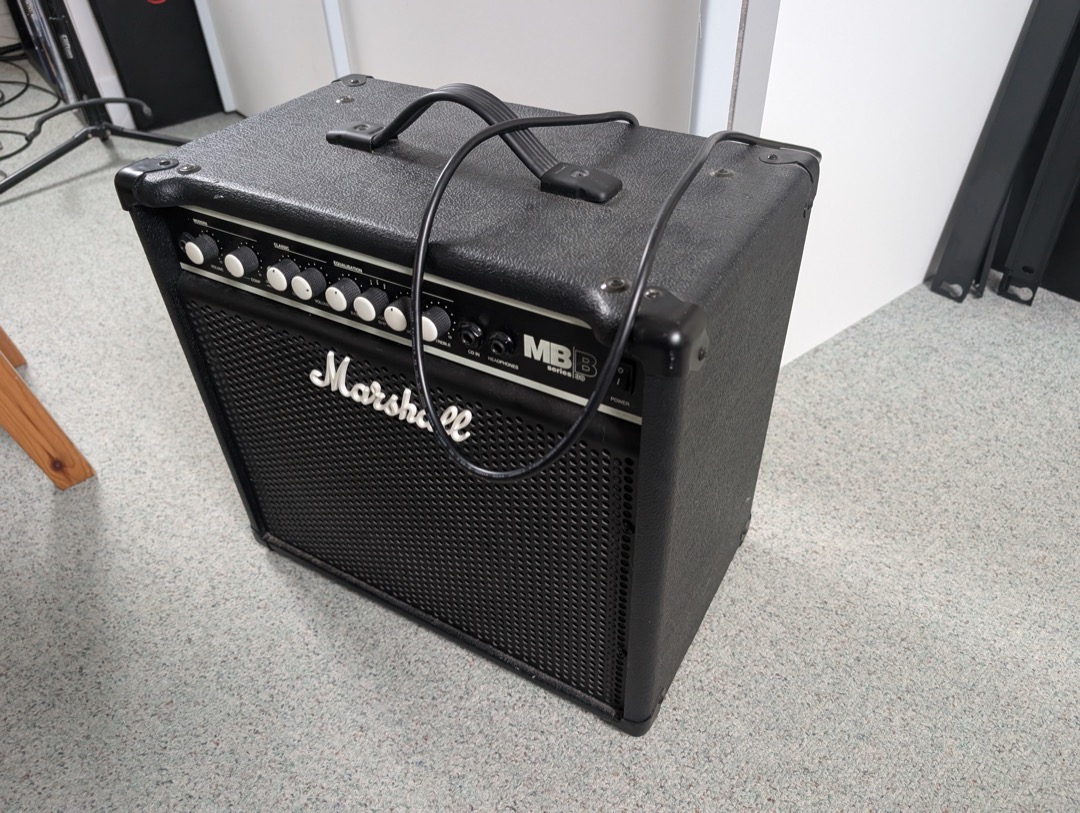
Ask ten bass players which amp to buy and the answers will diverge more than they would for guitar, because bass punishes a bad match harder. Low notes take far more energy to reproduce than high ones, so an amp that is slightly too small does not merely sound quiet — it sounds like mud, or like nothing at all once a drummer starts playing. The bedroom player wants clean tone at whisper volume and a headphone jack that does not sound like a telephone. The player who just joined a band needs headroom and a direct output. The one who practises at midnight in a shared flat needs no speaker whatsoever. There is no single best bass amp, only the best amp for how loud you play and where.
So I approached this roundup the way I approached buying inventory as a gear buyer: not “which bass amp is best” but “which is right for each kind of player,” from a first amp that costs less than a set of strings through to a professional stage rig you can carry in one hand. I evaluated ten amps on tone, speaker design, features, build and how honestly each serves a specific player, and matched each to a clear role. It is worth browsing our full amps and effects category to see how these fit the wider range, and if you are still choosing the instrument, start with our best bass guitars for beginners guide.
| Product | Price | Buy |
|---|---|---|
| Fender Rumble 40 V3Best Overall | $269.99 | View on Amazon |
| Fender Rumble 25 V3Runner-Up | $149.99 | View on Amazon |
| Fender Rumble 15 V3Budget Pick | $99.99 | View on Amazon |
| Orange Crush Bass 25Runner-Up | $249.00 | View on Amazon |
| Hartke HD15Runner-Up | $149.99 | View on Amazon |
| Fender Rumble 100 V3Premium Pick | $389.99 | View on Amazon |
| Ampeg Rocket Bass RB112Premium Pick | $499.99 | View on Amazon |
| Vox amPlug 3 BassRunner-Up | $47.80 | View on Amazon |
| JOYO MA-10BRunner-Up | $49.99 | View on Amazon |
| Gallien-Krueger MB112-IIPremium Pick | $800.00 | View on Amazon |
Find the Best Bass Amp for Your Need
Jump straight to the amp that fits how you play:
- Best bass amps overall
- Best bass amp for practice
- Best bass amp for beginners
- Best budget bass amp
- Best small bass amp
- Best bass amp for gigging
- Best bass headphone amp
- Best bass amp for metal
- More use cases
How I Tested and Evaluated These Bass Amps
Every amp here was selected on a verified, active Amazon listing, a real owner-review base, a genuine brand track record in bass specifically, and a clear fit for one kind of player. I drew on twenty years of playing and a gear-buyer’s eye for what matters once an amp is actually in a room: whether the low end holds together at volume, whether the midrange gives a note definition in a mix, how usable the EQ really is, and whether the connections match how bass is handled live and in the studio. I cross-referenced hundreds of owner reviews for the recurring complaints that matter on bass — speakers that distort on low notes, thin headphone outputs, hiss, front ends that clip with active pickups — and weighed power, speaker size and features against how each amp is meant to be used. Amps from unverified sellers or with thin, suspicious review histories were left out. Where an amp is voiced for a specific genre or playing style, I have said so rather than pretending every amp suits everyone.
Best Bass Amps Overall
These ten amps span every budget and use case, but they share one thing: each is the honest best choice for the player it targets. Below, every amp is reviewed once in full. Farther down, use-case sections pull the right two or three together so you can compare and decide quickly for your specific need.
Best Overall: Fender Rumble 40 V3
If I could hand one bass amp to a player who was not sure exactly what they needed, it would be the Fender Rumble 40 V3. It sits at the precise point on the size curve where a bass amp becomes genuinely satisfying: forty watts driving a ten-inch speaker is enough to reproduce a low E with weight and body rather than the papery click that smaller amps produce. Anything less and you are hearing an approximation of your instrument; this is where you start hearing the instrument itself.
The tone controls are what separate it from the crowd of three-knob practice combos. A four-band EQ with separate low-mid and high-mid controls gives you real influence over the frequencies where bass definition actually lives, and the Bright, Contour and Vintage switches are genuine character changes rather than token filters — Vintage thickens everything into old-school thump, Contour scoops the mids for a modern slap voice, Bright opens up the attack. The overdrive circuit is properly voiced for bass too, so pushing it adds growl on top of the note instead of hollowing it out the way a guitar distortion does. And all of that fits in a cabinet you carry with one hand.
The honest limits are about where you take it. There is no XLR direct output, so the first time you play a venue with a sound engineer you will be borrowing a DI box or wishing you had bought the Rumble 100. And it is a real combo with real weight, so if your only goal is silent midnight practice, a headphone amp does that one job better for a fraction of the money. For nearly everyone else, this is the amp that answers the most questions at once.

Fender Rumble 40 V3
by Fender
The bass amp that answers the most questions at once -- enough power and speaker area to sound like a real bass rig, enough tone shaping to cover most styles, and small enough to live in a bedroom.
Pros
- The most complete answer to the widest range of bass players -- 40 watts through a 10-inch speaker is the exact point where a bass amp stops sounding like a toy and starts reproducing a low E with real weight, which is why this is the amp most commonly recommended when someone asks what to buy first and last
- The four-band EQ plus Bright, Contour and Vintage voicing switches cover far more tonal ground than the three-knob amps at this price -- you can go from a scooped modern slap voice to a thick vintage thump without touching a pedal, and each switch is a genuine character change rather than a token filter
- It is light enough to carry with one hand and small enough to live in a bedroom, yet loud enough for quiet rehearsals and acoustic-drummer jams, which is a combination almost nothing else at this size manages
- The overdrive circuit is properly voiced for bass, so pushing it adds growl and grind without the fizzy thinness that happens when you borrow a guitar amp's distortion for low notes
Cons
- There is no XLR direct output, so once you start playing venues with a PA engineer you will want the Rumble 100 or an outboard DI box to send a clean signal to the desk
- It is a real combo with real weight -- for pure late-night silent practice a headphone amp costs a fraction of this and does that one job better
Best for Home Practice: Fender Rumble 25 V3
The Fender Rumble 25 V3 is the amp most bass players should actually buy, and its review base makes the case better than I can: more than three thousand owner ratings, and a rating nothing else here beats. That is an unusual amount of evidence, and what it tells you is that this amp does its one job — being a good bass amp in a bedroom — without the failures that plague cheap gear.
What surprises people is how much of the bigger Rumbles it keeps. The same switchable overdrive circuit and mid-scoop contour are here, so you get real tonal character rather than one flat voice, which matters enormously when the amp is the only thing you hear for an hour a day. An aux input lets you play along to a track through the speaker, and a headphone output lets you disappear completely when the house is asleep. Twenty-five watts through an eight-inch speaker is genuinely the right size for a room, and there is a subtlety here worth knowing: a smaller amp is often easier to get a good tone from at low volume than a large one running barely above idle.
Its limit is the one every home amp shares. Put a live drummer in the room and it runs out of headroom immediately, and pushing it makes the low end compress and blur rather than get louder. The eight-inch speaker also cannot move the air a ten can, so the deepest notes feel less physical than on the Rumble 40. Neither matters if you are practising alone — which is what this amp is for.

Fender Rumble 25 V3
by Fender
The most proven home practice bass amp here -- real Fender voicing, an overdrive circuit, aux in and headphone out, and thousands of owners behind a rating nothing else here beats.
Pros
- The deepest owner-review base of any amp on this page by a wide margin, and it shares the highest average rating here -- more than three thousand ratings tells you this amp does its one job, home practice, reliably enough that thousands of players had nothing to complain about
- It has the same switchable overdrive circuit and mid-scoop contour as the bigger Rumbles, so a practice amp that costs about half as much as the 40 still gives you real tonal character rather than one flat voice
- An eighth-inch aux input and a quarter-inch headphone output turn it into a complete practice station -- play along to a track through the speaker, or plug in headphones and disappear entirely when the house is asleep
- Twenty-five watts through an eight-inch speaker is genuinely the right size for a bedroom, where a bigger amp is not just wasted but harder to get a good tone from at low volume
Cons
- It runs out of headroom the moment a live drummer is in the room -- this is a home amp by design, and pushing it to keep up will make the low end compress and blur
- The eight-inch speaker cannot move the air a ten or twelve can, so the deepest notes feel less physical than they do on the Rumble 40
Best Budget: Fender Rumble 15 V3
The Fender Rumble 15 V3 is the cheapest amp here that still sounds like a bass amp, and the reason comes down to one spec most buyers overlook. At this price, nearly every competitor fits a four or five-inch driver, which physically cannot reproduce a low E — you get the attack and none of the note. Fender put a full eight-inch speaker in this cabinet, and that single decision is why its low end holds together where the rest fall apart.
Everything else is deliberately plain, and that is a virtue in a first amp. Volume, a three-band EQ, plug in and play: nothing to learn, nothing to get wrong, no menu standing between a beginner and the sound of their own bass. A headphone output means practice can happen at night without a conversation about noise, and an aux input means it can happen alongside a favourite song. With more than seventeen hundred owner ratings at a strong average, there is also a lot of accumulated evidence that the build survives being knocked around by a new player.
The trade-offs are exactly what the price implies. There is no overdrive circuit and no voicing switches, so this is one clean voice — fine for learning, limiting once you want grit. And fifteen watts is a personal practice level, not enough to jam with even a quietly played acoustic guitar. As the amp that gets someone playing bass properly for the least money, though, it is the clear pick.

Fender Rumble 15 V3
by Fender
The most amp you can get for the least money without buying junk -- a full eight-inch speaker, a real Fender clean voice, headphone practice, and a very deep review base.
Pros
- The cheapest amp here that still sounds like a real bass amp -- an eight-inch Fender Special Design speaker rather than the four or five-inch drivers most amps at this price use, which is the single biggest reason its low end holds together instead of farting out
- Nothing to learn and nothing to get wrong: volume, three-band EQ, plug in and play, which is exactly what the first month of playing bass should feel like
- A headphone output and an aux input mean a beginner can practice silently at night and play along to songs during the day, so the amp does not dictate when practice happens
- More than seventeen hundred owner ratings at a strong average, which is a rare amount of evidence at this price and tells you the build survives normal use
Cons
- No overdrive circuit and no voicing switches -- this is one clean voice, so a player chasing grit will add a pedal or step up to the Rumble 25 or 40
- Fifteen watts is strictly a personal practice level; it is not loud enough to jam with even a quiet acoustic guitar player
Best Tone Controls: Orange Crush Bass 25
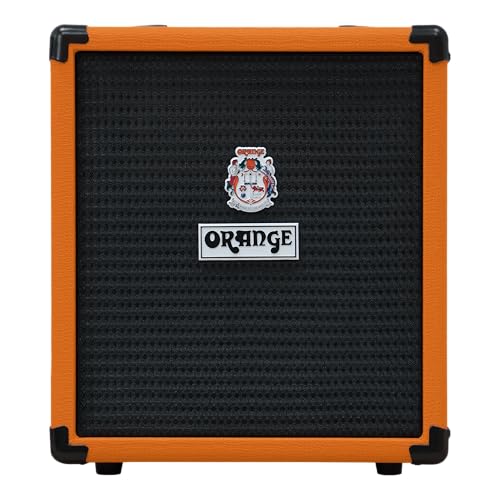
The Orange Crush Bass 25 gives you more genuine control over your sound than anything else at this size, and the parametric mid is the reason. Most small amps offer a fixed mid knob that boosts or cuts a frequency the designer chose for you; a sweepable parametric mid lets you move to the exact frequency that is causing trouble — the boom your room adds, the honk that makes your bass sound nasal, the notch where the note disappears — and fix it. That is a professional tool, and it is rare at practice-amp size.
The overdrive is done properly too. Rather than replacing your clean signal with a dirty one, the blend control mixes the two, so the fundamental low end stays intact underneath the grind. This is how bass distortion is supposed to work and why so many bass players are disappointed by guitar-style dirt. Orange also loads the headphone output with cabinet simulation, so quiet practice sounds like a mic’d rig rather than a thin buzz, and an onboard chromatic tuner means one less thing on the floor. The build is road-tough in the way Orange gear generally is.
What you are paying for is quality rather than quantity. It costs meaningfully more than similarly powered practice amps, and some of that is the styling and construction rather than extra volume. At twenty-five watts through an eight-inch speaker it is still firmly a home amp — excellent EQ in service of quiet playing. For a player who cares more about shaping tone than about being loud, that is a good trade.
Orange Crush Bass 25
by Orange
The most tonally capable small bass amp on this page -- parametric mid EQ, a proper blended overdrive, a cab-simulated headphone output, and an onboard tuner in a road-tough box.
Pros
- The best tone controls of any small amp here -- an active three-band EQ plus a sweepable parametric mid lets you hunt down the exact frequency where your bass either honks or disappears, which is a level of control usually reserved for amps three times this size
- The blend control mixes clean and overdriven signal together rather than replacing one with the other, which is how bass distortion is supposed to work: you keep the fundamental low end intact while the grind sits on top
- The headphone output is loaded with Orange's cabinet simulation, so silent practice sounds like a mic'd bass rig rather than the thin buzz you get from a plain headphone jack on most small combos
- A built-in chromatic tuner means one less thing on the floor and one less excuse for playing out of tune, and the road-tough Orange build feels far more like a piece of professional gear than its size suggests
Cons
- It costs noticeably more than similarly powered practice amps, and you are partly paying for the styling and the build rather than for extra volume
- At 25 watts through an eight-inch speaker it is still a home amp, so the excellent EQ and drive are in service of quiet playing rather than stage volume
Best Compact Amp: Hartke HD15
The Hartke HD15 is the amp for a player whose space is measured in inches. Its 6.5-inch HyDrive driver — a paper cone with an aluminium centre — is genuinely unusual at this size, and it gives the amp a bright, articulate attack that most small bass combos lack. Fingerstyle definition and slap snap survive at low volume rather than dissolving into a warm blur, which makes practising more useful because you can actually hear what your hands are doing.
The rest is refreshingly plain. A top-mounted panel with volume and three-band EQ, no presets, no menus, no app. It fits beside a computer or under a bed and does not dominate a room, which in practice means it stays plugged in and gets used. Hartke has been building bass-specific speakers for decades, and the voicing here reflects that — this is a cabinet designed for bass frequencies, not a guitar box with a different badge on it.
The physics catch up eventually. Fifteen watts through a 6.5-inch driver will not develop the lowest notes on a five-string, so if you play a low B regularly you want more speaker area. And with no overdrive and no voicing switches, tonal variety has to come from your hands or a pedal. As the smallest amp here that still counts as a proper bass rig, though, it earns its place.

Hartke HD15
by Hartke
The most compact real bass amp here -- a bright, articulate HyDrive driver and dead-simple controls in a cabinet that fits on a desk.
Pros
- The HyDrive driver pairs a paper cone with an aluminium centre, which gives this little amp a bright, articulate attack that cuts through in a way most small bass combos cannot -- fingerstyle definition and slap snap survive at low volume
- It is the most desk-friendly amp here with a real speaker: a 6.5-inch driver in a compact cabinet fits beside a computer or under a bed without dominating the room
- A straightforward top-mounted control panel with volume and three-band EQ means no menus, no presets, and no learning curve, so it disappears into the routine of practising
- Hartke has built bass-specific speakers for decades and it shows in the voicing -- this amp is tuned for bass frequencies rather than being a guitar cabinet with a bass badge
Cons
- Fifteen watts through a 6.5-inch driver means the deepest notes on a five-string will not develop fully; this is an amp for hearing yourself clearly, not for feeling the low end in your chest
- No overdrive circuit and no voicing switches, so tonal variety has to come from your hands or a pedal
Best for Rehearsals and Small Gigs: Fender Rumble 100 V3
The Fender Rumble 100 V3 is where the Rumble line stops being a practice amp and becomes a working one. A hundred watts through a twelve-inch Eminence speaker is the realistic minimum for holding your own against a live drummer, and the difference is not subtle: instead of the low end compressing and blurring as you turn up, it stays clean and defined. That headroom is the whole point of the upgrade.
The XLR direct output is the other half of the story, and it is the feature that quietly matters most. Bass is nearly always taken by DI live and in the studio, because a clean signal straight from the amp is far more usable than a microphone pointed at a speaker in a loud room. Once you play anywhere with a PA, having a DI on the back of your own amp turns setup from a negotiation into a plug. You also get the full Rumble tone kit — four-band EQ, three voicing switches, the overdrive circuit and an effects loop — and a Class-D power section that keeps the weight low enough to carry up a flight of stairs in one trip.
The caveat is need, not quality. A player who only ever practises at home is buying headroom they will never use, and a twelve-inch combo takes real floor space in a small apartment. But if a band exists, or is about to, this is the amp that stops being the weak link.

Fender Rumble 100 V3
by Fender
The point where a Rumble becomes a gigging rig -- 100 watts, a 12-inch Eminence speaker, an XLR direct out and an effects loop, still light enough to carry in one trip.
Pros
- This is the step where a bass amp becomes gig-capable -- 100 watts through a 12-inch Eminence speaker gives you the clean headroom to sit under a live drummer without the low end collapsing, which is the exact failure mode of smaller amps
- The XLR direct output is the feature that matters most once you play anywhere with a PA: the engineer takes a clean, consistent signal from your amp instead of pointing a microphone at it and hoping
- It stays remarkably light for its output thanks to a Class-D power section and a ported plywood cabinet, so the amp that covers a rehearsal is still one you can carry up a flight of stairs in one trip
- You get the full Rumble tone kit -- four-band EQ, the three voicing switches, the overdrive circuit and an effects loop -- so it is a complete rig rather than just a louder practice amp
Cons
- It is more amp than a purely bedroom player needs, and the extra power is money spent on headroom you will never use if you only practise at home
- A 12-inch combo takes real floor space, so it is not the amp to leave beside a desk in a small apartment
Best Classic Ampeg Tone: Ampeg Rocket Bass RB112
Ampeg is the sound of recorded bass on an enormous number of records you already know, and the Rocket Bass RB112 is the most accessible way to get that voice in a combo one person can lift. The character is thick and midrange-forward, and that midrange is exactly what makes a bass line audible in a dense mix rather than felt but not heard — it is a different philosophy from the scooped modern voice, and for rock, blues and funk it is often the more musical one.
Super Grit Technology is the standout feature and the best onboard overdrive here for heavy playing. It delivers an aggressive, harmonically dense grind while keeping the fundamental note solid underneath, which is precisely the balance that makes distorted bass work instead of turning into a thin buzz. The practical details are considered too: zero and minus-fifteen decibel inputs mean a hot active bass will not clip the front end, a genuine and under-discussed problem on cheaper amps. Add an XLR direct output and a hundred watts through a twelve-inch speaker and it is fully stage-ready, with strong owner ratings so far on a much thinner review base than the Fenders here.
The honest caveats are evidence and size. The review base is small next to the Fender Rumbles, so there is less accumulated long-term data even though the rating is excellent. And it is the heaviest combo here, which is a lot of amp for anyone not playing with other people. If the Ampeg voice is the sound in your head, none of the alternatives here will scratch that itch.

Ampeg Rocket Bass RB112
by Ampeg
The classic Ampeg voice in a liftable combo -- thick mids, the best onboard grind here for rock and metal, active-friendly inputs and a stage-ready XLR out.
Pros
- Ampeg is the sound of recorded bass on an enormous number of classic records, and the Rocket Bass line puts that thick, midrange-forward voice into a combo a working player can actually lift
- Super Grit Technology is the best onboard overdrive here for heavy styles -- it delivers the aggressive, harmonically dense grind that rock and metal bass lines need while keeping the fundamental note solid underneath
- Zero and minus-fifteen decibel inputs mean a hot active bass will not clip the front end, which is a genuine problem on cheaper amps and one that quietly ruins the tone of modern instruments
- The XLR direct output and 100 watts through a 12-inch speaker make it fully stage-ready, and owner ratings so far are strong, on a much thinner review base than the Fender amps here
Cons
- The review base is small compared with the Fender Rumbles, so there is less accumulated long-term evidence, even though the rating is excellent
- It is the heaviest and most expensive combo here apart from the Gallien-Krueger, which is a lot of amp for anyone not playing with a band
Best Headphone Amp: Vox amPlug 3 Bass
The Vox amPlug 3 Bass solves the problem that stops more bass practice than any other: you cannot play quietly. Bass carries through walls and floors in a way guitar does not, so shared flats, late nights and sleeping children are genuine obstacles. This plugs directly into the jack on your bass, runs on batteries, and sends full amp tone into your headphones at literally zero room volume. Nothing else here removes that obstacle so completely for so little money.
It is also better than its size suggests. Three voicings — Classic, Smooth and Funk — cover most of what a bass player actually reaches for, and the analog circuitry gives them warmth instead of the brittle thinness cheap headphone amps are known for. Nine built-in rhythm patterns matter more on bass than on any other instrument, because your job is to lock with a drummer and solo practice normally denies you one. And the built-in compressor evens out the gap between quiet fingerstyle and hard slapping, so you are not constantly adjusting volume.
The limits are inherent to the format. There is no speaker at all, so this complements a combo rather than replacing it — you cannot play with anyone in a room using it. And the controls are necessarily tiny, so fine adjustments take a moment. As a way of making practice possible at hours when it otherwise would not be, it is close to essential.

Vox amPlug 3 Bass
by VOX
The cheapest way to practise bass properly at midnight -- three warm analog voicings, nine rhythm patterns and a compressor, in something that plugs into your bass and runs on batteries.
Pros
- It removes every excuse not to practise -- it plugs straight into the jack on your bass, runs on batteries, and sends full amp tone to your headphones at zero room volume, so late nights, hotel rooms and shared walls stop being obstacles
- Three voicings (Classic, Smooth and Funk) cover most of what a bass player actually needs, and the analog circuitry gives them warmth rather than the brittle digital thinness cheap headphone amps are known for
- Nine built-in rhythm patterns turn solo practice into playing with something, which matters more for bass than for any other instrument -- your job is to lock with a drummer, and this gives you one
- The built-in compressor evens out volume peaks, so quiet fingerstyle and hard slapping sit at a usable level in your headphones without constant riding of the volume knob
Cons
- There is no speaker at all, by design, so it complements a combo amp rather than replacing one -- you cannot use it to play with anyone in a room
- The controls are tiny on a body this small, so fine adjustments take a moment
Best Portable Amp: JOYO MA-10B
The JOYO MA-10B is the only amp here with a real speaker that you can put in a backpack and run without an outlet, and that combination unlocks things the rest cannot: busking, practising in a garden, taking a bass to a friend’s house without a car, keeping an amp at a second location. Under three pounds is light enough that carrying it never becomes a decision.
For something this small it is more capable than expected. Two switchable channels, normal and drive, give it real tonal range, and the tone control moves it usefully between dark and bright. Being shelf-sized also has a subtle benefit: it lives in a room in a way a full combo cannot, and an amp that is always there gets switched on more often than one you have to make space for. With more than eighteen hundred ratings it also carries one of the largest review bases here, so you are not guessing about what it does.
Those reviews are also where the honesty lies. This has the lowest average rating on the page, and the recurring theme is exactly what physics predicts: ten watts through a small driver cannot reproduce a low B or a hard-hit low E cleanly. Treat it as a companion amp — the one you take out, not the one you learn on — and it is excellent value. Expect it to be your only amp and it will disappoint.

JOYO MA-10B
by JOYO
The go-anywhere bass amp -- battery power, two channels and a real speaker in something under three pounds that fits in a backpack.
Pros
- It is the only amp here with a real speaker that you can carry in a backpack and run on a battery, which makes busking, garden practice and travelling with a bass genuinely practical
- Two switchable channels, normal and drive, give it more tonal range than most amps at this size, and the tone control shifts it usefully between dark and bright
- Under three pounds and small enough to sit on a shelf, so it lives in the corner of a room the way a full combo cannot, which in practice means it gets switched on more often
- One of the largest review bases here, at more than eighteen hundred ratings, so there is a lot of accumulated evidence about what this little amp does and does not do
Cons
- The average rating is the lowest on this page, and the recurring theme in owner feedback is the obvious one: ten watts through a small driver cannot reproduce a low B or a loud low E cleanly
- It is a companion amp rather than a main one -- treat it as the amp you take out, not the amp you learn on
Best Professional Gigging Rig: Gallien-Krueger MB112-II
The Gallien-Krueger MB112-II is what a working bass player buys when load-in stops being fun. Two hundred watts through a twelve-inch Paragon driver, in a combo light enough to carry in one hand, is the trade the whole MB line was built to make — and it is the reason you see these on so many stages. The amp that covers a club gig should not require two trips.
The voice is distinct and worth understanding before you buy. Gallien-Krueger is famously clean, fast and articulate, with a top-end clarity that keeps fingerstyle detail, slap and chordal playing readable inside a loud band rather than letting them collapse into low-end mush. Contour and presence controls sit alongside the four-band EQ, which is the fastest way to reshape the whole voice for a difficult room during a soundcheck. And a chain output lets you drive an additional powered cabinet, so the same amp scales up to a bigger stage instead of being replaced.
It is the most expensive amp on this page by a clear margin, and it is important to be clear about what that money buys: headroom and portability, not features. A home player would gain nothing. And the modern GK voice is deliberately not vintage-flavoured, so if you want thick classic thump, the Ampeg is your amp. For a gigging player who values a light load-in and a clear tone, this is the one.
One practical note as of this update: the listing has its buy box back, so you can order it straight from the product page again. The seller is a specialist music retailer rather than Amazon itself, which is ordinary for professional gear at this level. It still pays to check who is selling and what the return terms are before you commit.

Gallien-Krueger MB112-II
by Gallien-Krueger
A professional stage amp you carry with one hand -- 200 clean watts, a fast articulate GK voice, a chain output to add a cabinet, and a full DI for the front-of-house desk.
Pros
- Two hundred watts through a 12-inch Paragon driver in a combo this light is the reason Gallien-Krueger built its reputation -- this is a professional stage amp that one person carries in one hand, which changes what loading in feels like
- The GK voice is famously clean, fast and articulate, with a top-end clarity that makes fingerstyle detail, slap and chordal playing read clearly in a dense band mix rather than turning into low-end mush
- A chain output lets you drive an additional powered cabinet, so the same amp scales from a small club to a bigger stage without you buying a different rig
- Contour and presence controls sit alongside the four-band EQ, which is a fast way to reshape the whole voice for a room rather than fiddling with individual bands during a soundcheck
Cons
- It is the most expensive amp on this page by a clear margin, and that money buys headroom and portability rather than extra features -- a home player would be spending for nothing
- The review base is small, and the clean, modern GK voice is deliberately not vintage-flavoured, so a player chasing thick classic thump will prefer the Ampeg
Best Bass Amp for Practice
A practice amp is judged on how good it sounds quietly, not how loud it goes. What matters is a speaker big enough that low notes stay musical at low volume, tone controls that keep practice interesting, and a headphone output for the hours when even quiet is too loud. All three of these do that; they differ in how much amp you want in the room.
| Product | Price | Buy |
|---|---|---|
| Fender Rumble 25 V3Best practice amp overall The right size for a bedroom, with overdrive, aux in and headphone out, and thousands of owners behind it | $149.99 | View on Amazon |
| Fender Rumble 40 V3Best if you also want to jam A 10-inch speaker and 4-band EQ for practice that scales up to light rehearsals | $269.99 | View on Amazon |
| Orange Crush Bass 25Best for tone shaping Parametric mid EQ and a cab-simulated headphone output make quiet practice genuinely inspiring | $249.00 | View on Amazon |
Best Bass Amp for Beginners
A beginner needs an amp that sounds like a real bass, has nothing confusing on the front panel, and allows practice at any hour. Price matters, but not at the cost of speaker size — an amp with a tiny driver teaches a new player that their instrument sounds thin, which is a bad and untrue lesson. If you are still choosing the bass itself, our best bass guitars for beginners guide pairs with any of these.
| Product | Price | Buy |
|---|---|---|
| Fender Rumble 15 V3Best first amp A full 8-inch speaker and three simple knobs for the lowest sensible spend | $99.99 | View on Amazon |
| Fender Rumble 25 V3Best beginner amp to grow into More power, overdrive and contour, so it stays useful well past the first year | $149.99 | View on Amazon |
| JOYO MA-10BBest beginner amp to take anywhere Battery power and a backpack-sized body for a beginner short on space | $49.99 | View on Amazon |
Best Budget Bass Amp
Buying cheap on bass is mostly about avoiding one mistake: a driver too small to reproduce the notes you are playing. Spend the money on speaker area first and features second. These three are the honest picks at the low end, covering a real combo, a portable amp, and the silent option.
| Product | Price | Buy |
|---|---|---|
| Fender Rumble 15 V3Best budget combo The cheapest amp here with a speaker big enough to sound like a bass | $99.99 | View on Amazon |
| JOYO MA-10BBest cheap portable amp A real speaker, two channels and battery power for pocket money | $49.99 | View on Amazon |
| Vox amPlug 3 BassCheapest way to practise properly Full amp tone into headphones for less than a set of quality strings | $47.80 | View on Amazon |
Best Small Bass Amp
Small has two meanings on bass: physically compact, and quiet enough for a shared space. The trap is that shrinking the speaker below eight inches costs you the bottom octave of your instrument. These three handle the compromise in different ways — a small driver voiced for clarity, a full-size driver in a modest cabinet, and no speaker at all.
| Product | Price | Buy |
|---|---|---|
| Hartke HD15Best desk-sized amp A 6.5-inch HyDrive driver tuned for articulate attack in a cabinet that fits on a desk | $149.99 | View on Amazon |
| Fender Rumble 15 V3Best small amp with a full-size speaker A compact box that still holds a full 8-inch speaker, so the low end survives | $99.99 | View on Amazon |
| Vox amPlug 3 BassSmallest option of all Pocket-sized, plugs into the bass itself, and makes no sound in the room at all | $47.80 | View on Amazon |
Best Bass Amp for Gigging
Gigging changes the requirements entirely: you need clean headroom to sit under a drummer, and an XLR direct output so the engineer can take a clean signal rather than miking your speaker. Weight becomes a real factor once you are carrying gear regularly. These three are the stage-ready amps here, in ascending order of what they will handle.
| Product | Price | Buy |
|---|---|---|
| Fender Rumble 100 V3Best gigging amp for the money 100 watts, a 12-inch Eminence speaker and a DI out, still light enough for one trip | $389.99 | View on Amazon |
| Ampeg Rocket Bass RB112Best for classic tone on stage Thick Ampeg mids and active-friendly inputs with a stage-ready XLR output | $499.99 | View on Amazon |
| Gallien-Krueger MB112-IIBest professional rig 200 clean watts you carry in one hand, with a chain out to add a cabinet | $800.00 | View on Amazon |
Best Bass Headphone Amp
Silent practice is more important on bass than on guitar, because low frequencies travel through walls that stop everything else. You have two routes: a dedicated headphone amp with nothing but a jack and a battery, or a combo whose headphone output is good enough to be worth using — which usually means cabinet simulation rather than a plain jack.
| Product | Price | Buy |
|---|---|---|
| Vox amPlug 3 BassBest dedicated headphone amp Three analog voicings, nine rhythm patterns and a compressor, straight into your headphones | $47.80 | View on Amazon |
| Orange Crush Bass 25Best combo for headphone tone Cabinet simulation on the headphone output makes silent practice sound mic'd, not thin | $249.00 | View on Amazon |
| Fender Rumble 25 V3Best affordable combo with headphones A straightforward headphone jack plus an aux input for playing along at any hour | $149.99 | View on Amazon |
Best Bass Amp for Metal
Metal asks two specific things of a bass amp: aggressive grind that does not hollow out the note, and enough headroom to stay defined under high-gain guitars and a loud drummer. The key is a blended overdrive, where the dirty signal sits on top of an intact clean fundamental rather than replacing it. For a fuller rig, our best distortion pedals guide covers the pedal route.
| Product | Price | Buy |
|---|---|---|
| Ampeg Rocket Bass RB112Best for metal overall Super Grit Technology delivers dense grind while keeping the low fundamental solid | $499.99 | View on Amazon |
| Orange Crush Bass 25Best heavy tone at home A blend control mixes dirt over clean signal, with parametric mid to cut through guitars | $249.00 | View on Amazon |
| Fender Rumble 40 V3Best mid-size option A bass-voiced overdrive plus contour switching for scooped modern aggression | $269.99 | View on Amazon |
Best Bass Amps by Use Case
A few more directions worth calling out. Every amp below is reviewed in full above — this is the quick map for a handful of specific players, from the home recordist to the jazz player.
| Product | Price | Buy |
|---|---|---|
| JOYO MA-10BBest portable bass amp Battery powered and backpack-sized, with a real speaker | $49.99 | View on Amazon |
| Fender Rumble 100 V3Best for recording at home An XLR direct output and effects loop send a clean signal straight to an interface | $389.99 | View on Amazon |
| Fender Rumble 25 V3Best for general home use Enough tone and volume for a room, with headphone and aux jacks for any hour | $149.99 | View on Amazon |
| Gallien-Krueger MB112-IIBest for jazz A fast, clean and articulate voice that keeps walking lines and chords readable | $800.00 | View on Amazon |
| Ampeg Rocket Bass RB112Best warm, vintage-voiced amp Thick Ampeg midrange for players chasing classic recorded bass tone | $499.99 | View on Amazon |
Buyer's Guide
I have spent twenty years playing and buying gear -- at Berklee, on stage, and as a buyer who evaluated hundreds of amps before they reached players. Bass amps are judged differently from guitar amps, because physics is less forgiving down here: low notes demand more power and more speaker area, and an amp that cannot deliver them turns to mush the moment a drummer starts playing. These are the six things I weigh, in the order that actually decides the purchase.
Wattage and Real-World Loudness
The first and most consequential choice, and bass players routinely get it wrong by buying too small. Perceived loudness only doubles for every tenfold increase in power, so extra watts mostly buy clean headroom rather than raw volume -- and bass needs that headroom badly, because reproducing a low E takes far more energy than a guitar's open A. For solo home practice, 10 to 25 watts is plenty and is easier to get a good tone from at low volume. Jamming with acoustic instruments wants 40 to 50. Rehearsing with a live drummer realistically starts at 100 watts, and stages without PA support want 200 or more. The common failure is buying a 25-watt combo, joining a band three months later, and discovering it vanishes entirely.
Speaker Size and Cabinet Design
Speaker area matters as much as wattage on bass, and it is the spec most often ignored. A larger driver moves more air, which is what turns a low note from a click into something you feel -- this is why a 15-watt amp with an 8-inch speaker sounds far more like a bass amp than a higher-powered amp with a tiny 4-inch driver. Eight inches is the practical minimum for a real low end, 10 inches is the sweet spot for home and light rehearsal, and 12 inches is where a combo starts to feel like a stage rig. Cabinet design counts too: a ported cabinet extends the low end, while a sealed one is tighter and more controlled. If you play a five-string, weight this heavily, because a low B punishes a small speaker.
EQ, Voicing and Onboard Overdrive
Bass tone is mostly about the midrange, which surprises people who assume it is about bass. Definition lives in the mids -- cut them and you vanish in a band mix, however loud you are. A 3-band EQ is the baseline; a 4-band EQ with separate low-mid and high-mid controls gives real control; and a sweepable parametric mid is the most powerful tone tool at this price because it targets one problem frequency exactly. Voicing switches are a fast way to reshape the whole amp. And if you want grit, look for a bass-specific overdrive that blends dirty and clean signal, like Orange's blend control or Ampeg's Super Grit -- a guitar-style distortion strips out the fundamental and leaves you sounding thin.
XLR Direct Out, Effects Loop and Recording
This is the feature that quietly separates a practice amp from a working one. An XLR direct output sends a clean signal from your amp straight to a mixing desk or an audio interface, which is how bass is nearly always handled live and in the studio -- an engineer would far rather take your DI than point a microphone at a combo. The Rumble 100, the Ampeg Rocket Bass RB112 and the Gallien-Krueger MB112-II all have one; the smaller amps here do not, which is fine until the first time someone asks for your DI. An effects loop matters if you run time-based pedals, and a headphone output with cabinet simulation, like Orange's, makes silent practice and simple recording sound genuinely amp-like rather than flat.
Size, Weight and Where You Will Actually Play
Be honest about the room. A 12-inch combo fills a stage but dominates a bedroom and is real weight on stairs; a compact combo like the Hartke HD15 sits on a desk and disappears; a battery-powered amp like the JOYO MA-10B goes in a backpack; and a headphone amp like the Vox amPlug 3 Bass fits in a pocket and works at midnight in a shared flat. Class-D power sections have changed this calculation enormously -- the Rumble 100 and the Gallien-Krueger deliver serious output at weights that would have been impossible a generation ago. The best amp is the one you switch on daily, and an amp that is awkward to have in the room is an amp that stays off.
Budget and Growing Into a Rig
There is a genuinely good bass amp at every level here, and the jumps are meaningful rather than marketing. The entry level buys a real first amp with a proper 8-inch speaker; the middle band is the sweet spot where most players should live, covering serious home practice through light jamming; and the step to a gig-capable amp with a DI output is what most people mean when they search for a bass amp under five hundred. Above that you are buying professional headroom and portability rather than features. A sensible path is to buy the practice amp you need now and add a gigging amp when a band actually exists, rather than buying stage power you will not use for a year. If you are still choosing the instrument, our best bass guitars for beginners guide is the natural companion to this one.
How to Choose the Best Bass Amp for You
The right bass amp is decided by volume and venue first, tone second, and budget third — in that order, because the first question rules out entire categories. If you practise alone in a bedroom, anything from fifteen to forty watts is right, and buying a hundred-watt combo means paying for headroom you will never use while making low-volume tone harder to dial in. If you rehearse with a live drummer, a hundred watts is the realistic floor and a smaller amp will simply vanish, no matter how good it sounds alone. And if you play venues with a PA, an XLR direct output stops being a luxury and becomes the thing the sound engineer asks you for.
Then think about the speaker, which matters more on bass than most buyers realise: eight inches is the minimum for a real low end, ten is the sweet spot for home and light rehearsal, and twelve is where a combo becomes a stage rig. Only then consider tone. Decide whether you want a clean platform to shape with pedals or an amp with strong character built in, and if you want grit, look for a blended bass overdrive rather than borrowed guitar distortion. Finally, be realistic about the room: the best amp is the one that is convenient enough to switch on every day. Chords are the hardest thing you can ask a bass amp to reproduce, so if you play them, test any amp with a couple of the shapes in our free bass guitar chord chart before you commit: a weak speaker turns a clean voicing to porridge long before it struggles with single notes. If you also need to keep the instrument in tune between sessions, our best guitar tuners guide covers options that work equally well on bass, and our guitar amp guide is worth a read if there is a guitarist in the house too.
Final Verdict
For most players, the Fender Rumble 40 V3 is the best bass amp of 2026 — the point where power and speaker area make a bass sound like a bass, with tone controls that cover most styles and a size that still fits a bedroom. If you only practise at home, the Fender Rumble 25 V3 is the better value and the most proven amp here, and the Fender Rumble 15 V3 is the sensible first amp when money is tight. For control over your sound at practice volume, the Orange Crush Bass 25 has the best EQ here; for a desk, the Hartke HD15; for backpacks and busking, the JOYO MA-10B; and for midnight practice in a shared flat, the Vox amPlug 3 Bass costs less than a set of strings and removes the problem entirely. Once a band exists, the Fender Rumble 100 V3 is the smart step up, the Ampeg Rocket Bass RB112 delivers the classic recorded bass voice with the best onboard grind, and the Gallien-Krueger MB112-II is the professional rig you carry in one hand. Match the amp to your volume and your room first, and the rest of the decision gets easy.
Frequently Asked Questions
What is the best amp for bass?
How many watts do I need for a bass amp?
Can I play bass through a guitar amp?
What are the best amp settings for bass?
Can I use one of these amps with an upright or acoustic bass?
Related Articles
9 Best Guitar Amps of 2026 (Every Budget, Practice to Gigging)
amps-effects
9 Best Looper Pedals of 2026 (Budget, Beginner, Bass, Drums & Live)
amps-effects
10 Best Distortion Pedals of 2026 (Metal, Rock, Blues & Budget)
amps-effects
11 Best Guitar Pedals of 2026 (One Pick for Every Effect)
amps-effects
10 Best Multi-Effects Pedals of 2026 (Budget, Compact, Acoustic & Live)
amps-effects
About the Reviewer

Julian Reyes, MM, Berklee
M.M. Performance, Berklee College of Music
Julian Reyes is a multi-instrumentalist with a Master of Music from Berklee College of Music and over a decade gigging on guitar, bass, and keys. Before founding House of Octave, he spent years as a gear buyer for an independent music retailer, evaluating hundreds of instruments and audio products for the sales floor. He started House of Octave in 2026 to give players honest, hands-on reviews — judged by how gear actually sounds and holds up on stage and in the studio, not by spec sheets or sponsorships.