9 Best Looper Pedals of 2026 (Budget, Beginner, Bass, Drums & Live)
Berklee-trained multi-instrumentalist Julian Reyes (MM) reviews the 9 best looper pedals of 2026 -- from the one-switch BOSS RC-1 to the song-structured BOSS RC-10R -- matched by use: budget, beginner, bass, acoustic, drum machine, multi-track and live performance.
Updated
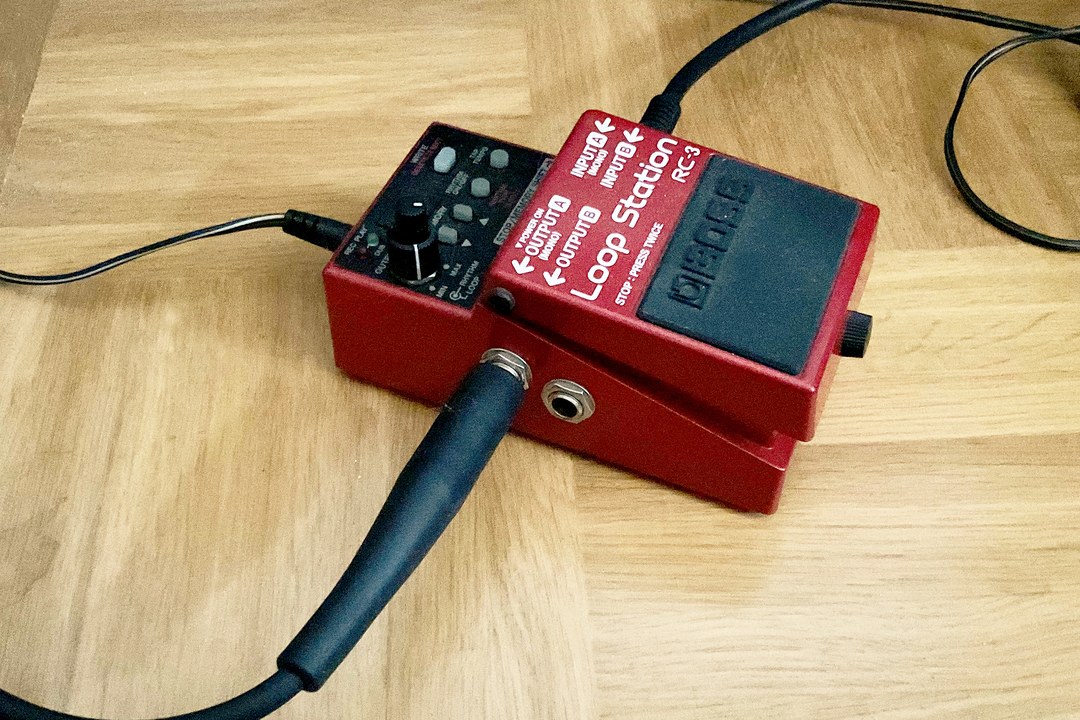
A looper pedal is the rare piece of gear that changes what you can do rather than how you sound. Plug one in and a solo practice session becomes a rhythm section, a songwriting idea gets captured before it evaporates, and a one-guitar gig turns into something an audience will actually stop and watch. That is why looping has spread out of the ambient fringe and into open-mic nights, worship teams, busking pitches and bedroom practice rooms.
The trouble is that “best looper pedal” hides at least four different questions. Do you want one footswitch you never have to think about mid-song, or do you want a pedal that stores a library of arrangements? Do you need drums to loop against because you practise alone, or do you have a drummer and want the money spent on the signal path instead? Are you performing whole songs hands-free, or capturing ideas on a sofa? And is this going on a crowded pedalboard with one gap left, or living on the floor by itself?
Those pull in genuinely different directions, and the specification everyone quotes first, record time, answers almost none of them. Twelve minutes is plenty for a live loop and useless for storing a set; thirteen hours is not six hundred times better. So I approached this the way I used to approach buying inventory: not “which looper is best” but “which looper is best for each way people actually loop.” I evaluated nine pedals on control scheme, loop memory, rhythm features, signal path and stage usability, and matched each to a clear role. It is worth browsing our full amps and effects category to see how a looper fits the rest of a rig.
| Product | Price | Buy |
|---|---|---|
| BOSS RC-1 Loop StationBest Overall | $93.49 | View on Amazon |
| LEKATO Looper Guitar Pedal with Tuner, 9 LoopsBudget Pick | $59.99 | View on Amazon |
| BOSS RC-5 Loop StationPremium Pick | $206.99 | View on Amazon |
| TC Electronic Ditto LooperRunner-Up | $83.90 | View on Amazon |
| Donner Circle Looper Pedal Drum MachineRunner-Up | $109.99 | View on Amazon |
| BOSS RC-500 Loop StationRunner-Up | $351.99 | View on Amazon |
| MOOER Looper X2 Stereo Looper PedalRunner-Up | $115.99 | View on Amazon |
| BOSS RC-10R Rhythm Loop StationRunner-Up | $310.20 | View on Amazon |
| Donner Triple Looper Guitar PedalRunner-Up | $79.99 | View on Amazon |
Find the Best Looper Pedal for Your Need
Jump straight to the pedal that fits how you play:
- Best looper pedals overall
- Best budget looper pedal
- Best looper pedal for beginners
- Best looper pedal for bass
- Best looper pedal with a drum machine
- Best multi-track looper pedal
- Best looper pedal for live performance
- Best looper pedal for acoustic guitar
- More looper picks by use case
How I Tested and Evaluated These Looper Pedals
Every pedal here was chosen on a verified, active Amazon listing, a real owner-review base, a brand with a service record, and a clear fit for a specific kind of player. I leaned on twenty years of playing and a gear buyer’s eye for the things that only show up once a looper is on the floor in front of you: whether the control scheme survives a song at tempo, whether the loop start and stop land where you meant them to, how the audio holds up on the fifth and sixth overdub rather than the first, and whether you can see what the pedal is doing without breaking eye contact with a room.
I cross-referenced thousands of owner reviews for the complaints that keep recurring in this category specifically, which are not the ones you might expect: timing drift on loop close, hold-and-count control schemes that are fine at home and unusable live, loops lost on power-off, and drum sounds that are technically present but musically unusable. I weighed record time against memory and saving behaviour, because they are different things and only one of them is quoted on the box. Pedals from unverified sellers or with thin, suspicious review histories were left out. Because a looper sits in the signal chain alongside everything else, I have noted throughout how each one behaves next to the rest of a board.
Best Looper Pedals Overall
These nine pedals span every budget and every way of working, but each is the honest best choice for the player it targets. Below, every pedal is reviewed once in full. Farther down, use-case sections pull the right two or three together so you can compare and decide fast for your situation.
Best Overall: BOSS RC-1 Loop Station
The BOSS RC-1 wins best overall because it removes every decision except the musical one. One footswitch records, overdubs, stops and clears, and the ring of twenty-four LEDs around it tells you exactly where you are in the bar using peripheral vision rather than a screen you have to look down and read. Underneath that sits a stereo signal path, twelve minutes of record time and the BOSS compact chassis that has survived four decades of being stepped on. It saves nothing and it has no drums, which are real limits, but nothing else here is this hard to get wrong at tempo, and more than three thousand owners agree.

BOSS RC-1 Loop Station
by BOSS
The industry-standard simple looper -- one footswitch, a stereo signal path, and an LED ring that tells you where you are in the bar without looking down.
Pros
- It is the looper almost every guitarist eventually recommends, and the reason is that one footswitch does everything: press to record, press to overdub, press twice to stop, hold to clear -- there is no menu, no mode button, and nothing to learn on stage
- The 24-segment ring of LEDs around the footswitch is the single best loop display in the category, because you see where you are in the bar with your peripheral vision rather than having to look down and read a screen
- Stereo inputs and outputs mean it handles a stereo rig, a keyboard, or a wet-dry setup without folding your sound to mono, which several loopers at this price still do
- With more than three thousand owner ratings sitting at 4.6 stars it has the deepest proven track record of anything here, and BOSS compact-pedal chassis are famously close to indestructible
Cons
- Twelve minutes of record time is generous for live use but there is only one loop and it is gone when you unplug -- there is no memory, no saving, and no way to keep an idea for tomorrow
- No rhythms and no drum machine, so if you want a beat to loop against you are buying a second box or a different pedal
- There is no undo of an undo beyond one step and no reverse, half-speed, or loop effects -- the simplicity that makes it fast also makes it the least featured pedal here
Best Budget: LEKATO Looper Pedal with Tuner
The LEKATO is the cheapest pedal here that does the two things budget loopers usually skip: it saves your loops and it tunes your guitar. Nine slots hold ten minutes each, all of it surviving power-off, and the built-in chromatic tuner means one pedal covers two jobs and one power supply output. Recording is 48kHz/24-bit with analog dry-through, so your dry tone is untouched. Everything runs through a single footswitch, which makes moving between the nine slots a hold-and-count affair, and the chassis is lighter than a BOSS — but for the money, nothing else is close.

LEKATO Looper Guitar Pedal with Tuner, 9 Loops
by LEKATO
The cheapest looper here that saves your loops and tunes your guitar -- nine slots, forty minutes, and a built-in tuner for well under the price of a basic BOSS.
Pros
- Nine separate loop slots holding forty minutes between them, at roughly half the price of the cheapest BOSS, is a feature set that simply did not exist at this price a few years ago -- and unlike the RC-1 the loops survive being unplugged
- A genuinely useful chromatic tuner is built in, which means this one pedal replaces two on a small board and frees up a power supply output as well as the space
- It records at 48kHz/24-bit with analog dry-through, so your dry signal never passes through the converters and your core tone is unchanged whether the pedal is on or off
- More than 2,800 owner ratings at 4.4 stars is the second-deepest review base on this page, which is a lot of reassurance for the least money here
Cons
- Everything runs through one footswitch and one knob, so switching between the nine slots means holding and counting rather than stepping -- workable at home, fiddly mid-song
- There is no drum machine and no rhythm track, so it is a pure looper despite the long record time
- Build quality is respectable for the money but it is a lighter chassis than a BOSS or TC compact, and it is not what you want under a boot for two hundred gigs a year
Best Upgrade: BOSS RC-5 Loop Station
The BOSS RC-5 is the pedal you buy when looping stops being an experiment. Thirteen hours of stereo recording across ninety-nine saved memories takes record time off the table permanently, and the 32-bit conversion with floating-point processing keeps the fifth and sixth overdub as clean as the first, which is precisely where cheaper loopers turn grainy. Fifty-seven rhythms across seven drum kits let you loop against a real beat, and full MIDI in and out syncs it to anything else on stage. It is single-track and it has a genuine menu to learn, but it shares the top owner rating on this page with the RC-1.

BOSS RC-5 Loop Station
by BOSS
Tied with the RC-1 for the top owner rating here -- thirteen hours of 32-bit stereo looping, 99 saved memories, onboard drums, and full MIDI in a compact BOSS chassis.
Pros
- Thirteen hours of stereo recording across 99 saved phrase memories effectively removes record time from the list of things you ever think about again, and every loop is still there when you power the pedal back on
- 32-bit AD/DA conversion with 32-bit floating-point processing is the cleanest signal path on this page, and it matters most exactly where cheap loopers fail: on the fifth and sixth overdub, where lesser converters turn a loop grainy
- Fifty-seven onboard rhythms with A and B variations across seven drum kits mean you can loop against a real beat, which is the difference between a looper you use for ideas and one you actually practise with
- Full MIDI in and out over space-saving mini TRS jacks lets it sync to a drum machine, a backing track rig, or another pedal -- and it shares the top owner rating on this page with the RC-1
Cons
- It is single-track, so you cannot run a verse loop and a chorus loop independently -- that needs the RC-500 or the RC-10R
- The deeper feature set arrives with a real menu, and getting the most out of the rhythms, memories, and MIDI means sitting down with the manual first
- At roughly twice the price of the RC-1 it is a lot of pedal for someone who only ever wanted to loop one chord progression
Best Minimal Looper: TC Electronic Ditto Looper
The TC Electronic Ditto is the looper for a board that has no room left. It is the smallest pedal here by a clear margin, with one knob and one footswitch, true bypass and analog dry-through, so it is completely invisible to your tone whether it is on or off. Five minutes of loop time, no saving, no drums, no stereo and no extras of any kind — every one of those is a deliberate omission rather than a cost saving. More than two thousand owners over more than a decade have decided that trade is worth it.

TC Electronic Ditto Looper
by TC Electronic
The smallest and most transparent looper on the page -- one knob, one switch, true bypass, and a footprint that fits the last gap on a crowded board.
Pros
- It is the smallest looper here by a clear margin, and on a full pedalboard that is often the deciding factor -- it slots into a gap where nothing else fits and still leaves room for a patch cable
- True bypass plus analog dry-through means the pedal is genuinely invisible when it is off and your dry signal never touches a converter when it is on, which is why it is the looper of choice for players precious about their tone
- One knob and one footswitch is the entire interface, so there is nothing to configure, nothing to accidentally change in the dark, and nothing that can go wrong during a set
- More than 2,200 owner ratings at 4.5 stars, over more than a decade on sale, make it the most proven design in the category alongside the BOSS RC-1
Cons
- Five minutes of loop time is the shortest here and it is not saved -- this is a pedal for ideas and live layering, not for storing arrangements
- It is mono only, which rules it out of a stereo or wet-dry rig
- No rhythms, no drums, no reverse, no memory slots, and no tuner -- everything the other pedals here add, this one deliberately leaves out
Best Looper With a Drum Machine: Donner Circle Looper
The Donner Circle Looper is the practice partner. A hundred and ten drum grooves across eleven styles give you something musical to loop against instead of a click, and two footswitches keep drum control and loop control separate so you start a beat and drop a progression over it without any hold-and-count gymnastics. Forty slots hold four minutes each and save automatically through a power cut. The drum sounds are serviceable rather than convincing and it needs a 500mA supply you have to buy, but nothing else near this price is this complete.

Donner Circle Looper Pedal Drum Machine
by Donner
The best combined looper and drum machine at its price -- 110 grooves, 160 minutes of saved loops, and two footswitches to drive them.
Pros
- A hundred and ten drum grooves across eleven styles plus ten metronome settings make it a far more musical practice partner than a click, and pairing those beats with the looper is the closest thing to a rehearsal band you can buy for this money
- Forty memory slots holding four minutes each -- 160 minutes in total, saved automatically even when the power goes out -- is an enormous amount of storage at a price where most pedals give you one unsaved loop
- Two footswitches means loop control and drum control are separate, so you start a beat and drop a loop over it without the hold-and-count gymnastics that single-switch budget loopers force on you
- It records 44.1kHz/24-bit in stereo with tap tempo, fade out, USB import and export, and an external footswitch jack, which is a genuinely complete spec sheet at this price
Cons
- The drum sounds are serviceable rather than convincing -- they do the job for practice and busking, but a BOSS RC-10R's kits are in a different class
- At 4.3 stars it sits below the BOSS RC-1, the RC-5 and the TC Electronic Ditto, and firmware updates have been needed to settle its behaviour
- No power supply is included and it needs a 9V 500mA centre-negative adapter, which is more current than a small daisy chain may have spare
Best Dual-Track Looper: BOSS RC-500 Loop Station
The BOSS RC-500 is where a looper stops being a backing device and becomes an instrument. Two independent stereo tracks let you build a verse on one and a chorus on the other and move between song sections with your foot, rather than clearing and rebuilding a single loop every time the music changes. Onboard mixing between the tracks plus Loop FX — repeat, scatter, shift and vinyl flick — turn the loop into something you perform with. It carries the same 32-bit path and MIDI as the RC-5, and the same learning curve, doubled.

BOSS RC-500 Loop Station
by BOSS
Two independent stereo loop tracks with onboard mixing and Loop FX -- the pedal you buy when a single loop stops being enough to carry a song.
Pros
- Two independent stereo tracks is what actually changes how you perform: you build a verse on track one and a chorus on track two, then move between song sections with your foot instead of clearing and rebuilding a single loop
- Onboard mixing between the two tracks, plus Loop FX including repeat, scatter, shift and vinyl flick, give you real-time control over the loop as a performance element rather than just a backing
- The same 32-bit AD/DA and 32-bit floating-point path as the RC-5, with 57 rhythms across 16 drum kits and full MIDI I/O for syncing to anything else on stage
- Two footswitches with deep external control support means a solo performer can run an entire arrangement hands-free, which is the whole point of stepping up from a single-track looper
Cons
- It sits at the top of the price range here, and the jump from the RC-5 buys you the second track and the mixing, not better sound quality
- With under 300 owner ratings it has by far the thinnest review base of any BOSS pedal on this page
- Two tracks, 99 memories, rhythms, Loop FX and MIDI add up to a genuinely deep pedal -- expect to spend real time with the manual before a gig
Best Stereo Looper: MOOER Looper X2
The MOOER Looper X2 has the deepest saved-loop library here short of the BOSS units that cost two to three times as much: seventy-seven slots in eleven banks, roughly three hundred minutes of true stereo recording. Two features set it apart in use. Auto Record starts the loop the instant it detects your signal, so a loop begins on your first note rather than a footswitch stab, and a dedicated fade knob lets each loop decay smoothly instead of stopping dead. There are no drums at all, navigating banks takes more thought than stepping, and its Amazon listing has only a small, mixed set of owner ratings so far, so buy it for the stereo library rather than for a proven track record.

MOOER Looper X2 Stereo Looper Pedal
by MOOER
A true-stereo looper with 77 saved slots, auto-record on your first note, and a fade knob that lets loops end gracefully instead of stopping dead.
Pros
- Seventy-seven save slots arranged as eleven banks of seven, totalling around 300 minutes of stereo recording, is the deepest saved-loop library here short of the BOSS units that cost two to three times as much
- The Auto Record function starts the loop the instant it detects your signal, with an adjustable threshold knob -- so the loop begins on your first note rather than on a footswitch stab, which is the cleanest possible loop start
- A dedicated fade knob lets each loop end with a smooth volume decay instead of a hard stop, which is the single feature most missing from cheap loopers and the one that makes solo performance sound finished
- True stereo quarter-inch inputs and outputs with true bypass, plus import of MP3, WAV, FLAC and APE files, make it equally at home in a stereo rig and as a backing-track player
Cons
- No drum machine and no rhythms at all, so it is a pure looper -- for a practice tool you want the Donner Circle instead
- The bank-and-slot structure is powerful but means finding a specific saved loop involves navigating rather than simply stepping to it
- Its own listing carries fewer than thirty ratings at 3.7 stars, a thin and mixed record next to every other pedal here, and the editor software is the only way to manage the library properly
Best Song-Based Rhythms: BOSS RC-10R Rhythm Loop Station
The BOSS RC-10R is the only pedal here that thinks in songs rather than loops. Its two hundred and eighty rhythm styles each carry an intro, an ending, two distinct sections and two transition fills, so the drums follow your arrangement instead of repeating one bar until you stop. Moving from a verse groove into a chorus groove with a fill in between, hands-free, is something nothing else on this page can do, and the sixteen kits come from the BOSS and Roland libraries rather than a budget sample set. Six hours of 32-bit stereo looping across two serial tracks make the looper side fully professional too.

BOSS RC-10R Rhythm Loop Station
by BOSS
The looper that plays songs, not loops -- 280 rhythm styles with real intros, fills and endings that follow your arrangement while you play over the top.
Pros
- This is the only pedal here that thinks in songs rather than loops: over 280 rhythm styles each carry an intro, an ending, two distinct sections and two transition fills, so the drums follow your arrangement instead of repeating one bar forever
- Stepping from a verse groove into a chorus groove with a fill in between, hands-free, is something no other looper on this page can do -- and for a solo performer it is the difference between backing and an actual band
- Sixteen drum kits drawn from the BOSS and Roland rhythm libraries are markedly better sounding than any budget looper's drums, and you can store 50 of your own user rhythms alongside 99 phrase memories
- Serial two-track operation with six hours of 32-bit stereo recording means the looping side is fully professional too, not an afterthought bolted to a drum machine
Cons
- It is expensive, and if you do not need song-structured rhythms the RC-5 gives you the same conversion quality and more loop time for considerably less
- Two circular displays are elegant but small, and reading precise parameter values on a dark stage takes practice
- Stock has been running thin on Amazon and it often ships on a multi-week lead time rather than straight away, so availability is less dependable than for the RC-1 or RC-5
Best Budget Multi-Loop: Donner Triple Looper
The Donner Triple Looper buys three saved loop slots for less than the price of most single-loop pedals. Thirty minutes per slot, ninety in total, all of it surviving power-off, plus a bright screen showing loop status and timing that is a real advantage over LED-only budget loopers on a dark stage or a street pitch. Its rating sits near the bottom of this page and the recurring criticism is fair: one footswitch driving three loops means switching is a hold-and-count operation that takes genuine practice. Get past that and it is a lot of capability for the money.

Donner Triple Looper Guitar Pedal
by Donner
Three saved loop slots and ninety minutes of record time for the price of a basic single-loop pedal -- the cheapest honest route to multi-loop performance.
Pros
- Three independent loop slots holding thirty minutes each is genuine multi-track capability at a price where the competition gives you a single unsaved loop, so you can hold a verse, a chorus and a solo section at once
- A bright high-visibility screen shows loop status, recording progress and timing, which is a real advantage over the LED-only budget loopers when you are busking or playing a dim stage
- Loops save automatically and survive power-off, so an idea captured at home is still there at rehearsal -- the single most important thing the cheapest loopers get wrong
- True bypass keeps your dry tone untouched, and with over 1,300 owner ratings it is one of the most-reviewed budget loopers on Amazon
Cons
- At 4.2 stars it sits near the bottom of this page's ratings, and the recurring theme in critical reviews is that the single-footswitch control scheme takes real practice to use cleanly
- No drums, no rhythms and no tuner -- it spends its budget entirely on loop slots and record time
- One footswitch driving three loops means switching between them is a hold-and-count operation rather than a step, which is awkward mid-song
Best Budget Looper Pedal
Cheap loopers usually cut one of two things: they either lose your loops when you unplug, or they make you fight the footswitch. The LEKATO avoids both better than anything else at its price, with nine saved slots and a built-in tuner for roughly half what a basic BOSS costs. The Donner Triple Looper spends its budget on three saved slots and a status screen instead, which suits a busker or a songwriter more than a live performer. And if you would rather pay a little more for something that will outlive several guitars, the TC Electronic Ditto is the cheapest genuinely professional pedal here.
| Product | Price | Buy |
|---|---|---|
| LEKATO Looper Guitar Pedal with Tuner, 9 LoopsBest budget overall Nine saved slots, forty minutes and a chromatic tuner for the least money on this page | $59.99 | View on Amazon |
| Donner Triple Looper Guitar PedalBest cheap multi-loop Three saved loop slots and a status screen, at a price below most single-loop pedals | $79.99 | View on Amazon |
| TC Electronic Ditto LooperBest cheap pro-grade looper The smallest, most transparent looper here and the one most likely to outlast your guitar | $83.90 | View on Amazon |
Best Looper Pedal for Beginners
A first looper should teach you to play in time, not teach you a menu. The BOSS RC-1 is the classic answer for exactly that reason: one footswitch, an LED ring that shows you the bar, and nothing you can set wrong in the dark. The LEKATO is the better choice if budget is the constraint and you want the loops to still be there tomorrow, and it tunes your guitar as well. The TC Electronic Ditto is the one to buy if you already suspect you will still be using it in ten years. If you are still building the fundamentals first, our guitar chords for beginners guide is the better place to start, and our free chord progression generator will hand you a fresh four-chord loop to lay down, in whatever key sits best under your fingers.
| Product | Price | Buy |
|---|---|---|
| BOSS RC-1 Loop StationBest first looper One switch and an LED ring showing the bar -- almost impossible to get wrong at tempo | $93.49 | View on Amazon |
| LEKATO Looper Guitar Pedal with Tuner, 9 LoopsBest beginner budget buy Saves your loops and tunes your guitar, so nothing is lost between practice sessions | $59.99 | View on Amazon |
| TC Electronic Ditto LooperBest beginner buy-once pedal One knob, one switch, true bypass, and a design proven over more than a decade | $83.90 | View on Amazon |
Best Looper Pedal for Bass
Bass asks one specific thing of a looper: do not touch the low end. That makes analog dry-through the specification that matters most, because it keeps your dry signal out of the converters entirely. The BOSS RC-1 is the standard recommendation on bass forums for that reason, with a stereo path and a control scheme that survives a groove at tempo. The TC Electronic Ditto is the most transparent option and the smallest. The MOOER Looper X2 is the pick if you want to store bass lines rather than build them live, with three hundred minutes of true stereo across seventy-seven slots. If you are still choosing the instrument, see our best bass guitars for beginners roundup.
| Product | Price | Buy |
|---|---|---|
| BOSS RC-1 Loop StationBest bass looper overall Stereo path, twelve minutes, and the one-switch scheme bassists keep recommending to each other | $93.49 | View on Amazon |
| TC Electronic Ditto LooperMost transparent for bass True bypass with analog dry-through -- your low end never passes through a converter | $83.90 | View on Amazon |
| MOOER Looper X2 Stereo Looper PedalBest for storing bass lines Seventy-seven saved slots of true stereo, with auto-record that starts on your first note | $115.99 | View on Amazon |
Best Looper Pedal With a Drum Machine
Looping against a beat is what turns a looper from an idea-catcher into a practice tool, and it is the difference between a guitarist and a one-man band on a solo gig. The Donner Circle Looper is the value answer, with a hundred and ten grooves and two footswitches so drums and loops are controlled separately. The BOSS RC-10R is in a different class musically, because its rhythms have intros, fills and endings that follow a song structure rather than repeating a bar. The BOSS RC-5 is the middle path: fifty-seven rhythms and seven kits alongside the cleanest looper here.
| Product | Price | Buy |
|---|---|---|
| Donner Circle Looper Pedal Drum MachineBest value looper with drums 110 grooves across 11 styles with separate drum and loop footswitches | $109.99 | View on Amazon |
| BOSS RC-10R Rhythm Loop StationBest drums by a distance 280+ styles with real intros, fills and endings that follow your arrangement | $310.20 | View on Amazon |
| BOSS RC-5 Loop StationBest looper first, drums second 57 rhythms and 7 kits attached to the cleanest signal path on this page | $206.99 | View on Amazon |
Best Multi-Track Looper Pedal
One loop forces every song into one section. A second or third track is what lets you build a verse and a chorus and actually move between them. The BOSS RC-500 is the proper answer, with two independent stereo tracks, onboard mixing and Loop FX for performing with the loop rather than over it. The BOSS RC-10R runs two serial tracks and pairs them with song-structured drums. And the Donner Triple Looper is the cheap way in, with three saved slots — accepting that one footswitch driving three loops takes practice.
| Product | Price | Buy |
|---|---|---|
| BOSS RC-500 Loop StationBest dual-track looper Two independent stereo tracks with onboard mixing and real-time Loop FX | $351.99 | View on Amazon |
| BOSS RC-10R Rhythm Loop StationBest two-track with rhythms Two serial tracks plus song-structured drums, for solo performance without a band | $310.20 | View on Amazon |
| Donner Triple Looper Guitar PedalBest budget multi-loop Three saved slots for the price of a basic single-loop pedal, at the cost of a fiddlier control scheme | $79.99 | View on Amazon |
Best Looper Pedal for Live Performance
On stage the priorities change completely: what matters is how many things you reach with your foot, whether the loop closes exactly where you meant it to, and whether you can read the pedal in bad light. The BOSS RC-500 is the most capable, with two tracks and two switches to run whole arrangements hands-free. The BOSS RC-5 is the choice when one track is enough and you want the most reliable single-switch pedal with rhythms and MIDI behind it. The BOSS RC-10R is the pick for solo sets where the drums need to follow the song. Whichever you choose, our best guitar amps guide covers the other half of what the audience hears.
| Product | Price | Buy |
|---|---|---|
| BOSS RC-500 Loop StationBest for full arrangements live Two stereo tracks and two switches let you run verse and chorus sections hands-free | $351.99 | View on Amazon |
| BOSS RC-5 Loop StationBest single-track stage looper The cleanest 32-bit path here with MIDI sync and 99 memories you can recall mid-set | $206.99 | View on Amazon |
| BOSS RC-10R Rhythm Loop StationBest for solo performance Song-structured rhythms with fills, so a solo set sounds arranged rather than looped | $310.20 | View on Amazon |
Best Looper Pedal for Acoustic Guitar
An acoustic guitar through a piezo pickup is unforgiving, so the looper’s job is to be inaudible until you use it. That makes true bypass and analog dry-through worth more than any feature list. The TC Electronic Ditto is the cleanest and smallest option and the natural pick for a singer-songwriter with a small board. The BOSS RC-1 adds stereo and a much longer loop while staying just as simple. The BOSS RC-5 is worth the step up if you play solo shows, because its rhythms give you something to sit against and its memories let you carry a set. Keep the instrument itself in shape with our how to restring a guitar walkthrough.
| Product | Price | Buy |
|---|---|---|
| TC Electronic Ditto LooperBest acoustic looper True bypass and analog dry-through keep a piezo pickup's tone completely untouched | $83.90 | View on Amazon |
| BOSS RC-1 Loop StationBest simple acoustic looper A stereo path and twelve minutes of loop with the same one-switch simplicity | $93.49 | View on Amazon |
| BOSS RC-5 Loop StationBest for acoustic solo shows Onboard rhythms and 99 saved memories to carry a whole set of arrangements | $206.99 | View on Amazon |
More Looper Picks by Use Case
A few more situations come up often enough to deserve a direct answer. If you need a stereo looper pedal for a wet-dry or dual-amp rig, if you want a MIDI looper pedal that syncs to the rest of your stage setup, if you are hunting a mini looper pedal for the last gap on a full board, or if you want a looper pedal with a tuner so one box covers two jobs, these are the picks. Each is reviewed in full above.
| Product | Price | Buy |
|---|---|---|
| MOOER Looper X2 Stereo Looper PedalBest stereo looper pedal True stereo in and out with 77 saved slots and around 300 minutes of recording | $115.99 | View on Amazon |
| BOSS RC-5 Loop StationBest MIDI looper pedal Full MIDI in and out over mini TRS jacks, syncing loops to anything else on stage | $206.99 | View on Amazon |
| TC Electronic Ditto LooperBest mini looper pedal The smallest footprint here, with true bypass and analog dry-through | $83.90 | View on Amazon |
| LEKATO Looper Guitar Pedal with Tuner, 9 LoopsBest looper pedal with a tuner A chromatic tuner built into the looper, freeing a board slot and a power output | $59.99 | View on Amazon |
Buyer's Guide
A looper is the one pedal where the specification everyone quotes -- record time -- is almost never the one that decides whether you keep using it. What matters far more is how the footswitches are laid out, whether your loops survive being unplugged, and whether there is anything to play against. Here is what genuinely separates these pedals in use.
Control scheme: how many footswitches, and what each one does
This is the first fork and the most common regret. A single footswitch handling record, overdub, stop and clear is fast and unambiguous when there is one loop, which is exactly why the BOSS RC-1 and the TC Electronic Ditto feel so effortless. Put three loops behind that same switch, as the Donner Triple Looper and the LEKATO do, and selecting one becomes a hold-and-count operation that is fine on a sofa and genuinely difficult mid-song. Two switches, as on the Donner Circle, MOOER Looper X2, BOSS RC-500 and RC-10R, separate the jobs so you step rather than count. Decide how much you need to do with your feet while playing, then count switches before you compare anything else.
Loop time versus memory slots, and whether loops are saved
These are two different specifications and the box usually shouts about the wrong one. Record time is how long a single loop can be, and even the shortest here -- the Ditto's five minutes -- is many times longer than a real live loop. Memory is whether the pedal keeps anything when you unplug it, and that is the one that changes how you work. The RC-1 and the Ditto save nothing, which is correct for a performance tool and useless for songwriting. The LEKATO holds nine slots, the Donner Triple three, the Donner Circle forty, the MOOER Looper X2 seventy-seven and the BOSS RC-5, RC-500 and RC-10R ninety-nine each. If you want to capture ideas rather than perform them, this is the specification to buy on.
Single-track, multi-track, or multi-slot
These three get conflated constantly and they are not the same thing. Single-track means one loop at a time, full stop. Multi-slot, which is what the LEKATO, MOOER and Donner Triple offer, means several stored loops that you switch between -- useful for a library, but only one plays at once. Genuine multi-track, which here means the BOSS RC-500 and RC-10R, runs two independent loops simultaneously so you can hold a verse and a chorus and move between them with your foot. Only the last of those changes what you can perform, and it costs accordingly. Be clear about which one you are actually buying.
Rhythms and drum machines
A beat to loop against is the most underrated feature in this category, because looping in silence hides timing drift that a click exposes immediately. The gap between implementations is enormous. The Donner Circle's 110 grooves are perfectly good for practice and busking. The BOSS RC-5's 57 rhythms across seven kits sound better and sync over MIDI. And the BOSS RC-10R is doing something different entirely, with over 280 styles that each carry an intro, an ending and transition fills, so the drums follow a song structure rather than repeating a bar. The LEKATO, Ditto, RC-1, MOOER Looper X2 and Donner Triple have no rhythms at all, which is a deliberate choice rather than an oversight.
Signal path: stereo, true bypass and analog dry-through
Analog dry-through means your dry signal never enters the converters, and it is the specification that matters most to bass players and acoustic players, because that conversion is where the low end and the natural transients get thinned. The Ditto, the LEKATO and the BOSS units all have it. Stereo matters if you run two amps, a wet-dry rig or a keyboard: the RC-1, RC-5, RC-500, RC-10R, Donner Circle and MOOER Looper X2 are stereo, while the Ditto is mono only. Then look at conversion quality, which shows up on the fifth and sixth overdub rather than the first -- the 32-bit AD/DA and floating-point processing in the BOSS RC-5, RC-500 and RC-10R is why their loops stay clean where budget pedals start to granulate.
Board footprint, power draw and external control
Check these before you buy, because they quietly rule pedals in and out. The Ditto is the smallest thing here by a wide margin and will fit a gap nothing else will. The Donner Circle needs a 9V 500mA centre-negative supply, which is more current than a small daisy chain may have spare, and no adapter is included. External control is the other thing worth checking: the RC-1, LEKATO, Donner Circle and MOOER all take an external footswitch that transforms their control schemes for very little money, and the BOSS RC-5 and RC-500 add full MIDI in and out for syncing to the rest of a stage rig. A looper is a several-year purchase, so buy for the rig you will have in two years rather than the one on the floor tonight.
How to Choose the Best Looper Pedal for You
Start with the control scheme, because it decides whether you will actually use the pedal. A single footswitch is fast and unambiguous for one loop and becomes a hold-and-count puzzle the moment there are three, which is the single most common regret in this category. If you only ever want one loop, that simplicity is a feature and the BOSS RC-1 or the TC Electronic Ditto is the end of the search. If you want to move between song sections live, you want a switch per function, which means the BOSS RC-500, the BOSS RC-10R, the MOOER Looper X2 or the Donner Circle. Count the switches before you count the minutes.
Then separate record time from memory, because the box quotes one and you need the other. Twelve minutes with no saving, as on the RC-1, is plenty for live looping and useless for keeping an idea overnight; the LEKATO’s forty saved minutes and the MOOER’s three hundred exist for a completely different purpose. Decide whether the loop is a performance that ends when the song does, or a library you build over time. After that it is a short list: do you need drums to practise against, which points at the Donner Circle for value or the BOSS RC-10R for musicality, and does your rig need stereo or MIDI. Finally, remember a looper is one pedal among several, so it is worth reading our best guitar pedals roundup for the effects that go around it, and our best multi-effects pedals guide if you would rather have the looper built into a unit that does everything else too.
The Bottom Line
If you want one looper that gets out of your way, the BOSS RC-1 Loop Station is the clearest best overall pick: one footswitch, a stereo path, and an LED ring that shows the bar without you looking down. On a budget the LEKATO Looper Pedal with Tuner gives you nine saved slots and a tuner for the least money, and the BOSS RC-5 Loop Station is the upgrade worth making, sharing the top owner rating here with the RC-1, thirteen hours of 32-bit recording, onboard rhythms and full MIDI. From there it is about how you play: the TC Electronic Ditto for the smallest and most transparent option, the Donner Circle Looper for drums on a budget, the BOSS RC-500 for two-track arrangements live, the MOOER Looper X2 for a deep stereo loop library, the BOSS RC-10R for rhythms that follow a song, and the Donner Triple Looper for cheap multi-loop capability. Match the switches to how you perform and the memory to how you write, and the pedal will disappear behind the music. Pair it with the right amp using our best guitar amps guide, and if you want an ambient wash to loop into, our best reverb pedals roundup is the natural next step.
Frequently Asked Questions
What is a looper pedal and how does it work?
How do you use a looper pedal properly?
Do I need a looper pedal with a drum machine?
Can you use a looper pedal with bass or acoustic guitar?
Where does a looper pedal go in the signal chain?
How much loop time do I actually need?
Is a multi-track looper worth it over a single-track one?
Related Articles
10 Best Multi-Effects Pedals of 2026 (Budget, Compact, Acoustic & Live)
amps-effects
10 Best Distortion Pedals of 2026 (Metal, Rock, Blues & Budget)
amps-effects
9 Best Reverb Pedals of 2026 (Spring, Ambient, Budget & Studio)
amps-effects
10 Best Bass Amps of 2026 (Practice, Home, and Gigging)
amps-effects
9 Best Guitar Amps of 2026 (Every Budget, Practice to Gigging)
amps-effects
About the Reviewer

Julian Reyes, MM, Berklee
M.M. Performance, Berklee College of Music
Julian Reyes is a multi-instrumentalist with a Master of Music from Berklee College of Music and over a decade gigging on guitar, bass, and keys. Before founding House of Octave, he spent years as a gear buyer for an independent music retailer, evaluating hundreds of instruments and audio products for the sales floor. He started House of Octave in 2026 to give players honest, hands-on reviews — judged by how gear actually sounds and holds up on stage and in the studio, not by spec sheets or sponsorships.