11 Best Guitar Pedals of 2026 (One Pick for Every Effect)
Berklee-trained multi-instrumentalist Julian Reyes (MM) picks the 11 best guitar pedals of 2026 — the definitive overdrive, distortion, fuzz, delay, reverb, compressor, phaser, wah, and tuner, plus the best pedals for beginners, metal, and a tight budget.
Updated
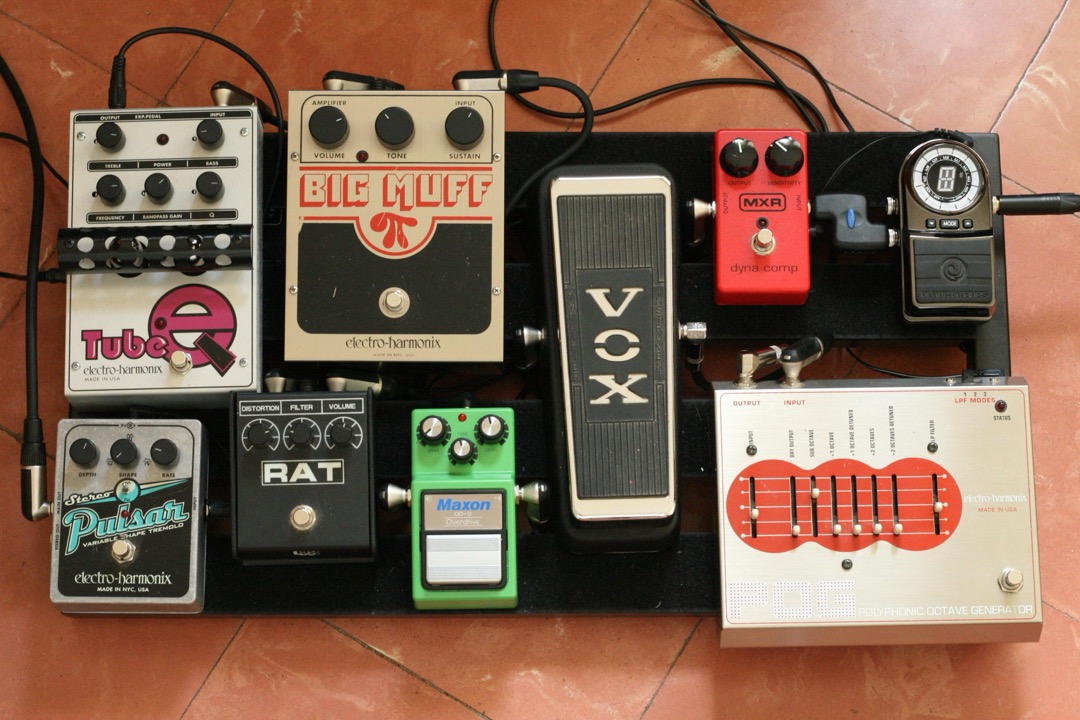
Ask ten guitarists to name the best guitar pedal and you will get ten different answers, because they are quietly answering ten different questions. The blues player wants a singing overdrive. The metal guitarist wants crushing high-gain distortion. The ambient player wants a lush reverb. The beginner just wants one great-sounding box that is easy to use. There is no single best guitar pedal — there is only the best pedal for each effect, and the smartest way to build a board is one standout at a time. So instead of ranking wildly different effects against each other, this guide names the single best pedal in every major category, then points you to the right ones for beginners, for metal, and for a tight budget.
I approached it the way I approached buying inventory as a gear buyer: not “which pedal wins” but “which pedal is the one to own in its category” — the overdrive, distortion, fuzz, delay, reverb, compressor, phaser, wah, and tuner that a player will still be happy with in ten years. Every pick below is a currently-available, verified Amazon listing with a deep, genuine owner-review base, chosen for tone, reliability, and honest value. As you read, our full amps and effects category covers how these fit the wider rig, and our best guitar amps guide covers the other half of your tone — because a pedal only ever sounds as good as the amp it runs into.
| Product | Price | Buy |
|---|---|---|
| Ibanez Tube Screamer MiniBest Overall | $79.99 | View on Amazon |
| BOSS DS-1 Distortion PedalBudget Pick | $69.99 | View on Amazon |
| Wampler Tumnus V2 Overdrive & Boost PedalPremium Pick | $149.38 | View on Amazon |
| BOSS DD-8 Digital Delay PedalRunner-Up | $183.68 | View on Amazon |
| Electro-Harmonix Big Muff Pi Fuzz PedalRunner-Up | $101.60 | View on Amazon |
| BOSS MT-2 Metal Zone Distortion PedalRunner-Up | $108.50 | View on Amazon |
| MXR Dyna Comp Compressor PedalRunner-Up | $99.99 | View on Amazon |
| MXR Phase 90 Phaser PedalRunner-Up | $99.99 | View on Amazon |
| BOSS RV-6 Reverb PedalRunner-Up | $145.20 | View on Amazon |
| Dunlop Original Cry Baby Standard Wah (GCB95)Runner-Up | $99.99 | View on Amazon |
| BOSS TU-3 Chromatic Tuner PedalRunner-Up | $109.99 | View on Amazon |
Find the Best Guitar Pedal for Your Need
Jump straight to the pedals that fit how you play:
- Best guitar pedals overall (one per effect)
- Best guitar pedals for beginners
- Best guitar pedals for metal
- Best budget guitar pedals
How I Chose These Guitar Pedals
Every pedal in this roundup earned its place on a verified, active Amazon listing, a deep and genuine owner-review base, a real brand reputation, and a clear claim to being the best in its effect category. I drew on twenty years of playing and a gear-buyer’s eye for what actually matters once a pedal is on a board: how musical and usable the core tone is, how honestly the pedal is built, how simple it is to dial in on a dark stage, and whether it will still earn its spot in a decade. I cross-referenced thousands of owner reviews for the recurring complaints — harsh clipping, noisy circuits, flimsy switches, confusing menus — and weighed each pedal against the specific job its category exists to do. Because a general roundup can only name one pick per effect, I chose the pedal that most players should own first in each category, not the most exotic or expensive option. Where a category deserves a deeper dive of its own, I have linked to it.
The Best Guitar Pedal in Every Category
The eleven pedals below cover every effect a complete pedalboard is built from — one standout pick per category, each reviewed in full. Farther down, use-case sections pull the right ones together for beginners, for metal, and for a tight budget so you can compare and decide fast.
Best Overall: Ibanez Tube Screamer Mini
If I could hand one pedal to a player who was not sure what they needed, it would be a Tube Screamer, and the Mini is the one I would actually buy today. It runs the most-cloned and most-recorded overdrive circuit in guitar history, and for good reason: that mid-boosted “screamer” voicing pushes a tube amp into natural, singing breakup, so it does not so much add a new sound as make the amp you already own sound better. That is why a Tube Screamer appears on more professional pedalboards than almost any other single pedal, from Stevie Ray Vaughan to John Mayer.
What makes it the best overall pick, though, is that it is genuinely easy to love. Three knobs — Drive, Tone, and Level — get you a great tone in seconds, with nothing to learn and no menus to dig through. It is built in Japan around the same analog circuit and the same JRC4558 chip as the full-size Tube Screamers, so nothing about the tone is compromised by the size; you simply get it back in pedalboard space, at a lower price than the standard-enclosure version ever sold for. The caveats are honest ones: the signature mid-hump can feel a touch nasal through an already scooped amp, there is no room for a battery so it needs a power supply, and it does one thing — overdrive — rather than trying to be a Swiss Army knife. For the vast majority of players, that one thing is exactly where a pedalboard should start.

Ibanez Tube Screamer Mini
by Ibanez
The definitive overdrive nearly every guitarist eventually owns, shrunk to a mini enclosure -- simple, reliable, and the one pedal that makes your existing amp sound better.
Pros
- The most-cloned, most-recorded overdrive circuit in guitar history -- from Stevie Ray Vaughan to John Mayer, the Tube Screamer's mid-boosted voicing is the sound countless players hear in their heads when they think overdrive
- It pushes a tube amp into natural, singing breakup rather than imposing its own distortion, so it makes whatever amp you already own sound better -- the reason a Tube Screamer lives on more pro pedalboards than almost any other single pedal
- A dead-simple three-knob layout (Drive, Tone, Level) means anyone can dial in a great tone in seconds, with no menus and nothing to learn
- Built in Japan around the same analog circuit and JRC4558 chip as the full-size Tube Screamers, in an enclosure under an inch and a half wide -- the same tone on a fraction of the pedalboard space
Cons
- The signature mid-hump voicing can feel boxy or nasal through an already mid-scooped amp
- The mini enclosure has no battery compartment, so it runs on a 9V adapter only and needs a power supply on the board
Best Budget: BOSS DS-1 Distortion
The BOSS DS-1 is the cheapest way into a genuinely iconic pedal, and it is not close. This is Kurt Cobain’s main distortion and a fixture on decades of rock records, yet it routinely costs less than any other legacy-brand pedal in this guide. For a first distortion — or a first pedal, full stop — nothing offers more proven tone for less money.
Its credentials are hard to argue with. The DS-1 has by far the deepest review base of anything researched here, north of 4,400 owners, which is decades of quiet proof that people keep loving it. It is beginner-simple, with just Tone, Dist, and Level and a single footswitch, and the famously tank-like BOSS chassis shrugs off real stage abuse. The trade-offs are exactly what you would expect at the price: it can get harsh or fizzy at very high gain on a bright amp, and its buffered bypass can subtly color your tone in a long all-analog chain. But as the cheapest reliable route to a legendary grunge and rock distortion, it is untouchable.

BOSS DS-1 Distortion Pedal
by BOSS
The most-reviewed distortion pedal on Amazon and still the cheapest way into a legendary grunge and rock tone.
Pros
- The cheapest way into a genuinely iconic pedal -- this is Kurt Cobain's main distortion and has appeared on decades of rock records, yet it costs less than almost any other legacy-brand pedal here
- By far the deepest review base of any pedal in this roundup (4,400-plus), which is decades of proof that owners keep coming back to it
- Beginner-simple: three knobs (Tone, Dist, Level) and a single footswitch mean there is nothing to figure out on your very first pedal
- The famously tank-like BOSS compact chassis is rated for real stage abuse and will outlast the guitar you bought it for
Cons
- It can sound harsh or fizzy at high gain settings, especially through a bright amp
- Buffered rather than true bypass can subtly color your tone in a long all-analog chain
Best Upgrade: Wampler Tumnus V2
The Wampler Tumnus V2 is the pedal you buy when a stock overdrive stops being enough. It is a boutique, hand-built take on the famous transparent “Klon” circuit, and the word that matters is transparent: instead of imposing a new voice on your sound, it amplifies your amp’s own character, adding gain, sparkle, and body while leaving the core of your tone intact. That is the sound intermediate and advanced players chase once they start caring about the fine details of their rig.
It backs the tone up with real substance. The build quality is genuine US boutique, internal DIP switches let you fine-tune the bass response and clipping to your guitar and amp, and it is one of the highest-rated boutique pedals on Amazon at 4.8 stars — all in a mini enclosure that saves precious board space. It even doubles as an always-on clean boost or a stacking drive in front of another pedal. The caveats are simply the cost of boutique: it is a premium price for essentially one very good sound, and its review base is far smaller than the legacy majors. For the player ready to graduate, it is worth every dollar.

Wampler Tumnus V2 Overdrive & Boost Pedal
by Wampler Pedals
The boutique upgrade for players who have outgrown a stock overdrive and want transparent, amp-like tone shaping that flatters everything you own.
Pros
- A transparent Klon-style circuit that amplifies your amp's own character instead of stamping a new voice on it -- the boutique sound players chase once a stock overdrive stops being enough
- Hand-built in the US to genuine boutique standards, with internal DIP switches that let you fine-tune the bass response and clipping to your rig
- One of the highest-rated boutique pedals on Amazon at 4.8 stars, and small enough to tuck into even a crowded pedalboard
- Doubles as an always-on clean boost or a stacking overdrive in front of another drive, so it earns its spot in more ways than one
Cons
- A premium price for what is essentially one very good transparent-overdrive sound
- A much smaller review base than the legacy majors, so there is less decades-long reliability data
Best Delay: BOSS DD-8
The BOSS DD-8 is the delay pedal I recommend when a player wants one box to do everything. Its eleven modes span warm analog and tape echo, crisp digital repeats, reverse, shimmer, and warp, so a single pedal covers vintage rockabilly slap-back through modern ambient soundscapes without you ever needing a second delay. Up to four seconds of delay time and a fast, reliable tap tempo make it equally at home on a big stage and in a bedroom ambient rig.
The extras are what seal it. A built-in looper adds genuine practice and songwriting value that a basic delay simply cannot match, and stereo in and out let it anchor a wide, professional stereo setup when you are ready for one. The only real trade-offs are a small learning curve to its modes and menus, and a price above the most basic single-mode delays. For the versatility on offer, that is easy to forgive — this is the delay that grows with you.

BOSS DD-8 Digital Delay Pedal
by BOSS
One delay pedal that covers vintage slap-back through modern ambient washes, with a looper built in for practice and songwriting.
Pros
- Eleven delay modes -- from warm analog and tape echo to reverse, shimmer, and warp -- mean one box covers vintage slap-back through modern ambient textures without a second pedal
- Up to four seconds of delay time plus reliable tap tempo make it as at home on a big stage as in an ambient bedroom rig
- A built-in looper adds real practice and songwriting value that a basic delay pedal cannot match
- Stereo in and out let it anchor a wide, professional stereo rig when you are ready for one
Cons
- The mode-and-menu switching has a small learning curve compared to a one-knob analog delay
- It costs more than a basic single-mode digital delay
Best Fuzz: Electro-Harmonix Big Muff Pi
The Electro-Harmonix Big Muff Pi is the fuzz all other fuzzes answer to. It is the huge, sustaining wall of sound behind David Gilmour, Jack White, and Billy Corgan — instantly recognizable the moment you hit a chord, and a genuinely different tool from any overdrive or distortion on your board. Where a drive pedal nudges your amp, the Big Muff transforms your signal into a thick, saturated roar with sustain that seems to last forever.
Its distinctive mid-scooped voicing is the whole point, and three simple knobs — Volume, Tone, and Sustain — take you from creamy singing leads to a full fuzz wall entirely by ear. True bypass and the classic tank-like EHX chassis mean it drops onto any board and survives years of abuse. The honest caveats: that mid-scoop can get lost or sound muddy in a busy full-band mix without EQ help elsewhere, and it is a commit-to-the-fuzz effect rather than a subtle, touch-sensitive one. For rock, shoegaze, and psych players who want that specific enormous sound, nothing else will do.

Electro-Harmonix Big Muff Pi Fuzz Pedal
by Electro-Harmonix
The wall-of-sound fuzz that has defined rock and shoegaze tone for over fifty years, with sustain for days.
Pros
- The definitive fuzz -- the huge, sustaining wall of sound behind David Gilmour, Jack White, and Billy Corgan, instantly recognizable the moment you hit a chord
- A distinctive mid-scooped voicing and near-endless sustain make it a genuinely different tool from any overdrive or distortion on your board
- Simple Volume, Tone, and Sustain knobs get you from creamy lead sustain to a roaring fuzz wall entirely by ear
- True bypass and the classic tank-like EHX chassis mean it drops onto any board and takes abuse for years
Cons
- The mid-scoop can get lost or sound muddy in a busy full-band mix without EQ help elsewhere in the chain
- It is not touch-sensitive the way an overdrive is -- it is a commit-to-the-fuzz effect, not a subtle one
Best for Metal: BOSS MT-2 Metal Zone
When the goal is crushing, modern high-gain, the BOSS MT-2 Metal Zone is the most recognized metal distortion pedal ever made. Its scooped, aggressive voicing is the sound thousands of metal and hardcore guitarists built their tone on, and it delivers enough gain to handle drop tunings, chugging rhythm, and searing leads from a single box — even sitting in front of a clean amp with no high-gain channel of its own.
What separates it from a simple distortion is control. A genuine three-band EQ with a sweepable parametric midrange lets you carve a tight, articulate metal tone or a classic mid-scoop with real precision — far more tone-shaping than most drive pedals offer. A 1,000-plus review base at 4.7 stars and the indestructible BOSS chassis make it a proven, gig-ready workhorse. Two things to know going in: it is notoriously noisy at extreme gain settings and really wants a noise gate after it, and it rewards a patient EQ setup — dialed carelessly it can sound brittle. Give it a few minutes and clean power, and it is a metal machine.

BOSS MT-2 Metal Zone Distortion Pedal
by BOSS
The most famous metal distortion ever built -- a full parametric EQ and enormous gain in one bulletproof box, ready for drop tunings and searing leads.
Pros
- The most recognized metal distortion pedal ever made -- its scooped, high-gain voicing is the sound thousands of metal and hardcore guitarists built their tone on
- A genuine three-band EQ with a sweepable parametric midrange gives you far more tone-shaping control than any standard distortion, so you can carve a tight, articulate metal tone or a classic mid-scoop
- Enormous available gain handles drop tunings, chugging rhythm, and searing leads from a single pedal, even in front of a clean amp
- A 1,000-plus review base at 4.7 stars and the indestructible BOSS chassis make it a proven, gig-ready workhorse
Cons
- It is notoriously noisy at extreme gain settings and really wants a noise gate after it in the chain
- Dial the EQ carelessly and it can sound fizzy or brittle -- it rewards a patient setup
Best Compressor: MXR Dyna Comp
The MXR Dyna Comp is the classic country and funk “squish” in a box — the smooth, even compression heard on countless Nashville sessions and clean-funk records. Compression is the effect most beginners overlook and most pros consider essential, because it evens out your pick attack so every note speaks at the same level and adds the reliable sustain that makes clean tones sound polished and professional.
Its appeal is its simplicity. Two knobs — Output and Sensitivity — are all it takes to set it and forget it, and the decades-proven analog circuit has nearly 700 reviews and the rock-solid MXR build behind it. The limits are the flip side of that simplicity: two controls mean less fine-tuning than a modern multi-knob compressor, and it can add audible hiss at high sensitivity. For players chasing that classic squishy sustain without a menu to navigate, it remains the reference.

MXR Dyna Comp Compressor Pedal
by MXR
The classic two-knob compressor that has added smooth sustain and even pick attack to country and funk rigs for decades.
Pros
- The classic country and funk squish -- the smooth, even compression heard on countless Nashville sessions and clean-funk records
- Dead-simple two-knob operation (Output and Sensitivity) means you can set it once and forget it
- It adds reliable sustain and evens out your pick attack so every note speaks at the same level -- the secret behind polished clean tones
- A decades-proven analog circuit with nearly 700 reviews and a rock-solid MXR build
Cons
- Only two controls limit fine-tuning compared with modern multi-knob compressors
- It can add audible hiss at high sensitivity settings
Best Modulation: MXR Phase 90
The MXR Phase 90 is the pedal that made modulation approachable, and it is still the one I hand a player who wants that lush, swirling movement without a learning curve. A single Speed knob delivers the warm analog phase sweep of Van Halen and Tom Petty — musical at every setting, from a slow, watery shimmer under clean chords to a fast, vibrato-like throb.
The magic is how much character comes from so little. There is exactly one control, a tiny footprint that slips onto even the most crowded board, and over 1,000 reviews at 4.7 stars confirming decades of the most reliable modulation on the market. The trade-off is the obvious one: no depth or feedback controls, so it trades sound-shaping range for its legendary simplicity, and its buffered bypass may not suit a strict all-true-bypass chain. If you want to add classic movement to your tone and start playing in ten seconds, this is it.

MXR Phase 90 Phaser Pedal
by MXR
The one-knob phaser that has been a pedalboard staple since Van Halen made it famous -- instant classic modulation with nothing to learn.
Pros
- One-knob simplicity that made it famous -- the warm, swirling phase of Van Halen and Tom Petty from a single Speed control
- The analog phase sweep is musical at every setting, from a slow, watery shimmer to a fast, vibrato-like throb
- A tiny footprint slips onto even the most crowded pedalboard
- Over 1,000 reviews at 4.7 stars confirm decades of the most reliable modulation on the market
Cons
- No depth or feedback controls, so it trades sound-shaping range for its legendary simplicity
- Buffered bypass may not suit a strict all-true-bypass signal chain
Best Reverb: BOSS RV-6
The BOSS RV-6 is the safe, do-everything reverb pick, and the reason it earns a spot on a general pedalboard is range. Eight modes — Room, Hall, Plate, Spring, Modulate, Dynamic, Shimmer, and Non-Linear — give it the widest selection of any single reverb in its price class, including a genuinely usable Shimmer that pricier ambient pedals build an entire identity around. Its clever Dynamic mode even auto-adjusts the reverb level to your picking intensity, ducking out of the way when you dig in and blooming when you back off.
A simple Time, Tone, and Effect Level layout plus stereo I/O keep it easy to use while leaving room to grow, and more than 1,300 reviews at 4.7 stars back the legendary BOSS reliability. The honest caveats are that its digital character is a touch less organic than a dedicated spring or plate-only boutique pedal, and it has fewer decay-shape controls than the $300-plus flagships. If reverb is your whole reason for shopping, our dedicated best reverb pedals guide goes deep on ambient, spring, and studio options — but as the one reverb on a broad board, the RV-6 is hard to beat.

BOSS RV-6 Reverb Pedal
by BOSS
One reverb pedal that covers subtle room ambience through full shimmer washes -- and the entry point to our dedicated reverb guide when you want to go deeper.
Pros
- Eight reverb modes -- Room, Hall, Plate, Spring, Modulate, Dynamic, Shimmer, and Non-Linear -- give you the widest range of any single reverb in its price class, including a genuinely usable Shimmer
- The clever Dynamic mode auto-adjusts reverb level to your picking intensity, ducking out of the way when you dig in and blooming when you back off
- A simple Time, Tone, and Effect Level layout plus stereo I/O make it easy to use yet ready for a serious rig
- More than 1,300 reviews at 4.7 stars and the legendary BOSS build make it the safe, do-everything reverb pick
Cons
- The digital character is a touch less organic than a dedicated spring or plate-only boutique pedal
- It has fewer decay-shape controls than the $300-plus flagship reverbs
Best Wah: Dunlop Original Cry Baby (GCB95)
The Dunlop Original Cry Baby is the wah every other wah is measured against — the expressive, vocal-like voice of Hendrix, Slash, and Kirk Hammett, and still the standard more than fifty years on. Rock a wah under a funk rhythm or a soaring solo and it adds a human, talking quality nothing else on your board can, all controlled by your foot in real time.
It stays the benchmark because the fundamentals are right. The classic Fasel inductor circuit gives a smooth, musical heel-to-toe sweep with no dead spots, and the near-indestructible cast-metal housing is built to survive a lifetime of being stomped on — nearly 2,000 reviews confirm exactly that longevity. The caveats: there are no internal voicing adjustments out of the box, so the stock tone is fixed (though it is a beloved mod platform), and the treadle format takes up real pedalboard space. For the definitive classic wah, it is still the only honest answer.

Dunlop Original Cry Baby Standard Wah (GCB95)
by Dunlop
The original Cry Baby wah, unchanged and still the funk, rock, and metal standard after more than fifty years.
Pros
- The wah every other wah is measured against -- the voice of Hendrix, Slash, and Kirk Hammett, and still the standard after fifty-plus years
- A smooth, musical heel-to-toe sweep with no dead spots, driven by the classic Fasel inductor circuit
- A near-indestructible cast-metal housing built to survive a lifetime of being stomped on
- Nearly 2,000 reviews confirm the long-term reliability that made it an institution
Cons
- No internal voicing adjustments out of the box -- it is a favorite mod platform, but the stock tone is fixed
- The treadle format takes up real pedalboard real estate
Best Tuner: BOSS TU-3
The BOSS TU-3 is the least glamorous pedal in this guide and quietly one of the most important. It is the industry-standard tuner on a huge share of professional pedalboards, delivering fast, accurate chromatic tuning you can read and trust on a dark stage. A tuner is not an effect, but it is the pedal that keeps every other one sounding good — because nothing kills a great tone faster than being out of tune.
It earns its keep in two ways beyond tuning. Its buffered output doubles as a signal booster and line driver at the front of your chain, preserving your high end across long cable runs — the exact buffer a big true-bypass board needs. And its high-brightness 21-segment LED meter is readable in direct sunlight while cleanly muting your signal between songs. More than 2,500 reviews at 4.8 stars make it the most-trusted tuner pedal on the market. It is bulkier and pricier than a mini clip-on, and its buffered bypass is a deliberate design choice a few purists avoid, but for a serious board it is essential, not optional.

BOSS TU-3 Chromatic Tuner Pedal
by BOSS
The tuner on nearly every professional pedalboard -- accurate, fast, doubles as a buffer, and the least glamorous but most essential pedal you will buy.
Pros
- The industry-standard tuner found on a huge share of professional pedalboards -- fast, accurate chromatic tuning you can trust on a dark stage
- Its buffered output doubles as a signal booster and line driver at the front of your chain, preserving your high end across long cable runs
- A high-brightness 21-segment LED meter is readable in direct sunlight, and it mutes your signal cleanly while you tune between songs
- More than 2,500 reviews at 4.8 stars make it the most-trusted tuner pedal on the market
Cons
- It is bulkier and pricier than a mini clip-on or micro pedalboard tuner
- Its buffered bypass is a design choice a few strict true-bypass purists prefer to avoid
Best Guitar Pedals for Beginners
If you are buying your first pedals, resist the urge to grab something exotic and start with the effects you will actually use every day. The three below are the classic first board: a versatile overdrive to shape your core tone, a dead-simple distortion for grit, and the tuner that keeps everything in tune. Each is affordable, nearly indestructible, and impossible to outgrow.
| Product | Price | Buy |
|---|---|---|
| Ibanez Tube Screamer MiniBest first overdrive The most useful first effect -- three knobs, and it makes your amp sound better | $79.99 | View on Amazon |
| BOSS DS-1 Distortion PedalBest first distortion The cheapest iconic pedal here and the simplest to dial in on day one | $69.99 | View on Amazon |
| BOSS TU-3 Chromatic Tuner PedalBest essential first tuner Not exciting, but it keeps every other pedal in tune and doubles as a buffer | $109.99 | View on Amazon |
Best Guitar Pedals for Metal
Metal tone is built on three things: enough high-gain distortion to crush, a tightening drive in front of it, and a way to control noise. The picks below cover the aggressive end of this roundup — a dedicated metal distortion for the core sound, a Tube Screamer to tighten a high-gain amp, and a Big Muff for the doom, stoner, and sludge players who want a thicker fuzz wall instead.
| Product | Price | Buy |
|---|---|---|
| BOSS MT-2 Metal Zone Distortion PedalBest metal distortion Full parametric EQ and enormous gain for drop tunings and searing leads | $108.50 | View on Amazon |
| Ibanez Tube Screamer MiniBest high-gain tightener Run in front of a high-gain amp to tighten muddy low end into aggressive clarity | $79.99 | View on Amazon |
| Electro-Harmonix Big Muff Pi Fuzz PedalBest doom/stoner fuzz A thicker, sustaining fuzz wall for stoner, doom, and sludge tones | $101.60 | View on Amazon |
Best Budget Guitar Pedals
You do not need to spend big to own genuinely iconic pedals. The three below are all legacy-brand classics that punch far above their price — the cheapest real distortion, the classic one-knob phaser, and the fuzz that defined rock — each proven by huge review bases and decades on real pedalboards.
| Product | Price | Buy |
|---|---|---|
| BOSS DS-1 Distortion PedalCheapest iconic pedal The lowest-priced legacy pedal here, with the deepest review base of any | $69.99 | View on Amazon |
| MXR Phase 90 Phaser PedalBest budget modulation Classic swirling phase from a single knob, at legacy-brand value | $99.99 | View on Amazon |
| Electro-Harmonix Big Muff Pi Fuzz PedalBest budget fuzz The definitive fuzz wall for the price of a night out | $101.60 | View on Amazon |
Buyer's Guide
The best guitar pedal is the one that fills the gap in your rig you actually feel -- not the one with the most knobs or the highest price. Because every pedal here is the standout in its own effect category, choosing between them is really about deciding which effect you need next and how it will sit in your signal chain. Here is what matters when you buy.
Effect type -- fill a gap, don't duplicate
The single most important question is which effect you are missing. A board with a great overdrive does not need a second one nearly as much as it needs a delay or a tuner. Build outward from the essentials -- a drive pedal and a tuner -- then add reverb, delay, and modulation as your playing calls for them. Each pedal in this roundup owns a different category on purpose, so use it as a checklist of the effects a complete board covers.
True bypass vs. buffered bypass
True bypass removes a pedal from your signal when it is off and keeps things clean on a small board. Buffered bypass drives a strong signal through long cables and big boards, preserving your high end. Neither is better in the absolute -- but as your chain grows past four or five pedals, having at least one buffer (the BOSS TU-3 is the usual pick) prevents the tone loss a long true-bypass chain can cause.
Analog vs. digital circuitry
Analog pedals like the Tube Screamer, Big Muff, Dyna Comp, and Phase 90 are prized for warmth, simplicity, and touch response. Digital pedals like the DD-8 delay and RV-6 reverb trade a little of that organic feel for enormous versatility -- many modes, presets, and stereo in one box. Neither is inherently superior; drives and fuzzes usually reward analog, while delays and reverbs benefit most from digital flexibility.
Power supply and noise
Almost every pedal here runs on standard 9V center-negative power, but most do not include an adapter. Once you own more than one or two, invest in a proper supply -- an isolated multi-output unit is quieter than a daisy chain and prevents the ground-loop hum that plagues crowded boards. High-gain pedals like the MT-2 Metal Zone are especially sensitive to dirty power, so give them clean, isolated outputs.
Single stompbox vs. multi-effects unit
Every pedal in this guide is a dedicated single-effect stompbox -- the format most players build a board from, one great-sounding effect at a time. If you would rather have dozens of effects in one box for practice or travel, that is a different tool: see our dedicated multi-effects coverage rather than a wall of individual pedals. Single pedals win on tone and simplicity; multi-effects units win on breadth and value per effect.
Build quality and pedalboard footprint
A pedal lives on your board for years and gets stomped on hundreds of times, so a rugged metal chassis and a reliable footswitch matter. Footprint counts too -- a mini pedal like the Wampler Tumnus saves space a treadle wah like the Cry Baby demands. Measure your board and plan your layout before you buy, especially if you are adding a large pedal to a crowded setup.
How to Choose the Best Guitar Pedals for You
The right guitar pedal is the one that fills the gap you actually feel in your rig, so start by asking which effect you are missing rather than which pedal is “best.” A board almost always begins with a drive pedal and a tuner, then grows outward — reverb and delay for space and depth, modulation and fuzz for color and character, a compressor to polish your clean tones. Because every pick in this guide owns a different category, you can treat the list as a checklist for a complete board and add one standout at a time as your playing calls for it.
Then think about how the pedals will work together. Pedal order matters — the standard chain runs tuner, then dynamics and filters (compressor, wah), then gain (overdrive, distortion, fuzz), then modulation, then time-based effects (delay, reverb) last. As your board grows past four or five pedals, add a buffer like the TU-3 to keep your tone strong across long cables, and plan your power early — an isolated supply is quieter than a daisy chain and keeps high-gain pedals like the MT-2 clean. Match everything to the rest of your setup, too: your pedals only sound as good as the amp they run into (start with our best guitar amps guide) and the guitar in your hands. If you are still choosing the instrument, our best electric guitars guide is the natural next read.
The Bottom Line
If you want one pedal to start with, the Ibanez Tube Screamer Mini is the clearest best overall pick — the definitive overdrive that makes your existing amp sound better. On a budget, the BOSS DS-1 is the cheapest route to a legendary distortion, and when you are ready to graduate, the Wampler Tumnus V2 is the boutique upgrade worth saving for. From there, build your board one category at a time: the BOSS DD-8 for delay, the Electro-Harmonix Big Muff for fuzz, the BOSS MT-2 Metal Zone for metal, the MXR Dyna Comp for compression, the MXR Phase 90 for modulation, the BOSS RV-6 for reverb, the Dunlop Cry Baby for wah, and the BOSS TU-3 to keep it all in tune. Pick the effect you need next, pair it with the right amp, and you will build a pedalboard that sounds like you.
Frequently Asked Questions
What guitar pedal should I buy first?
What is the difference between overdrive, distortion, and fuzz?
Does true bypass vs. buffered bypass actually matter?
What order should I put my guitar pedals in?
Do guitar pedals come with a power supply?
Related Articles
9 Best Guitar Amps of 2026 (Every Budget, Practice to Gigging)
amps-effects
9 Best Reverb Pedals of 2026 (Spring, Ambient, Budget & Studio)
amps-effects
10 Best Distortion Pedals of 2026 (Metal, Rock, Blues & Budget)
amps-effects
10 Best Multi-Effects Pedals of 2026 (Budget, Compact, Acoustic & Live)
amps-effects
9 Best Looper Pedals of 2026 (Budget, Beginner, Bass, Drums & Live)
amps-effects
About the Reviewer

Julian Reyes, MM, Berklee
M.M. Performance, Berklee College of Music
Julian Reyes is a multi-instrumentalist with a Master of Music from Berklee College of Music and over a decade gigging on guitar, bass, and keys. Before founding House of Octave, he spent years as a gear buyer for an independent music retailer, evaluating hundreds of instruments and audio products for the sales floor. He started House of Octave in 2026 to give players honest, hands-on reviews — judged by how gear actually sounds and holds up on stage and in the studio, not by spec sheets or sponsorships.