9 Best Guitar Picks of 2026 (Beginner, Acoustic, Metal, Jazz & Bass)
Berklee-trained multi-instrumentalist Julian Reyes (MM) reviews the 9 best guitar picks of 2026 — matched to your instrument, genre, and grip, with a plain-English guide to thickness and material for every playing style.
Updated
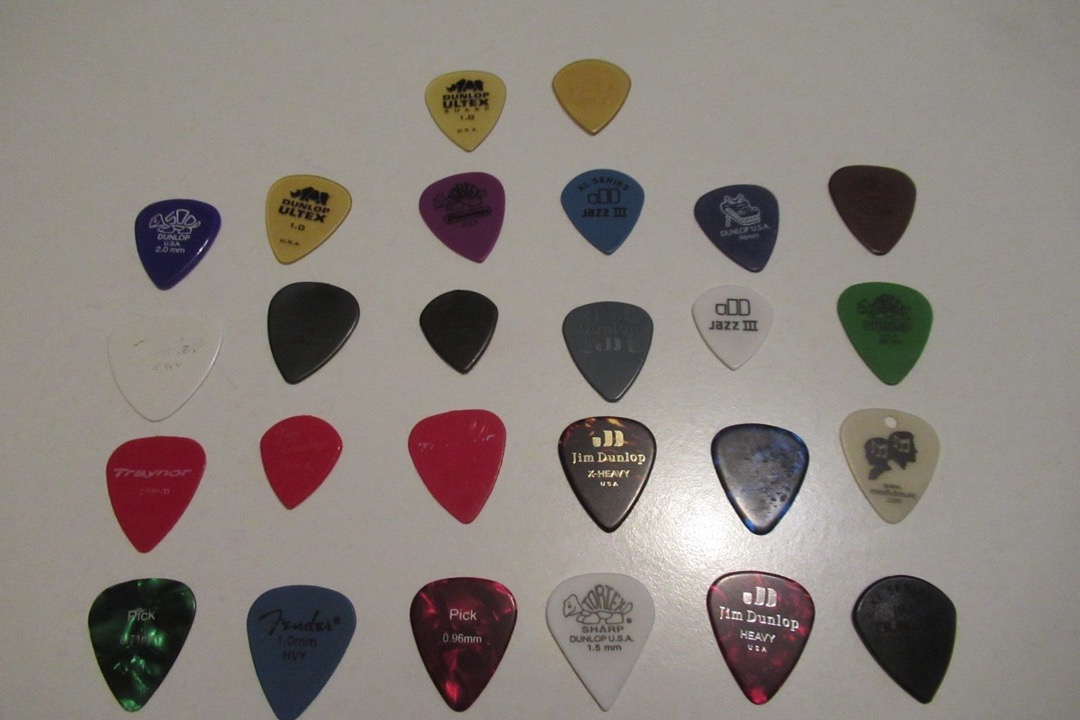
9 Best Guitar Picks of 2026 (Beginner, Acoustic, Metal, Jazz & Bass)
The guitar pick is the cheapest thing in your case and, note for note, one of the most important. It is the only object physically between your hand and the strings, which means it shapes your tone and your feel more than most players ever realize — I have watched students chase a better sound through new strings, new pedals, even new guitars, when a fifty-cent change of plectrum would have gotten them most of the way there. In twenty years of playing across a music degree at Berklee, jazz gigs, metal rhythm sessions, and quiet acoustic fingerstyle, I have gone through thousands of picks, and the lesson is always the same: there is no single best guitar pick, only the best pick for how you play.
That is genuinely good news, because picks are cheap enough to experiment with freely. The trick is knowing what separates them — thickness, material, shape, and grip each change the sound and the feel in specific ways — and matching that to your instrument and style. So this is not one ranked list. It is nine picks and packs I would actually hand to a real player in 2026, organized so you can jump straight to your situation: the best first variety pack, the best for beginners, for acoustic strumming, for electric and metal, for jazz and speed, for grip, for fingerstyle, and the one boutique splurge that is genuinely worth it. Whether you strum an acoustic or shred on an electric, one of these is the right answer for you.
| Product | Price | Buy |
|---|---|---|
| Fender Premium Picks Sampler - 12 PackBest Overall | $14.99 | View on Amazon |
| Jim Dunlop Guitar Pick LT/MD Variety Pack - 12 PackRunner-Up | $8.39 | View on Amazon |
| Jim Dunlop Acoustic Pick Variety Pack - 12 PackRunner-Up | $8.39 | View on Amazon |
| Jim Dunlop Electric Pick Variety Pack - 12 PackRunner-Up | $8.39 | View on Amazon |
| Jim Dunlop Max-Grip Nylon Standard Pick .88MM - 12 PackBudget Pick | $5.76 | View on Amazon |
| Jim Dunlop Jazz III Pick Variety Pack - 6 PackRunner-Up | $5.76 | View on Amazon |
| Gravity Acrylic Variety Pack Guitar Picks - 8 PackPremium Pick | $59.95 | View on Amazon |
| D'Addario Shell Celluloid Thumb Picks, Medium - 10 Picks (2 x 5-Pack)Runner-Up | $9.98 | View on Amazon |
| D'Addario Celluloid Guitar Picks, Medium 0.70mm - 25 PackRunner-Up | $14.29 | View on Amazon |
Find the Best Guitar Pick for Your Need
Jump straight to the pick that fits how you play:
- Best guitar picks overall
- Best for beginners
- Best for acoustic & strumming
- Best for electric, lead & metal
- Best for bass
- Best for grip & sweaty hands
- Best premium & boutique
- Best thumb & fingerstyle picks
- More use cases
How We Chose These Guitar Picks
Every pick here earned its place on a verified, in-stock Amazon listing, a real owner-review track record, a genuine brand pedigree, and a clear job for a specific kind of player. I leaned on two decades of playing across genres and a working knowledge of what actually separates a great pick from a forgettable one: how a material shapes tone and how long it lasts, how gauge changes flex and attack, whether the shape and tip suit strumming or precise single notes, and whether the grip holds up when your hands sweat. Because the “best” pick is so personal, I deliberately weighted variety packs highly — the smartest first purchase in this category is almost always an assortment that lets you find your own preference, not a single gauge someone else swears by. The nine below cover every player from a first-week beginner to a touring shredder to a fingerstyle folk picker.
Best Guitar Picks Overall
If you want one recommendation and you are not sure where to start, begin here. These are the picks that serve the widest range of players — and for most people, a good variety pack is the whole answer, because it teaches you what you like instead of guessing.
Best Overall: Fender Premium Picks Sampler
The Fender Premium Picks Sampler is the pack I hand to more players than any other, and the numbers back it up: with over twenty-six thousand ratings at 4.8 stars and a top-two ranking on Amazon’s guitar-pick best-seller list, it is the single most-reviewed pick listing in the entire category. That popularity is earned. You get classic Fender celluloid — warm, rounded, and smooth off the string, the traditional tone most people picture when they imagine a guitar pick — in the universal 351 teardrop shape that fits any hand and suits any style.
What makes it the ideal first buy is the thin/medium/heavy spread, four of each. For the price of a coffee, you get to feel exactly how gauge changes your tone and attack: the thins flex and chime for strumming, the heavies dig in with control for single notes, and somewhere in there is the thickness that clicks for you. Rather than trust someone else’s favorite, you find your own in an afternoon. If you own no picks, or you are buying for a new player, this is where to start.

Fender Premium Picks Sampler - 12 Pack
by Fender
The most trusted, most reviewed variety pack in the category and the one I hand almost every new player. Classic celluloid tone, the universal 351 shape, and a thin-to-heavy spread that teaches you your own preference for the price of a coffee. Buy this first.
Pros
- The single most-reviewed pick listing in the whole category by a wide margin, with more than twenty-six thousand ratings at 4.8 stars and a top-two spot on Amazon's guitar-pick best-seller list -- when a plain, no-nonsense pack is this universally loved, it is the safe default answer to 'which picks should I buy first'
- Classic Fender celluloid tone: warm, rounded, and smooth off the string, which is exactly the traditional voice most players picture when they think 'guitar pick' -- it flatters an acoustic and never sounds harsh on an electric
- The iconic 351 teardrop shape fits almost every hand and grip style, so nothing about it fights a beginner, and it is the shape 90 percent of the picks you will ever be handed at a jam are based on
- A genuinely useful thin/medium/heavy spread (four of each) means one cheap pack lets you feel how gauge changes your tone and attack before you commit to a favorite -- the fastest way to learn what you actually like
Cons
- A handful of verified buyers have reported the odd fulfillment mix-up (picks arriving under a different brand name) -- rare, but check that what lands in the mailbox is the real Fender pack
- The exact color assortment can vary a little from the listing photo, which matters to nobody tonally but is worth knowing if you care about the look
- Smooth celluloid offers no grip texture, so if your hands sweat hard you may still want a textured pick alongside it
Best for Beginners: Jim Dunlop LT/MD Variety Pack
For a true beginner, the Jim Dunlop LT/MD Variety Pack does something even the Fender sampler does not: it packs six different materials into one wallet-sized set — nylon, Max-Grip, celluloid, Gator Grip, Tortex, and Ultex. That matters because for a new player, feel is as confusing as tone, and holding a smooth celluloid pick next to a grippy Max-Grip one teaches more in ten seconds than any article can. The textured options are right there beside the slick ones, so you immediately understand why grip matters.
It sticks to light and medium gauges, which is exactly the range Dunlop and most teachers steer beginners toward — nothing here is so stiff it fights your still-developing strumming hand. It is Amazon’s Choice with nearly ten thousand ratings, and it is small enough to live in a wallet. The one catch is that there are no heavy gauges, so once you drift toward lead or metal you will want to add a thicker pick. But as a first kit for discovering what suits you, nothing is clearer or cheaper. Pair it with our guide to guitar chords for beginners and you have everything you need to start.

Jim Dunlop Guitar Pick LT/MD Variety Pack - 12 Pack
by Jim Dunlop
The best true beginner kit: six materials and two beginner-friendly gauges in one wallet-sized pack, so a new player can find the feel that clicks instead of guessing. The fastest, cheapest route from 'a pick is a pick' to knowing what you like.
Pros
- Six different pick materials in one pack -- nylon, Max-Grip, celluloid, Gator Grip, Tortex, and Ultex -- which makes it the clearest side-by-side way for a new player to discover which feel and tone actually suits them, not just which thickness
- The textured options (Max-Grip and Gator Grip) are included right alongside the smooth ones, so a beginner immediately feels the difference grip makes instead of reading about it
- Light and medium gauges only, which is exactly the range Dunlop and most teachers recommend a beginner start in -- nothing here is too stiff to strum comfortably while you build your hand
- Wallet-sized, Amazon's Choice, and backed by nearly ten thousand ratings -- a proven, portable discovery kit rather than a bargain-bin gamble
Cons
- No heavy gauges at all, so once you move toward lead or metal you will outgrow this pack and want something 1.0mm or thicker
- Ships in a plain baggie with no case, so the picks scatter easily
- Some picks have printed ink that can rub off on very sweaty fingers in the first few sessions
Best for Acoustic: Jim Dunlop Acoustic Pick Variety Pack
Acoustic tone is remarkably sensitive to the pick, and the Jim Dunlop Acoustic Pick Variety Pack is built to prove it. The materials are chosen specifically to flatter an acoustic guitar — warm nylon and flexible Herco Flex on one end, brighter Ultex and Tortex on the other — so you can dial in exactly how much warmth or sparkle you want out of the same instrument. Multiple owners report hearing an obvious difference on their acoustic just from swapping picks in this pack, which is the entire point of buying it.
The 0.6mm-to-1.0mm spread covers everything from light rhythm strumming to firmer flatpicking and single-note runs on a dreadnought, so it grows with you as your right hand develops. At 4.8 stars over nearly eight thousand ratings, it is a proven, acoustic-focused set from the brand most acoustic players already trust for their strings. If you play acoustic and have only ever used whatever pick came free with the guitar, this is one of the cheapest upgrades to your tone you can make — and while you are refreshing your setup, our roundup of the best acoustic guitar strings is the natural next step.

Jim Dunlop Acoustic Pick Variety Pack - 12 Pack
by Jim Dunlop
The acoustic player's sampler: a curated spread of warm and bright materials across strumming-to-flatpicking gauges, so you can tune your acoustic's voice with a pick before you ever touch the strings. The clearest way to hear how much a pick shapes acoustic tone.
Pros
- The materials are specifically chosen to complement acoustic tone -- warm nylon and Herco Flex against brighter Ultex and Tortex -- so you can dial in exactly how much warmth or sparkle you want from the same guitar
- Multiple owners report hearing an audible tonal difference on their acoustic just from swapping picks in this pack, which is the whole point of buying it
- A wide 0.6mm-to-1.0mm spread covers everything from light rhythm strumming to firmer flatpicking and single-note runs on a dreadnought
- 4.8 stars across nearly eight thousand ratings and Amazon's Choice -- a proven acoustic-focused set from the brand most acoustic players already trust
Cons
- A small pack that is easy to misplace one pick at a time -- there is no case
- Skews light-to-medium, so a hard bluegrass flatpicker may still want a dedicated heavy pick on top of it
Best for Electric & Metal: Jim Dunlop Electric Pick Variety Pack
Electric playing rewards a different pick, and the Jim Dunlop Electric Pick Variety Pack is purpose-built for it. The sharper Ultex and Tortex tips give the precise, articulate attack you want for riffs and single-note runs rather than broad strumming, and the pack folds in the Jazz III XL and Max-Grip Jazz III so you can sample the small, stiff shred shapes that lead players swear by without buying them separately. The heavier .88mm-to-2.0mm range delivers the control and fuller tone that high-gain rhythm and lead work demand.
It is deliberately heavy — there are no thin options here — so if you want a light, flexible feel for clean electric rhythm, look elsewhere. But for anyone playing with gain who wants precision over flap, this one pack lets you find your riffing and soloing feel across materials and gauges. Several owners note it tracks a bass cleanly too, which makes it a genuinely versatile buy. At 4.7 stars and Amazon’s Choice, it is a real electric toolkit, not a novelty.

Jim Dunlop Electric Pick Variety Pack - 12 Pack
by Jim Dunlop
The electric player's toolkit: sharp-tipped, heavier picks plus the Jazz III shred shapes, all in one pack, so you can find your riffing and soloing feel across materials and gauges. If you play with gain and want precision over flap, start here.
Pros
- Purpose-built for electric playing, with sharper Ultex and Tortex tips that give precise, articulate attack on single-note runs -- the definition you want for riffs and solos rather than broad strumming
- Includes the Jazz III XL and Max-Grip Jazz III, so you can sample the small, stiff shred shapes that lead players swear by without buying them separately
- The heavier .88mm-to-2.0mm range delivers the control and fuller tone that high-gain rhythm and lead work demand, and several owners note it tracks a bass cleanly too
- 4.7 stars over nearly eight thousand ratings and Amazon's Choice -- a genuinely versatile electric kit, not a gimmick pack
Cons
- Skews heavy with no thin options, so if you want a light, flexible feel for clean electric rhythm this is not the pack for it
- One reviewer found the whole set too stiff for casual electric strumming -- it is built for control, not looseness
Best for Grip: Jim Dunlop Max-Grip Nylon Standard .88mm
If there is one problem that plagues new and sweaty-handed players alike, it is the pick spinning out of their fingers mid-song — and the Jim Dunlop Max-Grip Nylon Standard is the cheapest cure. Its molded cross-hatch texture is repeatedly credited by owners with eliminating dropped picks during hot, high-energy sessions. Nothing else about it is unusual: it is a standard 351 shape in a balanced .88mm medium that handles both rhythm and lead, so there is no learning curve, just no more slipping.
At under six dollars for twelve, it works out to the lowest cost per pick on this list — a top-five guitar-pick best seller with more than ten thousand ratings. The texture feels rougher against the fingertips than glossy celluloid, and it comes in a single gauge, but neither is a real drawback for what it does. The lesson worth remembering: if your picks keep rotating in your grip, the fix is not a thicker pick, it is a grippier one, and this is the twelve-pack that quietly solves it.
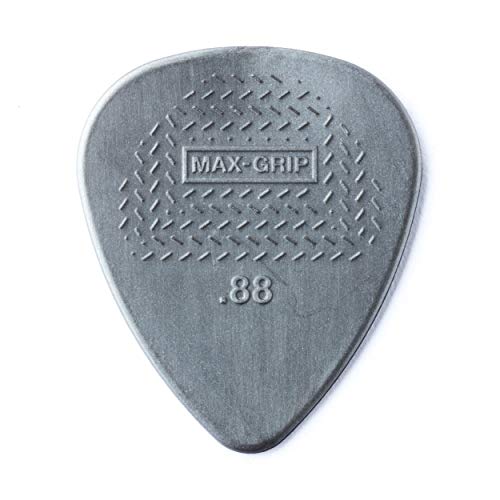
Jim Dunlop Max-Grip Nylon Standard Pick .88MM - 12 Pack
by Jim Dunlop
The best cheap insurance against dropped picks: a grippy, durable, do-anything medium nylon at pocket-change money. If your picks spin out mid-song when your hands warm up, this is the twelve-pack that quietly fixes it.
Pros
- The molded cross-hatch grip texture is repeatedly credited by owners with eliminating dropped picks during sweaty, high-energy sessions -- the single cheapest fix for a pick that keeps twisting out of your fingers
- A balanced .88mm medium flex that works for both rhythm strumming and single-note lead, so it is a genuine do-everything gauge rather than a specialist
- Nylon is tough and long-wearing, and at under six dollars for twelve it is the lowest cost per pick on this list (a top-five guitar-pick best seller with more than ten thousand ratings)
- The standard 351 size and shape mean the only thing different from a plain pick is the grip -- there is no learning curve, just no more slipping
Cons
- The textured surface feels rougher than smooth celluloid, which a few players dislike against the fingertips
- Sold in a single .88mm gauge only, so if you want to compare thicknesses you have to buy other packs separately
Best for Jazz & Speed: Jim Dunlop Jazz III Variety Pack
The Jazz III is the most influential lead-guitar pick ever made, and the Jim Dunlop Jazz III Variety Pack is the definitive way to try it. The small, pointed shape is repeatedly credited with improving speed and accuracy on solos, because less pick travels through the string — once it clicks, it is hard to go back. This pack gives you six variations of that iconic shape (Nylon Red, Max-Grip Carbon Fiber, Tortex, Ultex, and both XL sizes), so you can find the exact material and size in the family that unlocks your picking.
Every pick sits in the rigid ~1.0-1.4mm range that gives shredders and jazz players the controlled attack they want, with no flex to rob precision. It takes real adjustment time if you have only ever strummed with a full-size pick, and it is poorly suited to broad acoustic strumming — this is a precision tool, not an all-rounder. But if your solos feel sloppy with a big pick, this tiny plectrum is the upgrade nobody bothers to tell beginners about. At 4.8 stars and Amazon’s Choice, it is a rite of passage worth taking.

Jim Dunlop Jazz III Pick Variety Pack - 6 Pack
by Jim Dunlop
The lead player's rite of passage: the small, stiff, fast Jazz III shape in six materials, so you can find the version that unlocks your picking speed. If your solos feel sloppy with a big pick, this tiny plectrum is the upgrade nobody tells beginners about.
Pros
- The small, stiff Jazz III shape is repeatedly credited with improving speed and accuracy on solos -- the shorter tip means less pick has to travel through the string, which is why so many lead and metal players swear by it
- Six variations of the same iconic shape (Nylon Red, Max-Grip Carbon Fiber, Tortex, Ultex, and both XL sizes) let you find your exact material and size within the Jazz III family in one pack
- Every pick sits in the ~1.0-1.4mm heavy range that gives the rigid, controlled attack shredders and jazz players want -- no flex robbing your precision
- 4.8 stars over nearly three thousand ratings and Amazon's Choice -- the definitive way to try the most influential lead-guitar pick shape ever made
Cons
- Much smaller than a standard 351 pick, so it takes real adjustment time if you have only ever strummed with a full-size pick
- The stiff, small format is poorly suited to broad acoustic strumming -- this is a precision tool, not an all-rounder
- A six-pack rather than a twelve, so the per-pick cost is a touch higher
Best Premium: Gravity Acrylic Variety Pack
Once you know exactly what tone you are chasing, the Gravity Acrylic Variety Pack is the one boutique splurge I think is genuinely worth it. These hand-finished acrylic picks are noticeably brighter, louder, and more articulate than standard celluloid or nylon — the polished bevels release the string cleanly, and many owners describe them as the best-sounding picks they have ever played. This is not prestige for its own sake; it is a tonal difference you can actually hear and describe.
Acrylic also barely wears, so where a celluloid pick rounds off and needs replacing, one of these holds its edge for far longer — the up-front cost buys real longevity. At around seven-and-a-half dollars a pick this is a splurge, not an everyday buy, and losing one stings; the assortment also skews thick, so light-touch strummers have fewer options. The thin review base is simply the nature of a small boutique buyer pool, not a quality warning. If you have outgrown stock picks and want a genuinely different voice, this is the upgrade.

Gravity Acrylic Variety Pack Guitar Picks - 8 Pack
by Gravity Picks
For the player who has outgrown stock picks and wants a genuinely different voice: a hand-finished acrylic set that is brighter, louder, and far longer-lasting than anything in the budget tier. Expensive per pick, but a real, describable tonal step up.
Pros
- A noticeably brighter, louder, and more articulate tone than standard celluloid or nylon -- the polished acrylic and hand-finished bevels release the string cleanly, and many owners describe it as the best-sounding pick they have played
- Acrylic barely wears, so where a celluloid pick rounds off and needs replacing, one of these holds its edge for far longer -- the up-front cost buys real longevity, not just prestige
- Genuinely hand-crafted in California with a devoted following, and the variety pack lets you try several shapes and bevels to find the one that fits your attack
- A real tonal upgrade players can actually describe and hear, which is rare in a category where most picks sound broadly similar
Cons
- Around seven-and-a-half dollars per pick, this is a boutique splurge, not an everyday buy -- lose one and you feel it
- This particular assortment skews toward thicker gauges, so light-touch strummers have fewer options in the pack
- The review base is thin because the boutique buyer pool is small -- that is normal for this tier, not a quality warning
Best Thumb Pick: D’Addario Shell Celluloid Thumb Pick
Fingerstyle and hybrid players need a different tool entirely, and the D’Addario shell celluloid thumb pick is the fingerstyle staple. It wraps around your thumb so you keep the bass-string drive of a flatpick while your fingers stay free to work the treble strings — the classic country, folk, and Travis-picking technique. The warm, natural celluloid tone blends with your fingertips instead of sounding clicky, which is exactly what fingerstyle players want.
Its best trick is that it is heat-moldable: a quick dip in warm water lets you shape the band to your own thumb, a fix widely documented by owners. That matters because the most common complaint is that the sizing runs small and tight — even “Medium” can pinch until you mold it or break it in, and it is stiff out of the package. It is a specialist tool, so if you never fingerpick it is not for you. But if you do, mold one to fit and it becomes the pick that makes your fingerstyle sing. From D’Addario’s trusted Planet Waves line, at Amazon’s Choice with just over four thousand ratings.

D'Addario Shell Celluloid Thumb Picks, Medium - 10 Picks (2 x 5-Pack)
by D'Addario (Planet Waves)
The fingerstyle player's pick: a warm, moldable celluloid thumb pick that gives you flatpick punch on the bass strings while your fingers handle the rest. Mold it to fit and it becomes the tool that makes Travis picking and folk fingerstyle sing.
Pros
- A proper thumb pick for fingerstyle and hybrid players -- it wraps around your thumb so you keep the bass-string drive of a flatpick while your fingers stay free for the treble strings, the classic country and folk technique
- Warm, natural celluloid tone that blends with your fingertips instead of sounding clicky, which is exactly what fingerstyle players want
- Heat-moldable: a quick dip in warm water lets you shape the band to your own thumb, a fix widely documented by owners for dialing in the fit
- Trusted D'Addario / Planet Waves manufacturing, Amazon's Choice, and just over four thousand ratings -- a proven staple for the fingerstyle world
Cons
- The most common complaint is that the sizing runs small and tight -- even 'Medium' can pinch until you mold it or break it in
- Stiff straight out of the package, so budget a few minutes to fit it before it feels natural
- A thumb pick is a specialist tool -- if you never fingerpick, this is not the pick for you
Best Value: D’Addario Celluloid 25-Pack
The secret to never scrambling for a pick is simply owning a lot of them, and the D’Addario Celluloid 25-Pack is the pragmatist’s way to do it. You get twenty-five picks from a major, trusted brand at a low per-pick cost — the honest alternative to a sketchy off-brand bulk seller whose picks vary in thickness. The warm, classic celluloid tone comes in the versatile 0.70mm medium gauge that suits strumming and light lead alike, so this is a genuine everyday workhorse, not a compromise.
Buying twenty-five at once means there is always a pick in every case, pocket, and couch cushion. Celluloid does wear faster than Ultex or Delrin under aggressive play, and the edges roughen with hard use — but at this quantity you just rotate to a fresh one and never think about it. At 4.7 stars and Amazon’s Choice, with minimal-waste packaging and assorted pearlized colors, it also makes an easy gift for any guitarist. The stock-up buy that makes losing picks stop being a problem.

D'Addario Celluloid Guitar Picks, Medium 0.70mm - 25 Pack
by D'Addario
The stock-up pick: twenty-five trusted-brand celluloid mediums so you are never without one. Classic warm tone, a versatile gauge, and a low enough per-pick cost that losing them stops being a problem you think about. The pragmatist's bulk buy.
Pros
- Twenty-five picks from a major, trusted brand at a low per-pick cost -- the honest way to buy in bulk without dropping to a sketchy off-brand seller whose picks vary in thickness
- Warm, classic celluloid tone in the versatile 0.70mm medium gauge that suits strumming and light lead alike -- a genuine everyday workhorse
- Buying twenty-five at once means you always have a pick in every case, pocket, and couch cushion, which is the real secret to never scrambling for one
- Minimal-waste packaging and assorted pearlized colors make it a frequent, easy gift for a guitarist
Cons
- Celluloid wears faster than Ultex or Delrin under aggressive, frequent play, so heavy players churn through them quicker
- The edges can roughen with hard use, at which point you rotate to a fresh one -- easy enough at this quantity
Best Guitar Picks for Beginners
A new player’s best first pick is not a single gauge someone recommended — it is an assortment that lets you discover what you like. These three do exactly that, from the clearest material-discovery kit to a classic variety pack to the cheapest way to keep fresh picks around while you practice.
| Product | Price | Buy |
|---|---|---|
| Jim Dunlop Guitar Pick LT/MD Variety Pack - 12 PackBest beginner discovery kit Six materials and two beginner gauges so you feel what suits you | $8.39 | View on Amazon |
| Fender Premium Picks Sampler - 12 PackBest all-round variety pack Thin/medium/heavy celluloid in the universal 351 shape | $14.99 | View on Amazon |
| D'Addario Celluloid Guitar Picks, Medium 0.70mm - 25 PackBest cheap bulk to practice with Twenty-five trusted-brand mediums so you always have one to hand | $14.29 | View on Amazon |
Best Guitar Picks for Acoustic & Strumming
Acoustic tone changes noticeably with the pick, and thinner, warmer picks give that bright, forgiving chime strummers want. These are the sets that let you tune your acoustic’s voice from your picking hand.
| Product | Price | Buy |
|---|---|---|
| Jim Dunlop Acoustic Pick Variety Pack - 12 PackBest acoustic-tuned sampler Warm and bright materials chosen to flatter an acoustic | $8.39 | View on Amazon |
| Fender Premium Picks Sampler - 12 PackBest classic celluloid spread Thin-to-heavy celluloid so you can find your strumming gauge | $14.99 | View on Amazon |
| D'Addario Celluloid Guitar Picks, Medium 0.70mm - 25 PackBest bulk celluloid for strumming Twenty-five warm 0.70mm mediums -- the everyday strummer's stock-up | $14.29 | View on Amazon |
Best Guitar Picks for Electric, Lead & Metal
Electric riffing and soloing want a stiffer, sharper pick for precise attack — and for high-gain metal, a small heavy shape you can drive hard without flex. These deliver the control and definition gain demands.
| Product | Price | Buy |
|---|---|---|
| Jim Dunlop Electric Pick Variety Pack - 12 PackBest electric sampler Sharp heavy tips plus Jazz III shapes for riffs and solos | $8.39 | View on Amazon |
| Jim Dunlop Jazz III Pick Variety Pack - 6 PackBest for shred & lead The small stiff Jazz III family that unlocks picking speed | $5.76 | View on Amazon |
| Jim Dunlop Max-Grip Nylon Standard Pick .88MM - 12 PackBest grip for high-gain rhythm Textured nylon that will not slip during palm-muted chugging | $5.76 | View on Amazon |
Best Guitar Picks for Bass
Bassists who use a pick want a heavy one — the extra stiffness moves the thick, high-tension strings with a punchy, defined attack instead of flapping against them. Reach for the thickest gauges here.
| Product | Price | Buy |
|---|---|---|
| Jim Dunlop Electric Pick Variety Pack - 12 PackBest heavy pick for bass Runs up to 2.0mm -- ample stiffness for defined bass attack | $8.39 | View on Amazon |
| Gravity Acrylic Variety Pack Guitar Picks - 8 PackBest boutique bass tone Bright, durable acrylic for an articulate, cutting bass voice | $59.95 | View on Amazon |
| Fender Premium Picks Sampler - 12 PackBest way to find your bass gauge Its heavy .97mm celluloid is a fine, cheap place to start on bass | $14.99 | View on Amazon |
Best Guitar Picks for Grip & Sweaty Hands
If your pick keeps twisting or flying out of your fingers, the answer is texture, not thickness. These grip-optimized options lock into your hand during hot, high-energy playing.
| Product | Price | Buy |
|---|---|---|
| Jim Dunlop Max-Grip Nylon Standard Pick .88MM - 12 PackBest dedicated grip pick Cross-hatch texture repeatedly credited with ending dropped picks | $5.76 | View on Amazon |
| Jim Dunlop Electric Pick Variety Pack - 12 PackBest textured set for electric Includes grippy Gator Grip and Max-Grip Jazz III shapes | $8.39 | View on Amazon |
| Jim Dunlop Guitar Pick LT/MD Variety Pack - 12 PackBest pack to sample grip textures Bundles Max-Grip and Gator Grip so you feel grip differences fast | $8.39 | View on Amazon |
Best Premium & Boutique Guitar Picks
When you know your tone and want a genuine step up, boutique materials deliver a brighter, longer-lasting voice than any budget pick. Here is the splurge and the smart stepping stones toward it.
| Product | Price | Buy |
|---|---|---|
| Gravity Acrylic Variety Pack Guitar Picks - 8 PackBest boutique acrylic Hand-finished acrylic -- brighter, louder, and far longer-lasting | $59.95 | View on Amazon |
| Jim Dunlop Jazz III Pick Variety Pack - 6 PackBest premium shred material Ultex Jazz III variants give a glassy, durable premium attack | $5.76 | View on Amazon |
| Fender Premium Picks Sampler - 12 PackBest trusted mainstream pick The everyday celluloid benchmark before you spend up | $14.99 | View on Amazon |
Best Thumb & Fingerstyle Guitar Picks
Fingerstyle players need a thumb pick to keep bass-string drive while the fingers work the treble — and a set of flatpicks for when they switch to strumming. These cover both sides of a fingerpicker’s playing.
| Product | Price | Buy |
|---|---|---|
| D'Addario Shell Celluloid Thumb Picks, Medium - 10 Picks (2 x 5-Pack)Best thumb pick Moldable celluloid thumb pick for Travis picking and folk | $9.98 | View on Amazon |
| Jim Dunlop Acoustic Pick Variety Pack - 12 PackBest flatpicks for switching Warm acoustic materials for when you pick up a flatpick | $8.39 | View on Amazon |
| D'Addario Celluloid Guitar Picks, Medium 0.70mm - 25 PackBest cheap set to experiment Twenty-five mediums to test fingerstyle-and-flatpick hybrids | $14.29 | View on Amazon |
Best Guitar Picks by Use Case
A few more players need a narrower tool. These are the picks I reach for when the job is specific — classic celluloid tone, bulk gifting, drop-tuned rhythm, hybrid fingerpicking, or crossover to mandolin and ukulele.
| Product | Price | Buy |
|---|---|---|
| D'Addario Celluloid Guitar Picks, Medium 0.70mm - 25 PackBest classic celluloid tone Warm pearlized celluloid mediums, twenty-five to a pack | $14.29 | View on Amazon |
| Jim Dunlop Jazz III Pick Variety Pack - 6 PackBest for jazz comping Heavy Jazz III shapes for a round, even jazz attack | $5.76 | View on Amazon |
| Jim Dunlop Electric Pick Variety Pack - 12 PackBest for drop-tuned rhythm Stiff picks up to 2.0mm that hold firm on down-tuned strings | $8.39 | View on Amazon |
| Jim Dunlop Acoustic Pick Variety Pack - 12 PackBest for hybrid fingerpicking Warm acoustic materials that suit fingers-and-pick playing | $8.39 | View on Amazon |
| Fender Premium Picks Sampler - 12 PackBest all-round gift The universal sampler that pleases almost any guitarist | $14.99 | View on Amazon |
Buyer's Guide
A guitar pick is the cheapest piece of gear you own and one of the most consequential -- it is the only thing physically between your hand and the strings, and swapping it changes your tone and feel more than most pedals do. As a Berklee-trained multi-instrumentalist who has played jazz comping, metal rhythm, acoustic fingerstyle, and everything between, I have gone through thousands of picks finding the right one for each job. The good news is that picks are so cheap you can experiment freely; the trick is knowing what actually separates them. These are the six factors I weigh, in the order that decides which pick is right for you.
Thickness / Gauge (mm)
Gauge is the first and biggest decision because it governs both feel and tone. Thin picks (0.46mm-0.60mm) flex and give, making broad rhythm strumming easy and producing a brighter, lighter sound -- the classic acoustic-strummer's range. Medium picks (0.70mm-0.88mm) balance flex and control and are the safe all-purpose default, which is why nearly every beginner pack lives here. Heavy picks (1.0mm-1.5mm) barely bend, giving you the precise attack, speed, and fuller tone that lead, metal, and jazz players need. Extra-heavy specialty picks (1.5mm+) are for bass, baritone, and aggressive drop-tuned riffing. The more you strum, the thinner you can go; the more you pick single notes, the thicker you will want -- and a variety pack is the fastest way to find your number.
Material
Material shapes tone as much as gauge and determines how long a pick lasts. Celluloid is the warm, rounded, traditional choice that flatters acoustics but wears fastest. Nylon is flexible and soft-gripping with a mellow attack, the original Jazz III material. Tortex (Dunlop's Delrin) has a matte no-slip surface and a bright, snappy attack, and is famously color-coded by thickness. Ultex is stiffer and glassier still, prized by fast players for clarity and durability. Acrylic, used by boutique makers like Gravity, is the brightest and loudest and lasts far longer than anything cheaper. If you only ever learn one upgrade, it is that changing material on the same guitar is a real, audible tone tweak -- so a multi-material variety pack is the single most educational purchase a new player can make.
Shape & Tip
The standard 351 teardrop is the universal shape and the right default for almost everyone -- it fits any hand and suits strumming and general playing. The small, pointed Jazz III shape is the other giant: because less pick travels through the string, it rewards speed and precision, which is why lead and metal players adopt it (an XL version splits the difference for players who find the standard too tiny). Triangle picks give three usable tips and a broad grip some rhythm players prefer, and thumb picks wrap around your thumb for fingerstyle. Tip geometry matters too: a sharp, pointed tip gives articulate, aggressive attack for single notes, while a rounded tip glides for smoother strumming. Match the shape to your dominant technique -- strummers to 351, shredders to Jazz III, fingerpickers to a thumb pick.
Grip & Texture
A pick you cannot hold is useless, and grip is the most overlooked spec. Smooth celluloid looks and feels classic but turns slippery the moment your hands sweat, which is why beginners drop it. Textured picks solve this: Dunlop's Max-Grip cross-hatch and Gator Grip matte surfaces lock into your fingers during hot, high-energy playing, and grip-molded picks are worth seeking out if you play hard or live. Tortex's naturally matte surface splits the difference -- grippier than gloss celluloid without a raised texture. If you find picks constantly rotating or flying out of your fingers mid-song, do not buy a thicker pick, buy a grippier one; a textured medium like the Max-Grip nylon fixes the problem for pocket change.
Genre & Playing-Style Fit
The fastest way to a great pick is to match it to what you play. Acoustic strumming and folk want thinner, warmer celluloid or nylon for that bright, forgiving chime. Electric rhythm and rock sit happily in medium-to-heavy Tortex for a snappy, controlled attack. Lead, metal, and shred call for a stiff, small, sharp pick -- the heavy Jazz III family is the genre standard for a reason. Jazz comping favors a heavier pick for a rounder, more even tone. Fingerstyle and country need a thumb pick to keep bass drive while the fingers work the treble. Bass wants a heavy pick to move those thick strings with definition. You do not have to own one of each on day one, but knowing your style tells you which section below to read first.
Durability & Value
Picks span an enormous price range -- from a few cents each in a bulk celluloid pack to seven or eight dollars apiece for hand-finished boutique acrylic -- and the value math is about material and how hard you play. Soft celluloid wears fastest, so if you strum hard, buying it twenty-five at a time (like the D'Addario bulk pack) keeps fresh tips always on hand cheaply. Tougher Ultex and acrylic cost more up front but hold their edge for far longer, so a boutique pick can genuinely outlast dozens of cheap ones. For most players the sweet spot is a Dunlop or Fender twelve-pack; go boutique only once you know exactly what tone you are chasing. Whatever you buy, retire a pick when its tip rounds off -- a worn tip quietly dulls your attack, and at these prices there is no reason to play a tired one.
How to Choose the Best Guitar Pick
Start with gauge, because it decides both feel and tone. If you mostly strum — especially on an acoustic — lean thin to medium for a lighter, chimier, more forgiving sound. If you pick single notes, play lead, or want more control, go medium to heavy for a firmer, fuller, more precise attack. Beginners should sit in the 0.60mm-to-0.88mm middle, and honestly, the smartest first move is not to pick a gauge at all but to buy a variety pack and find your own.
After gauge, weigh material against the tone you want — warm celluloid, mellow nylon, bright snappy Tortex, glassy durable Ultex, or brilliant long-lasting acrylic — and remember that swapping material on the same guitar is a real, audible change. Then match the shape to your technique (351 for strumming, Jazz III for speed, a thumb pick for fingerstyle), choose a textured grip if your hands sweat, and let your genre point you to the right section above. Because picks cost so little, the honest advice is to buy two or three different ones and let your hands decide — and a good guitar tuner will make sure the in-tune guitar behind that pick sounds its best.
The Bottom Line on the Best Guitar Picks
For most players, the best guitar pick is whichever one your hand settles on after a little experimenting — and the fastest way there is the Fender Premium Picks Sampler, the most trusted variety pack in the category and my default recommendation for anyone. If you are just starting out, the Jim Dunlop LT/MD Variety Pack teaches you materials and feel for a couple of dollars; if you play lead or metal, the Jim Dunlop Jazz III Variety Pack is the shape that unlocks picking speed; and if you have found your voice and want a genuine tonal upgrade, the Gravity Acrylic Variety Pack is the boutique splurge worth making. Match the pick to your instrument, gauge, and style rather than chasing a single “best,” and the plectrum disappears into your playing — which is exactly what a great one should do. Put that dialed-in pick to work with the right electric guitar or acoustic for your style, and you will hear the difference in every note.
Frequently Asked Questions
What thickness guitar pick should a beginner use?
Does guitar pick material actually affect tone?
What is the difference between celluloid, nylon, Tortex/Delrin, and Ultex picks?
Are thicker or thinner picks better?
What guitar picks do most professional guitarists use?
Can you use a guitar pick on a bass, and how often do picks wear out?
Related Articles
8 Best Acoustic Guitar Strings of 2026 (Every Player & Budget)
accessories-care
10 Best Audio Interfaces for Guitar of 2026 (Picks for Amp Sims, Bass and Acoustic)
studio-recording
10 Best Guitar Tuners of 2026 (Clip-On, Pedal, Strobe & More)
accessories-care
8 Best Electric Guitar Strings of 2026 (Every Style & Budget)
accessories-care
How to Restring a Guitar: Acoustic, Electric and Classical, Step by Step
accessories-care
About the Reviewer

Julian Reyes, MM, Berklee
M.M. Performance, Berklee College of Music
Julian Reyes is a multi-instrumentalist with a Master of Music from Berklee College of Music and over a decade gigging on guitar, bass, and keys. Before founding House of Octave, he spent years as a gear buyer for an independent music retailer, evaluating hundreds of instruments and audio products for the sales floor. He started House of Octave in 2026 to give players honest, hands-on reviews — judged by how gear actually sounds and holds up on stage and in the studio, not by spec sheets or sponsorships.