8 Best Electric Guitar Strings of 2026 (Every Style & Budget)
Berklee-trained gear buyer Julian Reyes (MM) reviews the 8 best electric guitar strings of 2026 — nickel-plated steel, pure nickel, coated, and flatwound — matched to your genre, gauge, and budget, from beginner sets to metal and blues.
Updated
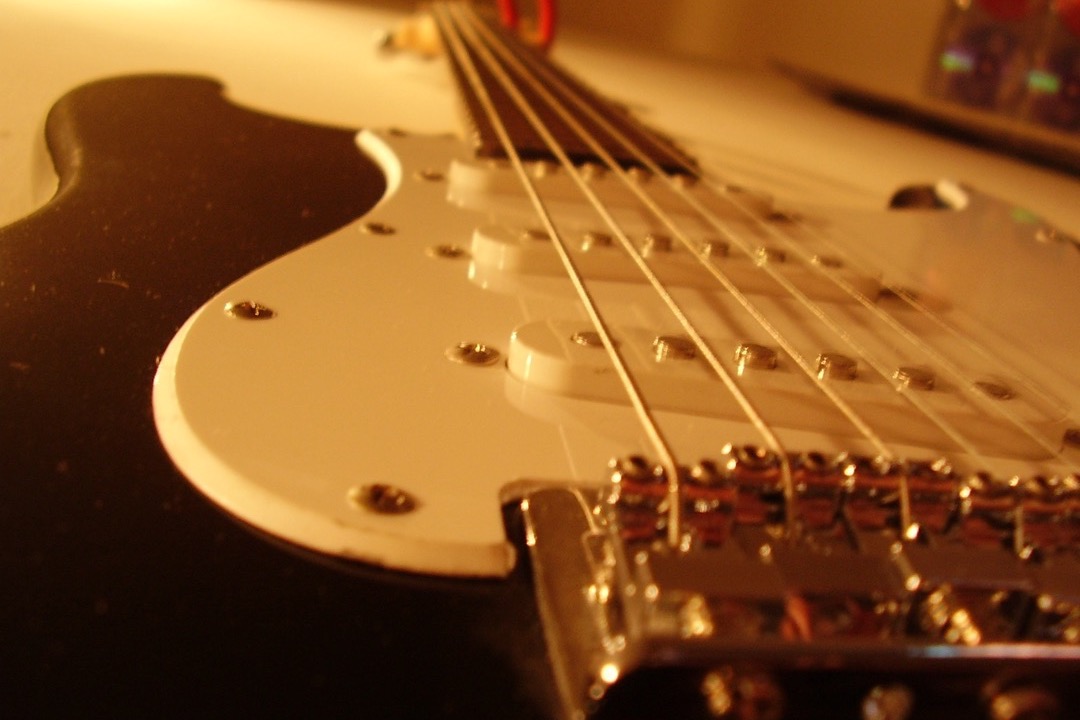
Strings are the most overlooked upgrade in all of electric guitar. Players will agonize for weeks over which pickups or which amp to buy, then leave the same dead, corroded factory strings on the guitar for a year and wonder why it sounds lifeless and will not stay in tune. In two decades of playing — through a music degree at Berklee, years on stage and in the studio, and a stretch on the other side of the counter buying gear for a store — the fastest, cheapest transformation I ever heard from an electric was a nine-dollar set of fresh strings. The right strings change the voice, the feel, and the playability of your guitar more than almost anything short of a pickup swap or a proper setup.
So this is not a list of exotic boutique strings nobody stocks. It is the eight sets I would actually put on a real player’s electric in 2026, each chosen for a specific gauge, alloy, and budget — from the balanced nickel-plated steel I hand to almost everyone, to light sets for beginners and benders, heavy hybrids for metal and drop tuning, warm pure nickel for blues, smooth flatwounds for jazz, and month-lasting coated sets for gigging. Whether you want the safe universal choice, the easiest set to bend, strings that survive a tour, or the tone of the old records, one of these is right for you. If you are still choosing an instrument, our roundup of the best beginner electric guitars pairs perfectly with the right first set of strings, and our guide to the best guitar amps covers the other half of your tone.
Find the Best Electric Guitar Strings for Your Need
Jump straight to the strings that fit how you play:
- Best electric guitar strings overall
- Best for beginners
- Best for metal & drop tuning
- Best for blues
- More use cases
How We Chose These Electric Guitar Strings
Every set here earned its place on a verified, in-stock Amazon listing, a deep and consistent owner-review base, a genuine name-brand pedigree, and a clear role for a specific kind of player. I leaned on twenty years of playing and a former gear buyer’s ear to weigh what actually separates a great electric string from a forgettable one: the gauge and the tension it puts under your fingers, the wrap alloy and the voice it produces, whether a coating is worth its cost for how you play, roundwound versus flatwound feel, tuning stability under hard bending, and break resistance. I cross-referenced tens of thousands of owner reviews for the recurring truths — which strings hold their tone, which stay in tune, which break, which brands stay consistent set to set — and I deliberately built the lineup to cover every major gauge, alloy, and use case rather than eight variations on one string. The eight below represent the best electric guitar strings for every genre, playing style, and budget.
Best Electric Guitar Strings Overall
The lineup runs from the balanced nickel-plated steel set that suits almost any guitar, through lighter beginner sets and premium upgrades, to specialist metal, blues, and jazz strings. Here is every set reviewed in full, starting with my overall pick.
Best Overall: Ernie Ball Regular Slinky 10-46
When someone asks me for one electric string recommendation and tells me nothing else about their guitar, this is the answer — and it is not close. The Ernie Ball Regular Slinky is a 10-46 nickel-plated steel set, and that exact combination is the most-used electric string on the planet for a simple reason: it fits everything. Ten-to-forty-six is the gauge most guitars ship with from the factory, so it drops onto almost any electric, any pickup, and any style with no adjustment and no surprises. The voice is balanced and versatile — bright, clear highs over a full low end — and it works for rock, pop, indie, country, and light metal alike. If you have no strong opinion yet about what you want your guitar to sound like, this is the sound most people mean by “a good electric guitar tone.”
What makes it a string I trust rather than just like is its pedigree and its consistency. These are the strings on records by Slash, Jimmy Page, Angus Young, and countless others, and they carry one of the largest review bases of any music product on Amazon at a 4.8-star average. The 10-46 gauge sits right in the tension sweet spot: heavy enough to hold tuning and drive a pickup hard, light enough to bend and fret comfortably. With a price under ten dollars, there is simply no cheaper or lower-risk upgrade you can make to any electric. The only real caveat is the one every uncoated string shares — expect a few weeks of bright life from steady playing before the tone dulls. Change them on that rhythm and this is the string that will never let you down.

Ernie Ball Regular Slinky Nickel Wound Electric Guitar Strings, 10-46
by Ernie Ball
The string I put on almost any electric when someone wants one answer -- balanced, bright nickel-plated steel in the universal 10-46 gauge, played by half the guitar heroes you can name, at a price that makes it a no-brainer.
Pros
- The default electric guitar string on Earth -- a 10-46 nickel-plated steel set in the exact gauge most guitars ship with, so it fits almost any electric, any pickup, and any style without a second thought, which is why it is the string named first in nearly every roundup and AI overview
- A balanced, versatile voice with bright, clear highs and a full low end that works for rock, pop, indie, country, and light metal alike -- the sound most people mean by 'a good electric guitar tone,' and the reference every other string here is measured against
- Played by everyone from Slash to Jimmy Page to Angus Young, backed by one of the largest review bases of any music product on Amazon at a 4.8-star average -- a genuinely zero-risk, under-ten-dollar choice
- The 10-46 gauge is the sweet spot of tension: heavy enough to hold tuning and drive a pickup, light enough to bend and fret comfortably -- the right default for a player who does not yet know exactly what they want
Cons
- As an uncoated string it corrodes faster than a coated set -- expect a few weeks of bright life from steady playing before the tone dulls, versus months from an Elixir or D'Addario XT
- Because it is the safe all-rounder, it is not the specialist's choice -- a metal player chasing maximum low-end chug or a blues player after vintage warmth will prefer the Skinny Top Heavy Bottom or Pure Nickel sets below
Best Budget: Ernie Ball Super Slinky 9-42
If the Regular Slinky is the safe default, the Super Slinky is the set that makes playing easier — and it is the string I reach for first when a beginner asks what to buy. It is the same balanced, bright nickel-plated steel as the Regular Slinky in a lighter 9-42 gauge, and that lighter gauge is the whole point: less tension means less finger pressure to fret a clean note and far less effort to bend a string. For uncalloused beginner fingers, that difference is the line between a frustrating first month and one where you actually keep playing.
But do not mistake it for a beginner-only string. That same low tension is exactly why so many shredders and blues-rock players live on 9s — bends and vibrato feel effortless, and the lighter strings snap back to pitch faster, so expressive playing gets easier, not just easier to learn. Tonally it is a touch brighter and more elastic than the Regular Slinky while staying just as versatile across styles. It carries the same enormous 4.8-star review base and the same under-ten-dollar price, so there is never an excuse to leave dead strings on a first guitar. The only trade is the one you accept for that easy feel: the light 9-42 gauge gives up a little low-end thickness and volume, so if you drop-tune or strum hard, step up to the Regular Slinky or a heavier set. For everyone else, this is the friendliest electric string there is. To hear those open strings ring in tune before you play, a good clip-on guitar tuner is the other inexpensive upgrade every player needs.

Ernie Ball Super Slinky Nickel Wound Electric Guitar Strings, 9-42
by Ernie Ball
The friendliest electric string there is -- a light 9-42 nickel-plated steel set that makes bending and fretting almost effortless, ideal for beginners building calluses and for anyone who lives for expressive bends.
Pros
- The easiest-playing standard set here -- a lighter 9-42 gauge holds less tension, so bends take less effort and fretting is far kinder to new, uncalloused fingertips, which makes it the string I hand almost every beginner
- That low tension is exactly why shredders and blues-rock benders love it too -- string bending and vibrato feel effortless, and the lighter strings snap back into pitch faster, so it is a favorite far beyond the beginner shelf
- The same balanced, bright nickel-plated steel voice as the Regular Slinky, just a touch lighter and more elastic -- versatile enough for any style while staying the most forgiving set to actually play
- The lowest-risk, lowest-cost way onto a great string: an enormous 4.8-star review base and an under-ten-dollar price, so a beginner never has an excuse to leave dead strings on a first guitar
Cons
- The light 9-42 gauge gives up a little low-end thickness and volume -- drop-tuners and heavy strummers will want a heavier set like the Regular Slinky or Skinny Top Heavy Bottom
- Uncoated, so it fades in a few weeks of steady play -- fine at this price, but plan to change it more often than a coated set
Best Upgrade: D’Addario NYXL1046
For the player who keeps snapping strings mid-solo or fighting a guitar that drifts out of tune during a set, the D’Addario NYXL is the fix, and it is the clearest step up from a standard set here. NYXL is built on a reformulated high-carbon steel core that resists breakage far better than an ordinary string and, more importantly, holds tuning through the hardest bending and whammy-bar abuse. It is genuinely the string that stays in tune when others slip flat — a difference you feel within the first song of hard playing.
It also sounds different in a way many players love: a brighter, more present midrange than a standard nickel wound, with more output and cut that makes a guitar feel more alive under the fingers and slices cleanly through a dense mix. That combination of durability, tuning stability, and bite is why it is a go-to for both lead players who bend constantly and metal players who need to cut through high gain. Because it is the same universal 10-46 gauge as the Regular Slinky, it drops straight on as an upgrade — you keep the familiar tension and simply gain performance. It carries a strong 4.8-star rating from thousands of demanding players. The honest caveats are two: it costs more than a standard Slinky, so the premium only pays off if you value the extra stability and break resistance, and its extra brightness is not for the player chasing warm vintage roundness — who should look at the Pure Nickel set below.

D'Addario NYXL1046 Nickel Wound Electric Guitar Strings, Regular Light 10-46
by D'Addario
The performance upgrade for any electric -- a high-carbon-core nickel wound that resists breakage, holds tuning through the hardest bends, and adds bright, cutting output, at a small premium over a standard set.
Pros
- D'Addario's flagship high-performance string, built on a reformulated high-carbon steel core that resists breakage far better than a standard set and, crucially, holds tuning through the hardest bending and whammy abuse -- the string that stays in tune when others slip flat
- A noticeably brighter, more present midrange than a standard nickel wound, with more output and cut -- it makes a guitar feel more alive under the fingers and slices through a dense mix, which is why it is a go-to for both lead players and metal
- The same universal 10-46 gauge as the Regular Slinky, so it drops onto almost any electric as a straight upgrade -- you keep the familiar tension and gain durability, tuning stability, and bite
- A strong 4.8-star rating from thousands of demanding players -- the set to reach for when a cheap string keeps breaking mid-solo or drifting out of tune during a set
Cons
- Costs more than a standard Slinky or XL set -- the premium only pays off if you actually value the extra tuning stability and break resistance
- That extra brightness and output is not to every ear -- a player chasing warm, vintage roundness will prefer the Pure Nickel set below
Best Coated (Longest-Lasting): Elixir OPTIWEB
If you dread changing strings — or your hands seem to kill a set in days — the Elixir OPTIWEB is the answer, from the company that created the entire coated-string category. Elixir wraps the string in a polymer coating that locks out the sweat, skin oil, and airborne grime that actually kill tone. The result is a set that stays bright and alive three to five times longer than a bare one: where an uncoated string fades in weeks, these routinely last three to four months of real playing.
OPTIWEB is Elixir’s thinnest coating, and it exists to answer the one classic complaint about coated strings — the slightly slick, damped feel. It is engineered so a coated string finally feels and sounds like a bare one, with a crisp, natural top end and no sacrifice of playability. That longevity quietly flips the cost math that scares people off the higher price: a set that lasts four months works out cheaper per week than a nine-dollar uncoated set changed monthly, and you restring far less often — a real win for gigging and touring players. The coating also means far less finger squeak and a smoother feel, and it earns a 4.8-star rating from a large, loyal base. The only players who should hesitate are those who change strings compulsively for that brand-new zing anyway. Everyone else who plays regularly should try a set. To see how a lighter or heavier set changes the tension under your fingers, our free guitar string tension calculator does the math for any gauge.
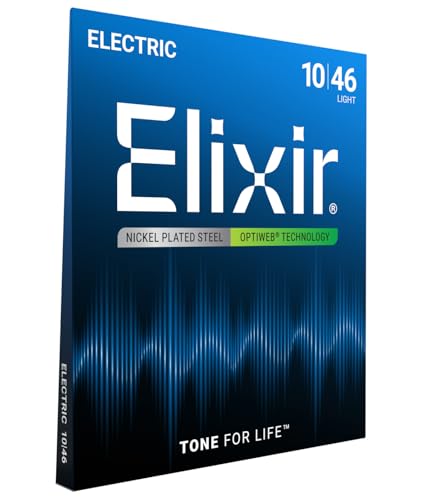
Elixir Strings OPTIWEB Coated Nickel-Plated Steel Electric Guitar Strings, Light 10-46
by Elixir
The set for players who hate changing strings -- an OPTIWEB-coated nickel wound that holds its bright tone for months, feels like a bare string, squeaks less, and often costs less per week than the cheap sets you replace constantly.
Pros
- The longest-lasting tone of any mainstream electric string -- Elixir's OPTIWEB coating wraps the string to block the sweat, skin oil, and grime that kill tone, so a single set stays bright three to five times longer than an uncoated one
- OPTIWEB is Elixir's thinnest coating, engineered specifically so a coated string finally feels and sounds like a bare one -- crisp, natural top end and none of the slick, damped feel that put some players off older coated strings
- That longevity flips the cost math: a set that lasts three to four months of hard playing often works out cheaper per week than the uncoated sets you change monthly, and you restring far less often -- a huge win for gigging and touring players
- The reduced grime buildup also means far less finger squeak and a smoother feel, and it earns a 4.8-star rating from a large, loyal base -- Elixir essentially invented the coated-string category and still sets the durability benchmark
Cons
- The highest up-front price here -- the per-set cost only pays off if you keep them on for months rather than changing on a schedule
- A few players still feel any coating sands off a sliver of the very brightest brand-new zing, and prefer a fresh uncoated set even if it dies faster
Best for Metal & Drop Tuning: Ernie Ball Skinny Top Heavy Bottom
When a guitar needs to chug tight and low, the Ernie Ball Skinny Top Heavy Bottom is the benchmark, and it solves a problem standard sets cannot. It is a hybrid 10-52 gauge, which means it pairs a skinny top (the light 10-13 plain strings, for easy bending and singing leads) with a heavy bottom (the thick 30-52 wound strings, for tight, articulate low-end chug). That combination lets one set do both jobs a heavy rhythm player needs at once: fast, expressive highs and a punchy, defined low end.
The heavy bottom strings are the real key for anyone who drop-tunes. When you drop to D, C#, or lower, string tension falls, and a standard 10-46 set goes floppy, buzzy, and muddy on the low strings. The thicker wound strings here restore that tension, so palm-muted riffs stay tight and articulate instead of turning to mush — this is the set that keeps down-tuned metal defined. It uses standard scale length and ball ends, so it drops onto any electric with no setup surprises, and the skinny top keeps solos feeling fast even with the heavier low strings. That is why it is a staple for metal, hard rock, and modern worship players alike. It shares the trusted Ernie Ball nickel wound build and enormous 4.8-star review base at the same under-ten-dollar price — a specialist tone for a beginner’s budget. The only caveat: if you never drop-tune, the heavy 52 low string is overkill, and a straight 10-46 set will feel more balanced.

Ernie Ball Skinny Top Heavy Bottom Slinky Nickel Wound Electric Guitar Strings, 10-52
by Ernie Ball
The metal and drop-tuning benchmark -- a hybrid skinny-top, heavy-bottom set that keeps down-tuned chugs tight and articulate while leaving the top strings light enough for fast, singing leads, at a budget price.
Pros
- The definitive drop-tuning and metal string -- a hybrid 10-52 gauge that pairs a skinny top (10-13 for easy bending and singing leads) with a heavy bottom (30-52 for tight, articulate low-end chug), so it does both jobs a heavy rhythm player needs at once
- Those thicker wound strings hold tension and stay articulate when you drop to D, C#, or lower, where a standard 10-46 set goes floppy and muddy -- this is the set that keeps down-tuned riffs tight and defined
- Standard scale length and ball ends mean it drops straight onto any electric with no setup surprises, and the skinny top keeps solos and bends feeling fast even with the heavier low strings -- the reason it is a staple for metal, hard rock, and modern worship players
- The same trusted Ernie Ball nickel wound build and enormous 4.8-star review base as the Regular Slinky, at the same under-ten-dollar price -- a specialist tone for a beginner's budget
Cons
- The heavy 52 low string is overkill in standard tuning for lighter styles -- if you never drop-tune, a straight 10-46 set is more balanced
- Uncoated, so like any bare set it needs changing every few weeks under heavy playing to stay bright
Best for Blues & Vintage Tone: Ernie Ball Classic Pure Nickel
Some strings are all-purpose; the Ernie Ball Classic Pure Nickel is a character actor, and for the right player it is unforgettable. Pure nickel is the wrap alloy used on the classic records of the 1950s and 60s, before nickel-plated steel became the industry standard. What it gives you is a warm, round, vintage voice with softened highs and a rich midrange that nickel-plated steel simply cannot produce. It does not sparkle and cut so much as sit and glow — exactly what blues, classic rock, jazz, and roots players are chasing.
That warmth has a practical magic to it: it takes the harsh edge off bright single-coils and amps, sits beautifully under overdrive, and makes a modern, sterile-sounding guitar sound like the old recordings you grew up on. It has a smooth, slightly slinkier feel than nickel-plated steel and comes in the same easy 10-46 gauge, so it plays like a familiar set while completely changing the tonal character — the cheapest way there is to chase a vintage tone. It is a genuine Ernie Ball set at the same budget price as the Regular Slinky, with a devoted following and a strong 4.7-star rating. Understand the trade: pure nickel is naturally lower-output and less bright, so if you want maximum cut, sparkle, and modern aggression, this is the wrong set and the NYXL is your string. But if you have ever wished your guitar sounded like the old records, this is the set that gets you there. Our walkthrough of the best beginner electric guitars pairs well with a warm pure-nickel set for anyone learning blues and classic rock.

Ernie Ball Classic Pure Nickel Electric Guitar Strings, 10-46
by Ernie Ball
The vintage-voice specialist -- a pure nickel set that trades modern brightness for the warm, round, midrange-rich tone of the classic records, the cheapest way to make a bright modern guitar sound old-school.
Pros
- Pure nickel wrap wire -- the alloy used on the classic records of the 1950s and 60s before nickel-plated steel took over -- gives a warm, round, vintage voice with softened highs and a rich midrange that nickel-plated steel cannot match
- That warmth is exactly what blues, classic rock, jazz, and roots players chase: it takes the harsh edge off bright single-coils and amps, sits beautifully under overdrive, and makes a modern guitar sound like the old recordings
- A smooth, slightly slinkier feel than nickel-plated steel and the same easy 10-46 gauge, so it plays like a familiar set while completely changing the tonal character -- the cheapest way there is to chase a vintage tone
- A genuine Ernie Ball set at the same budget price as the Regular Slinky, with a devoted following and a strong 4.7-star rating from thousands of players
Cons
- Pure nickel is naturally lower-output and less bright than nickel-plated steel -- if you want maximum cut, sparkle, and modern aggression, this is the wrong set
- The softer alloy corrodes a touch faster and can feel less crisp under heavy pick attack than a steel string -- a deliberate trade for that vintage warmth
Best for Jazz & Hollow-Body: D’Addario XL Chromes Flat Wound
The D’Addario XL Chromes are the string that makes a jazz box or a semi-hollow sound the way it is supposed to. They are flatwound, which means the wrap wire is a flat ribbon polished glass-smooth instead of the usual round wire, and that construction produces a warm, dark, mellow voice with almost none of the finger squeak a roundwound makes. It is the classic sound of jazz, soul, and hollow-body guitars, and once you have played a set into a clean amp you understand why archtop players never go back.
The smooth surface is a revelation to play as much as to hear: your fingers glide silently across the wound strings with no scrape or squeal, which matters enormously for recording and for any exposed clean tone. Flatwounds are also extraordinarily long-lived — the sealed, polished surface traps far less grime than a roundwound, so a set holds its tone for many months and resists the dead-string decline, which makes the higher price genuinely economical over time. D’Addario’s precision winding gives class-leading consistency and tuning stability, backed by a 4.8-star rating. The caveats follow directly from the design: that warm, dark voice and slick feel are a specialist taste, so if you want bright, aggressive modern rock or metal, a roundwound is the right choice, and the 11-50 gauge takes a little more finger strength. But for smooth, mellow, vintage tone on a hollow or semi-hollow guitar, nothing else here comes close.
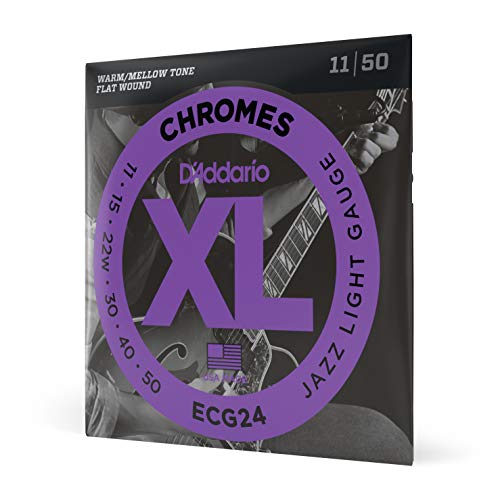
D'Addario XL Chromes Flat Wound Electric Guitar Strings, Jazz Light 11-50
by D'Addario
The smooth-jazz and hollow-body benchmark -- a polished flatwound set with a warm, dark, squeak-free voice and an exceptionally long life, the classic string for archtops, semi-hollows, and any clean, mellow tone.
Pros
- Flatwound construction -- a flat ribbon wrap polished smooth instead of the usual round wire -- gives a warm, dark, mellow voice with almost no finger squeak, the classic sound of jazz, blues, soul, and hollow-body guitars
- That glass-smooth surface is a revelation to play: your fingers glide silently across the wound strings with no scrape or squeal, which is why they are the standard on archtops, semi-hollows, and any guitar going into a clean amp
- Flatwounds are also extraordinarily long-lived -- the sealed, smooth surface traps far less grime than a roundwound, so a set holds its tone for many months and resists the dead-string decline, making the higher price genuinely economical over time
- D'Addario's precision winding gives class-leading consistency and tuning stability, backed by a 4.8-star rating -- the flatwound most players reach for first when they want that smooth, vintage, mellow character
Cons
- That warm, dark voice and slick feel are a specialist taste -- if you want bright, aggressive, modern rock or metal tone, a roundwound is the right choice
- The 11-50 gauge and higher tension take a little more finger strength, and flatwounds cost more up front than a standard roundwound set
Best Value Coated: D’Addario XT Nickel
For the gigging player who wants strings that last but balks at the top coated-string price, the D’Addario XT is the smart-money choice. It is built on the same high-carbon NY Steel core as the NYXL, so it carries real break resistance and tuning stability — and then adds a coating for extended life. Getting both durability and longevity in one string is genuinely rare, and it is what makes the XT punch above its price.
The coating is applied to the wound strings only and is remarkably thin, so these feel and sound far closer to a bright uncoated set than most coated strings — you get the long life without the damped, slick compromise that used to come with it. Crucially, the XT undercuts the Elixir on price while delivering the same core benefit of three-to-five-times-longer tone life, which makes it the pragmatic pick for players who restring often and want to spend less doing it. It comes in a standard 10-46 gauge and carries a strong 4.7-star rating from thousands of players. The honest caveats: it is still a premium over an uncoated Slinky, so it only makes sense if you value long string life, and it is a newer product with a shorter track record than the decades-old Elixir line. But dollar for dollar, it is the best-value way to stop changing strings every few weeks.

D'Addario XT Nickel Coated Electric Guitar Strings, Regular Light 10-46
by D'Addario
The value coated string -- D'Addario's XT pairs a break-resistant NY Steel core with a thin coating for Elixir-class longevity and a natural, bright feel, at a lower price than the premium coated sets.
Pros
- D'Addario's coated string built on the same high-carbon NY Steel core as the NYXL -- so you get real break resistance and tuning stability along with the extended life a coating brings, a genuinely rare two-in-one
- The coating is applied to the wound strings only and is remarkably thin, so these feel and sound far closer to a bright uncoated set than most coated strings -- long life without the damped, slick compromise
- The best-value coated string here: it undercuts the Elixir on price while delivering the same core benefit of three-to-five-times-longer tone life, which makes it the pragmatic choice for gigging players who restring often
- A standard 10-46 gauge and a strong 4.7-star rating from thousands of players -- an easy, low-risk upgrade for anyone who wants their strings to last without paying the top price
Cons
- Still a premium over an uncoated Slinky, so it only makes sense if you value long string life over the lowest possible up-front cost
- A newer product than the decades-old uncoated sets, with a smaller (though excellent) track record than an Elixir NANOWEB or OPTIWEB
Best Electric Guitar Strings for Beginners
The strings that make learning easier all share one trait: low tension, so it takes less finger pressure to fret and bend a note. The goal for a first set is simply to keep playing from hurting, so your hands build calluses and your ear starts to develop. These three picks from the lineup serve new players best, from the easiest-bending light gauge to a durable coated set for those who would rather not restring often.
| Product | Price | Buy |
|---|---|---|
| Ernie Ball Super Slinky Nickel Wound Electric Guitar Strings, 9-42Best for beginners overall The lightest standard gauge here at 9-42, so fretting and bending take the least effort -- the kindest set on sore beginner fingertips while calluses form. | $8.99 | View on Amazon |
| Ernie Ball Regular Slinky Nickel Wound Electric Guitar Strings, 10-46Best step-up gauge A slightly heavier 10-46 with a touch more body and tuning stability -- the natural next step once your hands are ready, and the gauge most guitars ship with. | $8.99 | View on Amazon |
| D'Addario XT Nickel Coated Electric Guitar Strings, Regular Light 10-46Best low-maintenance (coated) A coated 10-46 that lasts three to five times longer, so a beginner who forgets to restring keeps a bright, playable set for months instead of weeks. | $13.99 | View on Amazon |
Start with the Ernie Ball Super Slinky — its light 9-42 gauge makes fretting and bending as easy as a standard set gets while you toughen up your fingertips. Once your hands are ready for a touch more tension and body, the Regular Slinky in 10-46 is the natural step up and the gauge most electrics are set up for. And if you know you will forget to change your strings, the coated D’Addario XT keeps a fresh, bright set on the guitar for months, so dead strings never become the reason a beginner blames themselves for a bad sound. Whichever you pick, keep the gauge light — a heavy set is the fastest way to make a new player give up.
Best Electric Guitar Strings for Metal
Metal and hard rock ask two things of a string that standard sets struggle to do at once: a heavy enough bottom end to stay tight when you drop-tune, and enough brightness and break resistance to survive aggressive picking and cut through high gain. These three picks cover it, from the drop-tuning benchmark to the break-resistant performance string.
| Product | Price | Buy |
|---|---|---|
| Ernie Ball Skinny Top Heavy Bottom Slinky Nickel Wound Electric Guitar Strings, 10-52Best for drop tuning & chugs The hybrid 10-52 heavy bottom stays tight and articulate in drop D and lower, where a standard set goes floppy -- the definitive down-tuned metal set. | $8.99 | View on Amazon |
| D'Addario NYXL1046 Nickel Wound Electric Guitar Strings, Regular Light 10-46Best for shred & bends A high-carbon core that resists breakage and holds tuning through the hardest picking and bending, with a bright, cutting midrange that slices through distortion. | $12.99 | View on Amazon |
| Elixir Strings OPTIWEB Coated Nickel-Plated Steel Electric Guitar Strings, Light 10-46Best long-lasting for touring A coated set that survives weeks of hard, sweaty playing without going dead -- the pick for touring and gigging metal players who cannot restring nightly. | $15.29 | View on Amazon |
The Ernie Ball Skinny Top Heavy Bottom is the standout for anyone who drops below standard tuning: its heavy 10-52 bottom keeps chugs tight and defined where a normal set turns to mush, while the skinny top keeps leads fast. For players in standard or drop D who beat on their strings, the D’Addario NYXL is the pick — its high-carbon core resists breakage and holds tuning through the most aggressive picking, and its cutting midrange punches through high gain. And if you gig or tour and cannot restring every night, the coated Elixir OPTIWEB survives weeks of sweaty abuse without going dead. Match the gauge to how low you tune first, then choose for durability and cut.
Best Electric Guitar Strings for Blues
Blues rewards a string with warmth, a rich midrange, and an easy feel under the fingers for expressive bends and vibrato. You want a voice that softens the harsh edge of a bright amp and sits beautifully under overdrive, not one that adds modern sparkle and aggression. These three picks cover the range, from a true vintage pure-nickel voice to the easiest-bending everyday set.
| Product | Price | Buy |
|---|---|---|
| Ernie Ball Classic Pure Nickel Electric Guitar Strings, 10-46Best warm vintage tone Pure nickel gives the warm, round, midrange-rich voice of the classic blues records -- the cheapest way to make a bright modern guitar sound vintage. | $9.99 | View on Amazon |
| Ernie Ball Regular Slinky Nickel Wound Electric Guitar Strings, 10-46Best all-round blues The balanced 10-46 nickel wound does blues cleanly with a touch more brightness and cut than pure nickel, if you want a more modern edge. | $8.99 | View on Amazon |
| Ernie Ball Super Slinky Nickel Wound Electric Guitar Strings, 9-42Best for expressive bends The light 9-42 gauge makes the big, slow bends and wide vibrato at the heart of blues playing feel effortless -- ideal for a lighter touch. | $8.99 | View on Amazon |
The Ernie Ball Classic Pure Nickel is the standout: its warm, round, vintage voice is exactly what blues players chase, and it makes a modern guitar sound like the old records for the price of a coffee. If you want a slightly more modern edge with more brightness and cut, the Regular Slinky handles blues cleanly while staying versatile for everything else. And for a player with a lighter touch who lives for big, slow bends and wide vibrato, the Super Slinky’s light 9-42 gauge makes that expressive playing effortless. All three are inexpensive enough to buy a couple and hear which voice suits your amp and your hands.
Best Electric Guitar Strings by Use Case
A few more specific situations call for a specific string. These sets each solve one particular problem well — and unlike a plain table, every row keeps a live Amazon link so you can grab the right set in a click.
| Product | Price | Buy |
|---|---|---|
| Ernie Ball Regular Slinky Nickel Wound Electric Guitar Strings, 10-46Best for rock The balanced 10-46 nickel wound is the all-round rock string -- bright, punchy, and versatile enough for rhythm and lead across every rock subgenre. | $8.99 | View on Amazon |
| D'Addario XL Chromes Flat Wound Electric Guitar Strings, Jazz Light 11-50Best for jazz & hollow-body Smooth flatwound construction gives the warm, dark, squeak-free voice archtops and semi-hollows are built around, and lasts for months. | $20.99 | View on Amazon |
| Elixir Strings OPTIWEB Coated Nickel-Plated Steel Electric Guitar Strings, Light 10-46Best long-lasting / low-maintenance OPTIWEB coating holds a bright tone three to five times longer than an uncoated set -- the set to buy if you hate restringing or your hands eat strings. | $15.29 | View on Amazon |
For all-round rock, the Regular Slinky is the everyman string — bright, punchy, and versatile enough for rhythm and lead in any rock style. For jazz, soul, and hollow-body guitars, the D’Addario Chromes flatwound delivers a warm, dark, glass-smooth voice with no finger squeak and an exceptionally long life. And if your priority is simply not changing strings, the Elixir OPTIWEB holds its bright tone for months. Matching the string to the specific job is the cheapest way there is to make an electric do exactly what you need.
How to Choose the Best Electric Guitar Strings
After two decades of playing and a stint buying gear for a living, I have learned that choosing electric strings is less about chasing one “best” set and more about matching the string to your genre, your hands, and how low you tune. Here is the framework I walk everyone through.
String Gauge (Thickness)
Gauge is the diameter of the strings, and it is the first decision because it sets both tension and tone. Lighter gauges (super light 9-42, light 10-46) hold less tension, so they are easier to fret and bend — the right call for beginners, lead players, and anyone who bends a lot. Heavier gauges hold more tension for a fuller low end, more volume, and the stability that down-tuning demands, at the cost of harder fretting. For standard tuning and most players, 9s or 10s are the sweet spot; go heavier only if you drop-tune, strum hard, or want more low-end thickness.
String Material (Alloy)
The wrap alloy around the steel core is the biggest tone decision after gauge. Nickel-plated steel is the bright, punchy, high-output modern default that suits rock, pop, country, and metal. Pure nickel is warmer, rounder, and lower-output, the vintage voice loved by blues and classic rock. Stainless steel is even brighter and more corrosion-resistant, and cobalt offers extra output and clarity. Choose the alloy for the voice you want first — bright and modern, or warm and vintage — and everything else is fine-tuning.
Coating and Winding
Coated strings block the sweat and grime that kill uncoated sets, extending life from weeks to months and often costing less per week despite the higher sticker price — the clear choice for gigging players. Winding is the other feel decision: roundwound is the bright, textured, versatile default, while flatwound gives a warm, dark, squeak-free voice for jazz and hollow-body guitars and lasts far longer. Pick coated if you hate restringing, and flatwound only if you specifically want that smooth, mellow character.
Buyer's Guide
Strings are the cheapest, fastest, most dramatic upgrade you can make to any electric guitar -- a fresh set transforms how an instrument sounds and feels more than almost any change short of a pickup swap or a professional setup. As a Berklee-trained player and a former gear buyer who evaluated string contracts by the caseload, I have restrung more electrics than I can count and heard exactly how much the right set matters. These are the six factors I weigh for every player before recommending a string, in the order that actually changes what you hear and feel.
String Gauge (Thickness)
Gauge is the diameter of the strings, and it is the first decision because it sets both tension and tone. Lighter gauges (super light 9-42, light 10-46) hold less tension, so they are easier to fret and bend -- the right call for beginners, lead players, and anyone who bends a lot. Heavier gauges (11-48 and up, or hybrid sets like 10-52) hold more tension for a fuller low end, more volume, and the stability that down-tuning demands, at the cost of harder fretting. For standard tuning and most players, 9s or 10s are the sweet spot; go heavier only if you drop-tune, strum hard, or want more low-end thickness.
String Material (Alloy)
The wrap alloy around the steel core is the biggest tone decision after gauge. Nickel-plated steel is the bright, punchy, high-output modern default that suits rock, pop, country, and metal -- it is what most sets are and what most guitars ship with. Pure nickel is warmer, rounder, and lower-output, the vintage voice loved by blues, classic rock, and jazz players. Stainless steel is even brighter and more corrosion-resistant (but harder on frets), and cobalt offers extra output and clarity. Choose the alloy for the voice you want first -- bright and modern, or warm and vintage -- and everything else is fine-tuning.
Coating
Coated strings (Elixir OPTIWEB, D'Addario XT) wear a thin polymer layer that blocks the sweat and grime that kill uncoated strings, extending playable life from weeks to months and reducing finger squeak. Uncoated strings cost far less up front and, to some ears, sound a hair brighter brand-new. The decisive question is how often you play and how acidic your hands are: because a coated set lasts three-to-five times longer, it often works out cheaper per week despite the higher sticker price, and it is the clear choice for gigging, touring, and anyone whose strings die in days. If you play rarely or love a fresh set constantly, uncoated is perfectly fine.
Winding (Roundwound vs Flatwound)
Almost every electric string is roundwound -- round wire wrapped around the core, giving the bright, textured, articulate tone most players want, plus the familiar finger squeak when you slide. Flatwound strings (D'Addario Chromes) use a flat ribbon polished smooth, which produces a warm, dark, mellow voice with virtually no squeak -- the classic sound of jazz, soul, and hollow-body guitars, and a favorite for smooth clean tones. Flatwounds also last far longer because their sealed surface traps less grime. Choose roundwound for bright, modern, versatile tone; choose flatwound for warm, smooth, vintage or jazz character and a glass-smooth feel.
Playing Style and Genre
Match the string to how you actually play. Beginners and lead players who bend a lot want light 9s or 10s for easy playability. Metal and drop-tuning players want heavier hybrid gauges (10-52) and bright, break-resistant nickel-plated steel to stay tight and cut through gain. Blues, classic rock, and roots players lean toward warm pure nickel. Jazz and hollow-body players want smooth flatwounds. Gigging and touring players prioritize coated strings for longevity and low squeak. There is no universally best string -- there is the best string for the music you make and the guitar you make it on.
Tuning and Tension
How low you tune should drive your gauge choice as much as your genre does. In standard E tuning, a 9-42 or 10-46 set has ideal tension. The moment you drop-tune -- drop D, D standard, drop C, and lower -- string tension falls, and a light set goes floppy, buzzes, and loses definition on the low strings. The fix is heavier strings: a 10-52 hybrid for drop D and D standard, 11-56 or heavier for drop C and below, so the low strings keep enough tension to stay tight and articulate. If you switch tunings often, it is worth using our free string tension calculator to find a gauge that keeps the feel consistent across the tunings you actually play.
The Bottom Line on the Best Electric Guitar Strings
The best electric guitar strings are the ones matched to your genre, your hands, and how low you tune — and for most players, most of the time, that is the Ernie Ball Regular Slinky, a balanced, bright 10-46 nickel-plated steel set played by half the guitar heroes you can name, at a price that makes it a no-brainer. If you are a beginner or love to bend, the lighter Super Slinky is the friendliest set there is; if you keep breaking strings or slipping out of tune, the D’Addario NYXL is the performance upgrade; and if you hate restringing, the coated Elixir OPTIWEB or value D’Addario XT will hold their tone for months. Reach for the Skinny Top Heavy Bottom for metal and drop tuning, the Classic Pure Nickel for warm blues and vintage tone, and the D’Addario Chromes flatwound for smooth jazz and hollow-body guitars.
Whichever set you choose, do the two things that matter more than the brand on the pack: change your strings before they sound dead, and wipe them down after every session so they last longer. Fresh strings are the cheapest transformation in all of electric guitar. Once the new set is on, tune it against our guide to guitar string notes so every open string lands where it should. When you are ready to put them to work, our free interactive guitar scales chart maps every scale across the fretboard in any key, and our guide to how to play guitar starts from holding the instrument — so you can turn those fresh strings loose the moment your hands are ready.
Frequently Asked Questions
What gauge electric guitar strings should a beginner use?
How do I change my electric guitar strings, and how often?
What is the difference between nickel-plated steel and pure nickel electric guitar strings?
Are coated electric guitar strings worth the extra cost?
What gauge and type of strings are best for metal and drop tunings?
What are the string notes on an electric guitar?
Related Articles
8 Best Acoustic Guitar Strings of 2026 (Every Player & Budget)
accessories-care
Guitar String Notes Explained: The 6 Open Strings (E-A-D-G-B-E)
accessories-care
10 Best Guitar Tuners of 2026 (Clip-On, Pedal, Strobe & More)
accessories-care
9 Best Guitar Picks of 2026 (Beginner, Acoustic, Metal, Jazz & Bass)
accessories-care
How to Restring a Guitar: Acoustic, Electric and Classical, Step by Step
accessories-care
About the Reviewer

Julian Reyes, MM, Berklee
M.M. Performance, Berklee College of Music
Julian Reyes is a multi-instrumentalist with a Master of Music from Berklee College of Music and over a decade gigging on guitar, bass, and keys. Before founding House of Octave, he spent years as a gear buyer for an independent music retailer, evaluating hundreds of instruments and audio products for the sales floor. He started House of Octave in 2026 to give players honest, hands-on reviews — judged by how gear actually sounds and holds up on stage and in the studio, not by spec sheets or sponsorships.