How to Read Sheet Music: A Complete Beginner's Guide
Berklee-trained musician Julian Reyes (MM) teaches you to read standard notation from zero: the staff, treble and bass clefs, note names, rhythm values, time and key signatures, dynamics, articulation and repeat signs, with a worked example and a practice plan that actually builds fluency.
Updated
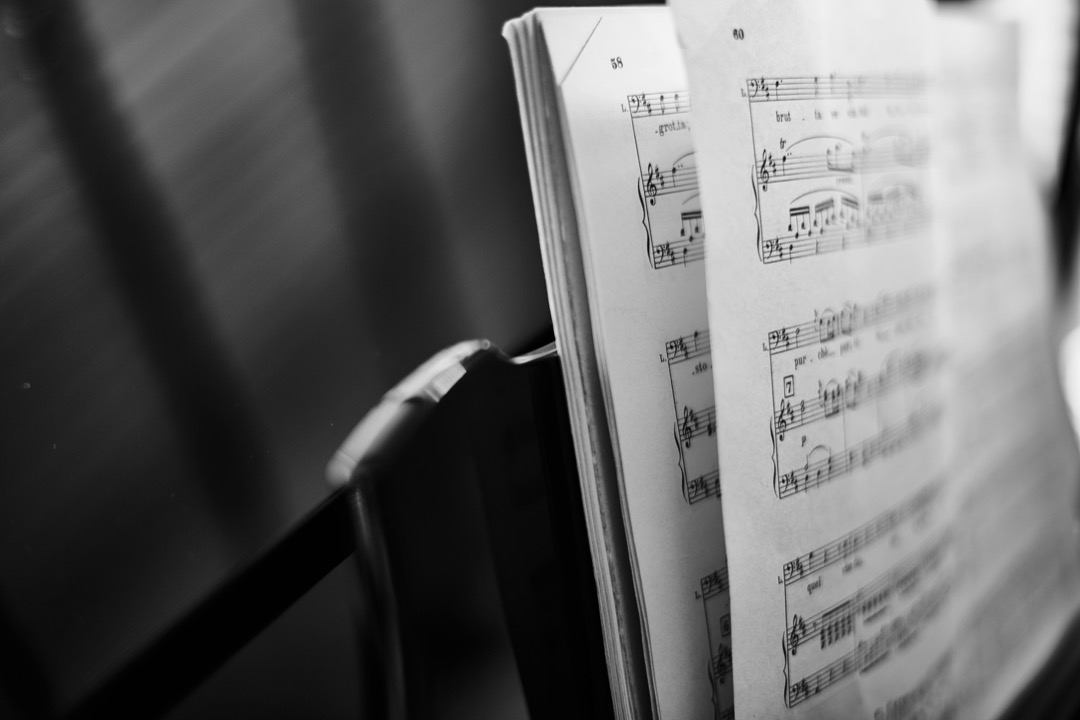
A student of mine spent an entire semester convinced he could not read music. He could play, well enough to hold down a Saturday gig, but put a page of notation in front of him and he froze. When we finally sat down with it, the problem took about twenty minutes to find: nobody had ever told him that the five lines are just a pitch ruler, and that everything else printed on the page is an instruction attached to that ruler. He had been treating notation as a language with thousands of words. It is closer to a map with about fifteen symbols on the legend.
I am a Berklee-trained multi-instrumentalist who spent years buying gear for a music shop, and in that time I have watched hundreds of players circle this skill without ever starting it. This guide starts you from nothing. By the end you will know what every mark on a page of standard notation is asking you to do, you will have read a full line of music, and you will have a practice routine that turns decoding into fluency.
What Sheet Music Actually Is
Standard notation is a graph. The vertical axis is pitch, the horizontal axis is time. Everything printed on the page is one of those two things, or an instruction about how to play them.
That is the whole concept, and it is worth sitting with for a second because it explains the design choices that follow. Higher on the page means higher in pitch. Further right means later in time. A symbol that looks complicated, like a dotted eighth note tied across a barline, is complicated only in the sense that it specifies a precise position on both axes at once.
What separates notation from a system like guitar tablature is that notation is instrument-neutral. It tells you the note, not the finger. A written C sounds the same whether it is played on a piano, a cello, a trumpet or a guitar, which means a single page can be handed to any musician in the room and understood. Tab does the opposite: it tells a guitarist exactly which fret to press and says nothing about which note results. Both are useful. Notation is the one that travels.
The Staff: Five Lines, Four Spaces
Every piece of standard notation is written on a staff, which is five horizontal lines with four spaces between them. Nine positions in total, and a note can sit on any of them: centred on a line, or sitting in a space.
Notes move by steps. Moving from a line to the space directly above it is one step up the musical alphabet, and that alphabet runs A, B, C, D, E, F, G and then starts again at A. There is no H. Once you know one note on the staff you can work out every other note by counting steps from it, which is why the first anchor you learn matters far more than memorising all nine positions.
When music goes higher or lower than the five lines can show, short extra lines called ledger lines are drawn above or below the staff to extend the ruler. They follow exactly the same logic: the first ledger line above the staff is the next line position, the space above it is the next space, and so on. Ledger lines look intimidating in dense piano music, but they are not a new system, just more of the same one.
Clefs: The Symbol That Gives the Lines Their Names
A staff on its own means nothing. Five lines could represent any five pitches. The clef at the left edge of the staff is what assigns actual note names to those positions, and it is the first thing you should look at on any new piece of music.
The treble clef, also called the G clef, is the ornate curl you have seen on a thousand tote bags. That curl wraps around the second line from the bottom, and it does so for a reason: it marks that line as G. The treble clef is used by the right hand on piano, by guitar, violin, flute, trumpet, saxophone and most high-register instruments, and by singers in the upper voices.
Reading the five lines from bottom to top, the treble clef gives you E, G, B, D and F. The old mnemonic is Every Good Boy Does Fine. The four spaces, bottom to top, spell the word FACE, which is the single easiest thing to remember in all of music notation.
The bass clef, or F clef, is the backwards C shape with two dots. Those two dots straddle the fourth line from the bottom, marking it as F. The bass clef carries the left hand on piano, plus bass guitar, double bass, cello, trombone, tuba and lower voices.
Its lines from bottom to top are G, B, D, F and A, remembered as Good Boys Do Fine Always. Its spaces are A, C, E and G, remembered as All Cows Eat Grass. Note that the same physical positions mean different notes than they do in treble clef. That is the point of clefs, and it is also why learning the second clef feels briefly like starting over. It is not as bad as it looks: the pattern of steps and skips is identical, only the labels shift.
The grand staff is a treble staff and a bass staff stacked and joined by a curly brace, and it is what almost all piano music uses. Middle C is the pitch that links them. It sits on a short ledger line just below the treble staff and, equivalently, on a short ledger line just above the bass staff. Finding middle C on the page and on the keyboard is the orientation move that makes the grand staff readable, and it is the strongest argument for learning to read on a keyboard even if a keyboard is not your main instrument. A weighted-key instrument shows you the whole pitch range laid out left to right in front of you, which makes the vertical axis of the page physically obvious in a way a fretboard does not. If you want one for this purpose, our roundup of the best digital pianos covers the weighted actions worth having.
You will also meet C clefs, mainly the alto clef used by viola and the tenor clef used in the upper register of cello, bassoon and trombone. The symbol points at whichever line is middle C. They are worth knowing exist, but unless you play one of those instruments you can leave them for later.
How Long Each Note Lasts
Pitch is the vertical axis. Rhythm is the horizontal one, and it is encoded in the shape of the note itself rather than its position.
The system is built on halving, which makes it far easier than it first appears. Counting in common time, where a quarter note gets one beat:
- A whole note is a hollow oval with no stem and lasts four beats.
- A half note is a hollow oval with a stem and lasts two beats.
- A quarter note is a filled head with a stem and lasts one beat.
- An eighth note is a quarter note with one flag, or beamed to its neighbours with one beam, and lasts half a beat.
- A sixteenth note has two flags or two beams and lasts a quarter of a beat.
Each rung is exactly half the one above. Two eighths fill one quarter, two quarters fill one half, two halves fill one whole.
Silence is notated just as precisely. Every note value has a matching rest of the same duration, and the two you will confuse are the whole rest and the half rest, which look nearly identical: the whole rest hangs down from the fourth line, and the half rest sits on top of the middle line. The memory trick most teachers use is that the whole rest is heavier so it hangs, and the half rest is lighter so it sits. Count rests as deliberately as you count notes, because dropping the pulse during a silence is the most common rhythm mistake there is.
Two modifiers round out the system. A dot after a notehead adds half of that note’s value back onto it, so a dotted half note lasts three beats and a dotted quarter lasts a beat and a half. A tie is a curved line joining two notes of the same pitch, and it means play one sound lasting the combined duration rather than two separate attacks. Do not confuse a tie with a slur, which is the same curved line drawn between notes of different pitches and means play them smoothly and connected.
A triplet is written as three notes under a bracket with a small 3, and it means fit three evenly spaced notes into the time two of them would normally take. Triplets are where a lot of readers first feel genuinely stuck, and the fix is always the same: say it out loud before you play it.
Time Signatures: How the Beats Are Grouped
Music is divided into measures, also called bars, separated by vertical barlines. The time signature at the start of the piece tells you how much fits in each measure.
It looks like a fraction without the dividing line, and the two numbers answer different questions. The top number is how many beats are in a measure. The bottom number is which note value counts as one beat, where 4 means a quarter note, 2 means a half note and 8 means an eighth note.
So 4/4 is four quarter-note beats per measure, which is why it is the default in nearly all popular music and why it is often printed as a stylised C for common time. A C with a vertical line through it is cut time, which is 2/2: still four quarters of material per bar, but felt in two, which changes how you phrase it. 3/4 gives you three quarter-note beats and is the waltz feel. 6/8 is the one that catches people out: it has six eighth notes per measure, but at normal tempos it is felt as two big beats of three, which is where the rolling lilt of most 6/8 music comes from.
The time signature appears once, at the beginning, and then only if the meter genuinely changes. The key signature, by contrast, is reprinted at the start of every line.
Counting Rhythm Out Loud
This is the section most guides give one sentence. It deserves more, because counting out loud is the single highest-return habit in reading, and almost nobody does it until a teacher makes them.
The principle is that you speak a continuous stream of syllables locked to the beat, and you keep speaking whether a note is sounding, held or resting. Putting the pulse outside your body is what lets you hear yourself drift, which is something you cannot do reliably from the inside.
Work up the ladder in 4/4, one rung at a time, with a metronome running:
- Quarter notes. Count one, two, three, four. Every note lands on a number.
- Eighth notes. Fill the gaps with the word and: one and two and three and four and. Every eighth now has a syllable.
- Sixteenth notes. Use one e and a, two e and a, three e and a, four e and a. Four evenly spaced syllables per beat.
- Dotted rhythms. A dotted quarter followed by an eighth is counted one and two and, playing on one and on the second and. Say the full count and play only the syllables that carry a note.
- Ties and rests. Keep counting at full volume. Play nothing on the tied or rested syllables. Dropping the count during silence is the error that causes nearly every lost bar.
Two rules make the drill work. Count before you play, clapping or tapping the rhythm of the line with no pitches at all, then add the notes once the rhythm is solid. And count at a tempo where you never stop, which is almost always slower than feels dignified.
Our guide to practising with a metronome goes deeper on subdivision drills and the tempo ladder, and there is a free browser-based 120 BPM metronome you can leave running in a tab while you work through this.
Key Signatures and Accidentals
Immediately after the clef sits a cluster of sharp or flat symbols. This is the key signature, and it is a standing instruction for the entire piece: every note on those positions is raised or lowered until told otherwise.
The symbols appear in a fixed order that never varies. Sharps go F, C, G, D, A, E, B, traditionally remembered as Father Charles Goes Down And Ends Battle. Flats go in the exact reverse: B, E, A, D, G, C, F, which conveniently spells BEAD followed by GCF. Because the order is fixed, you can identify the key at a glance with two shortcuts. For sharp keys, take the last sharp in the group and go up one half step: three sharps ending on G sharp means the key is A major. For flat keys, the second-to-last flat is the name of the key, with F major as the single-flat exception you memorise separately.
Within the music, an accidental temporarily overrides the key signature. A sharp raises a note by a half step, a flat lowers it by a half step, and a natural cancels whatever was in effect and gives you the plain note. The rule everyone forgets is that an accidental lasts to the end of the measure it appears in, applying to every later note on that same line or space, and then expires at the barline.
Key signatures make far more sense when you can see how the keys relate to each other rather than memorising twelve isolated facts. Our interactive circle of fifths lays out every key signature, its sharp or flat count and its relative minor in one diagram, and five minutes with it will do more than an hour of flashcards.
The Instructions Around the Notes
Once pitch and rhythm are handled, everything else on the page is performance direction. There is less of it than it appears, and it clusters into three groups.
Dynamics are volume, written as Italian abbreviations in bold italics below the staff. From quiet to loud the core set runs pp (very soft), p (soft), mp (medium soft), mf (medium loud), f (loud) and ff (very loud). Gradual changes are drawn as long angled lines called hairpins: opening means get louder, closing means get softer, and they are sometimes spelled out as cresc. and dim. instead.
Articulation is how each note is attacked and released, marked directly above or below the notehead. A dot means staccato, short and detached. A short horizontal line means tenuto, held for full value. A wedge pointing right is an accent, played harder. A curved arc over a note is a fermata, meaning hold it longer than written at the performer’s discretion.
Tempo appears at the top left in one of two forms. Italian terms give a rough feel: Adagio is slow, Andante is a walking pace, Moderato is moderate, Allegro is fast and Presto is very fast. Modern scores usually add or substitute a metronome mark, written as a quarter note followed by an equals sign and a number, which is exact. Anything marked rit. or ritardando means gradually slow down, and a tempo means return to the original speed.
Repeat Signs and the Road Map
The last category is navigation: symbols that tell you where to go next instead of what to play.
A repeat barline is a double bar with two dots facing into the section, and it sends you back to the matching opening repeat sign or to the start of the piece. First and second endings are the numbered brackets over the last measures of a repeated section: play the first ending the first time through, then on the repeat skip it and take the second ending instead.
The Italian shorthand covers longer jumps. D.C. is da capo, meaning go back to the top. D.S. is dal segno, meaning go back to the ornate segno symbol. Fine marks the actual end, so D.C. al Fine means return to the beginning and stop at the word Fine. A coda symbol marks a tail section, and D.S. al Coda means jump back to the segno, play until the coda instruction, then skip to the coda.
Skipping these is a mistake worth avoiding, because an unread repeat sign is the difference between playing a piece correctly and playing two thirds of it.
Reading a Full Line, Step by Step
Here is the order of operations I teach, applied to any new piece of music before a single note is played.
- Read the clef. Treble or bass decides every note name that follows. On a grand staff, check both.
- Read the key signature. Count the sharps or flats, name the key, and say out loud which notes are affected. Two sharps means every F and every C is sharp, all the way through.
- Read the time signature. Decide what you are counting and how fast one measure is.
- Scan the rhythm before the pitches. Tap or clap the whole line at a slow tempo with nothing but the rhythm. This isolates the harder of the two skills and stops rhythm errors hiding behind note errors.
- Name the notes out loud without playing, working through the line in time. Slow is fine. Wrong and fast is not.
- Play it slowly with a metronome, at a tempo where you never stop. The tempo that lets you play a line without hesitation is the correct tempo, however slow that feels.
- Check the performance markings on a second pass: dynamics, articulation, repeats.
Steps four and five are the ones people skip, and they are the ones that make the difference. Separating rhythm from pitch cuts the difficulty of a passage roughly in half, because you are solving one problem at a time instead of two at once.
How Notation Works on Your Instrument
The system is universal, but each instrument has a wrinkle worth knowing.
Piano and keyboards read the grand staff, two clefs at once, which is the most demanding reading job of the common instruments and also the best way to learn. The layout of a keyboard maps directly onto the page, so pitch relationships become visible rather than abstract. Learn hands separately, then combine slowly.
Guitar is written in treble clef and sounds one octave lower than written, a convention that exists purely to avoid a forest of ledger lines. Classical guitar repertoire is published in standard notation only, never tab, which is the main practical reason a guitarist takes up reading. If that is the direction you are heading, a nylon-string instrument is the right tool, and our guide to affordable classical guitars covers what to look for. For steel-string players starting from scratch, the best beginner acoustic guitars roundup is the better entry point, and guitar string notes will help you connect written pitches to fretboard positions.
Bass guitar reads bass clef and, like guitar, sounds an octave lower than written. Bass is genuinely the easiest instrument to learn reading on, because it is almost always a single line with no chords to decode, which is why so many bassists end up as the reader in the band. Our beginner bass guitar picks are a reasonable starting point if you are choosing a first instrument with reading in mind.
Drums and percussion use a percussion clef, drawn as two thick vertical bars, and the staff positions map to kit pieces rather than pitches: snare on the third space, bass drum on the bottom space, toms in between, with x-shaped noteheads for hi-hat and cymbals. Drum charts are pure rhythm reading with no pitch axis at all, which makes them an underrated way to get comfortable with complex rhythm. If you are practising this at home, an electronic drum kit lets you work through charts at 2am without a noise complaint, and there are smaller kits built for kids if the reader in question is nine.
Voice and wind instruments read a single line in one clef, which is the simplest reading situation, with the extra job of tracking lyrics or breath marks underneath.
A Practice Plan That Builds Real Fluency
Reading is a recognition skill, and recognition responds to frequency far more than to duration. Ten minutes a day beats seventy minutes on Sunday, every time.
Weeks one and two: note names. Spend five minutes a day naming notes on sight in one clef, then add the second clef in week two. Use anchors rather than reciting mnemonics from the bottom line, because counting up is a habit that caps your speed permanently.
Weeks two and three: rhythm. Clap and count written rhythms out loud with a metronome running. Do not play anything. Start at quarter notes, add eighths, then dotted rhythms and sixteenths.
Week three onward: read something new every single day. Easy material, below your playing level, one short piece at a time, and resist the urge to go back and perfect it. Sight-reading improves through volume of new material, not through repetition of old.
Alongside all of it: write music out by hand. Copying a line of notation onto blank staff paper forces you to think about spacing, stem direction and beaming, and it builds recognition faster than reading alone. We have a free printable blank sheet music generator for exactly this, and a note frequency chart if you want to connect written pitches to the actual frequencies your ear is hearing.
One more habit worth building early: practise with something that stops you cheating on rhythm. A metronome is the obvious tool, and a good pair of closed-back studio headphones makes it far easier to hear a click against your own playing without the click bleeding into everything.
Sheet Music and Tab Are Not Rivals
Guitarists in particular are told they must choose. They do not. The two notations answer different questions and the smart move is to hold both.
Tab tells you where to put your fingers and nothing about rhythm. Notation tells you exactly what to play and when, and nothing about fingering. Published guitar music frequently prints them stacked, standard notation on top and tab beneath, precisely because together they cover each other’s blind spots. If you already read tab, you are not starting from zero here: you understand that a vertical stack means simultaneous and left to right means sequential, which is most of the conceptual work already done.
If you have not learned tab yet and you play guitar, learn it first. It gets you playing real music inside a week, and our guide to reading guitar tabs covers every symbol. Then come back to this. Reading standard notation is the skill that opens ensemble playing, classical repertoire and any conversation with a musician who does not play your instrument, and it is far less work than its reputation suggests.
Twenty minutes to understand the map. A few weeks of short daily sessions to get comfortable on it. That is the actual cost, and it is one of the best returns available in music.
Frequently Asked Questions
How long does it take to learn to read sheet music?
What is the difference between a time signature and a key signature?
What do the treble clef and bass clef mnemonics mean?
Do I need to read sheet music to play guitar?
How do you read both hands at once on piano sheet music?
What are the note values in sheet music and how do they relate?
Can I teach myself to read sheet music without a teacher?
Is there an app that will read sheet music for me?
How do you count rhythm out loud while reading?
Related Articles
How to Read Guitar Tabs: A Complete Beginner's Guide
guitars
How to Use a Metronome: A Complete Beginner's Guide
accessories-care
9 Best Digital Pianos of 2026 for Beginners, Home, and Stage (88-Key Weighted)
keyboards-pianos
Guitar String Notes Explained: The 6 Open Strings (E-A-D-G-B-E)
accessories-care
How to Tune a Guitar: A Complete Beginner's Guide (Standard EADGBE)
accessories-care
About the Reviewer

Julian Reyes, MM, Berklee
M.M. Performance, Berklee College of Music
Julian Reyes is a multi-instrumentalist with a Master of Music from Berklee College of Music and over a decade gigging on guitar, bass, and keys. Before founding House of Octave, he spent years as a gear buyer for an independent music retailer, evaluating hundreds of instruments and audio products for the sales floor. He started House of Octave in 2026 to give players honest, hands-on reviews — judged by how gear actually sounds and holds up on stage and in the studio, not by spec sheets or sponsorships.