
About Epiphone
Epiphone traces back to 1873, when Anastasios Stathopoulos began building instruments in Smyrna before the family firm relocated to New York City in 1908. Through the 1930s the House of Stathopoulos built a genuine rival to Gibson in the archtop market with its Masterbilt range, and in 1957 Gibson acquired the company outright. Rather than folding Epiphone into its own name, Gibson kept the brand running on its own line, and today Epiphone is Gibson's companion brand in the same way Squier sits under Fender: same core body shapes and headstock silhouette, built to a more accessible price.
That relationship is closer than most brand pairings of this kind. The Inspired by Gibson Custom Collection, expanded again for 2025, ships with pickups built at the Gibson Pickup Shop in Nashville, the same lab that winds pickups for Gibson's own Custom Shop instruments, even though the guitars themselves are built at Epiphone's Qingdao factory. The Les Paul, SG, and Casino body shapes Epiphone sells today are the same designs that made Gibson's name, offered at a fraction of the cost of a USA-built original.
Brand website: epiphone.com
What Epiphone makes
Epiphone's catalog runs wider than the gear we review. The lines we know best from our own testing are marked with a star:
Les Paul Series
single-cutaway solid-body guitars including the Les Paul-100 and Les Paul Special II, Epiphone's best-known and best-selling shape — featured on House of Octave
SG Series
double-cutaway mahogany solid-bodies built for lighter weight and faster upper-fret access
Inspired by Gibson Custom Collection
premium reissues built with USA-made Gibson Custombucker and mini-humbucker pickups from the Nashville pickup lab
Casino and Archtop Series
hollow and semi-hollow body guitars descended from Epiphone's original archtop designs
Prophecy Series
active-pickup solid-bodies aimed at higher-gain rock and metal playing
Acoustic and acoustic-electric guitars
dreadnought and parlor body styles alongside the electric line
Why we recognized Epiphone
The House of Octave Top Brand recognition isn't paid for and can't be applied for. We award it to the brands whose gear consistently stands out in our player-tested category guides. Epiphone earned it on the strength of the products below, judged the same way every product on this site is: assessed on build, tone, and playability, weighed against what players actually report over years of use, and ranked on merit.
Epiphone gear we rated highly

Epiphone Les Paul Special II Electric Guitar
One of our top picks for players drawn to a thick, humbucker-driven rock tone. In our testing, the two humbuckers delivered the warm, high-output Les Paul voice that a single-coil Strat-style guitar can't produce, and the shorter 24.75-inch Gibson-style scale length made chords and bends noticeably easier on smaller hands. A fixed Tune-O-Matic bridge with no tremolo held pitch more reliably than the tremolo-equipped guitars we tested alongside it, and it's backed by Epiphone's lifetime limited warranty.
Read the 7 Best Beginner Electric Guitars of 2026 guide →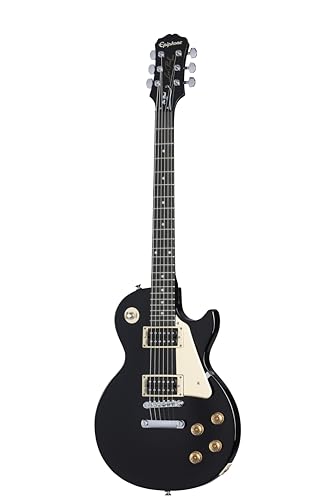
Epiphone Les Paul-100 E1
One of our top picks for blues and classic-rock players in our full electric guitar lineup. Its 700T and 650R humbuckers produced the woody, midrange-forward growl that defines the genre, and the mahogany body with a maple top gave us the sustain and resonance we associate with far pricier Les Pauls. It also carried the deepest review base of any guitar we tested on that page, which is a genuine signal of how proven this exact build is at scale.
Read the 9 Best Electric Guitars of 2026 (Every Budget & Skill Level) guide →What earned Epiphone the recognition
- Epiphone owns the Les Paul shape at accessible prices: both the Les Paul Special II and Les Paul-100 E1 were top picks in our testing for their humbucker-driven classic-rock tone, and both use the shorter 24.75-inch Gibson-style scale that we found easier on smaller hands than a 25.5-inch Strat-style neck.
- A 150-year instrument-making history, from Anastasios Stathopoulos's 1873 workshop through the Masterbilt archtops that rivaled Gibson in the 1930s to Gibson's own 1957 acquisition of the company.
- Every guitar we tested shipped with a fixed Tune-O-Matic bridge and stopbar tailpiece rather than a tremolo, which held pitch more reliably in our hands-on testing than the tremolo-equipped guitars on the same pages.
- The Inspired by Gibson Custom Collection ships with pickups wound at the Gibson Pickup Shop in Nashville, the same lab that supplies Gibson's own Custom Shop, a direct line to Gibson's own parts supply that few sub-brands in this category can claim.
- Backed by Epiphone's lifetime limited warranty, giving buyers name-brand, long-term support rather than the disposable coverage typical of unbranded budget guitars.